
Suit Accessories
Finishing Touches for a Dapper Look
Classic suit accessories, such as a quality watch, tie, and cufflinks, add a personal touch to formal attire.
Wearing a well-fitted suit instantly elevates a man’s appearance, but it’s the accessories that truly set the distinguished gentleman apart. The right accessories can transform a standard suit into a memorable ensemble by adding personality, polish, and purpose. One style guide aptly noted that what separates someone who merely wears a suit from someone who owns the look is a “good eye for the individual accessories that truly ‘create’ an outfit”. In this section, we’ll explore the essential accessories to consider with a suit, such as watches, ties, pocket squares, cufflinks, and more, and how to choose and coordinate them to achieve a cohesive, elegant appearance.
-
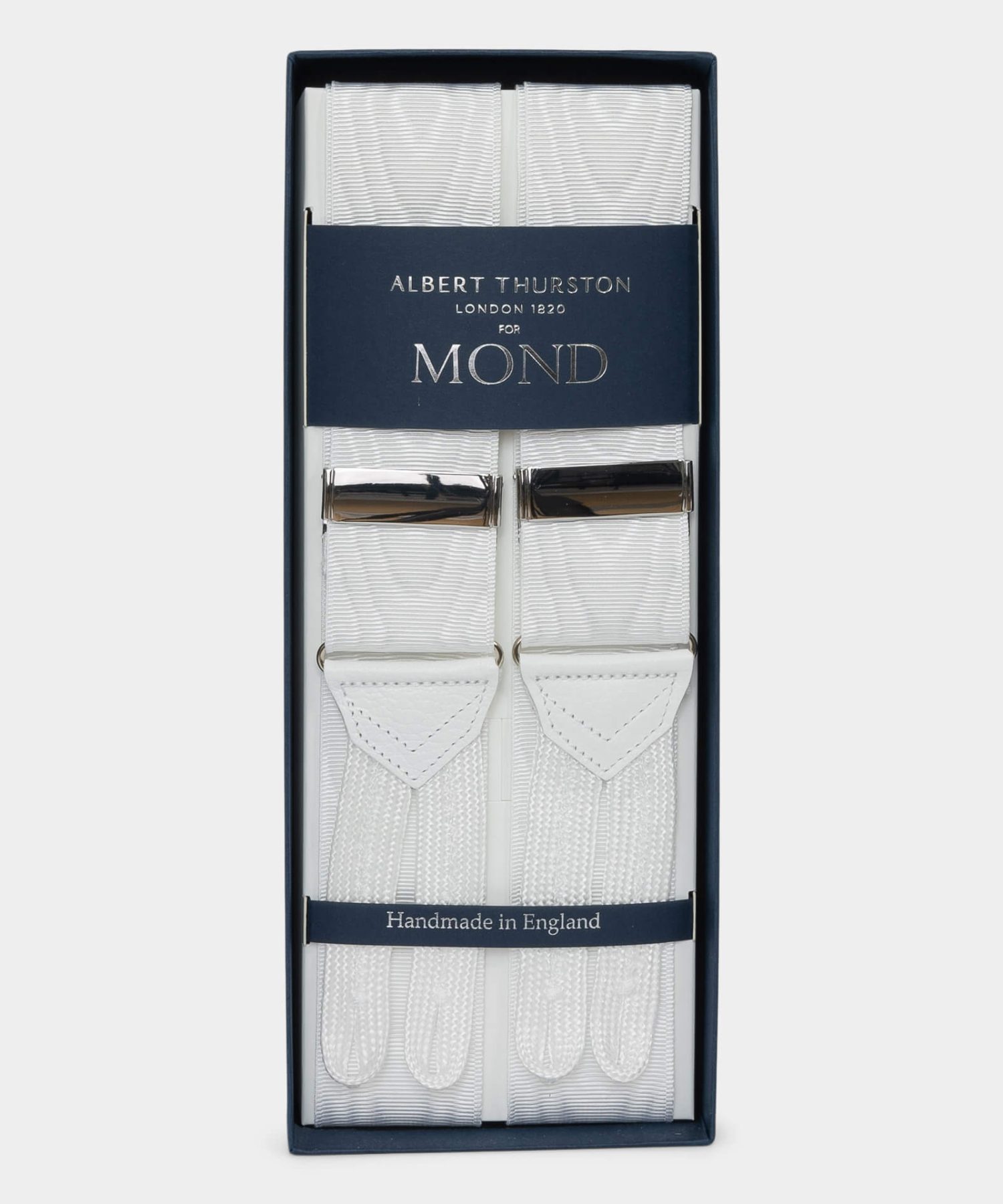 129 €Introducing our White Moire Braces which are braided with elegant leather trimmings, meticulously crafted in England by the renowned braces maker, Albert Thurston, exclusively for Mond. These braces are not just an accessory; they’re a piece of sartorial heritage that has graced the attire of distinguished individuals for generations. Albert…
 -
 109 €
109 €This unique terracotta-colored tie pairs especially well with fabrics in earthy tones, as it combines beautifully with beige, brown, and even green.
-
 55 €
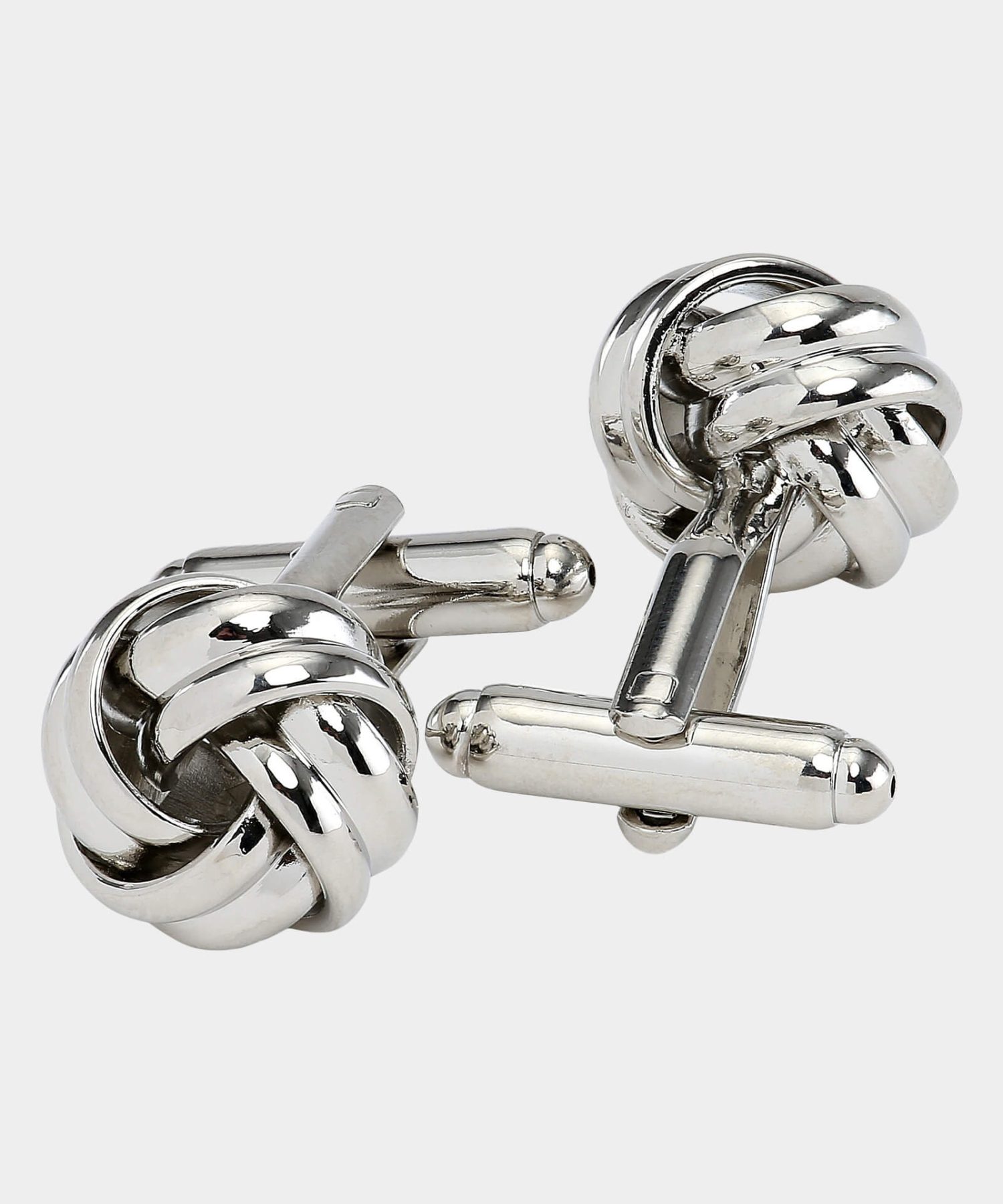
55 €Manchetknapper i sølv fra vores egen kollektion.
-
 45 €
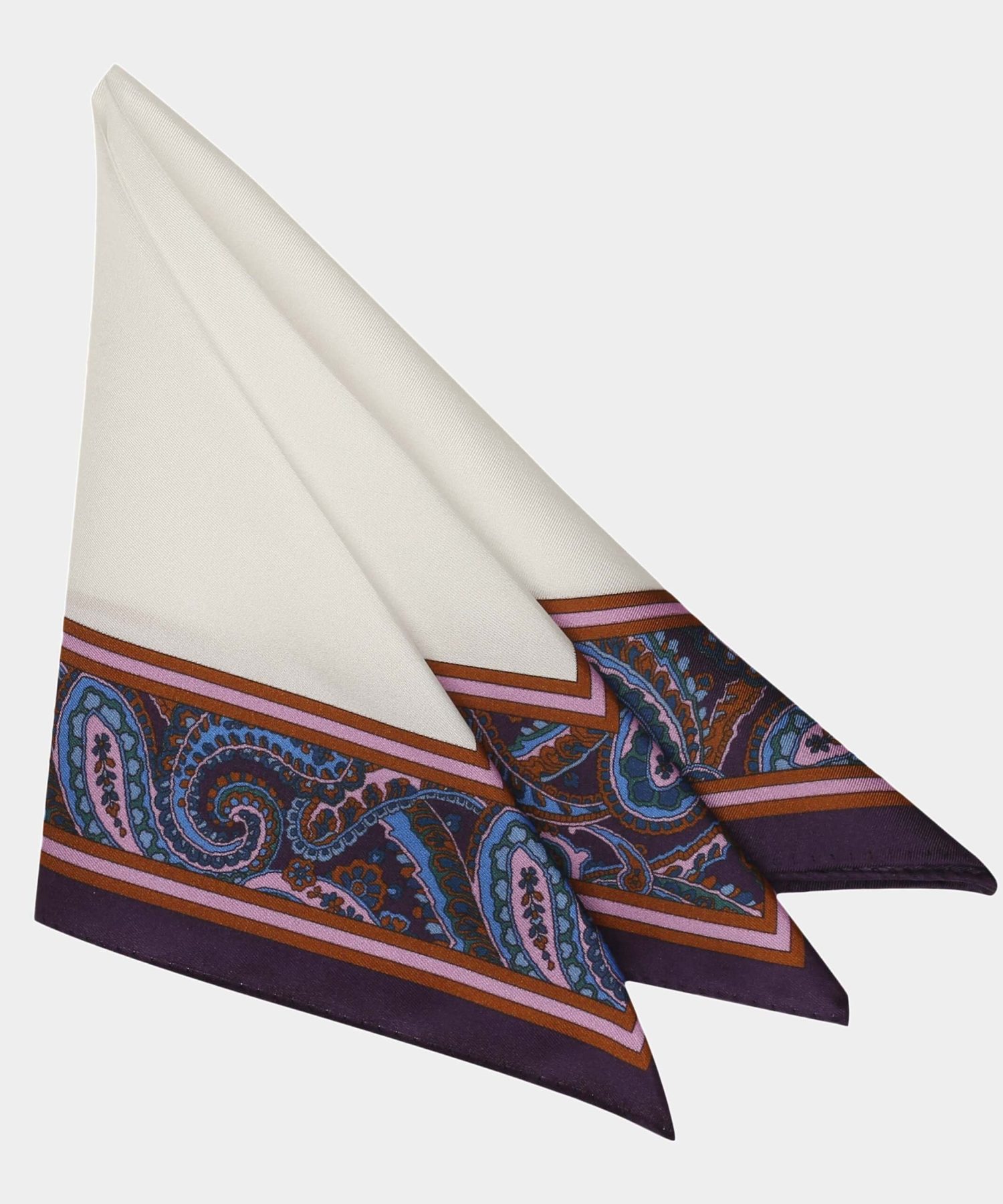
45 €White/dark purple pocketsquare with paisley silk print. This pocketsquare is made of 100% silk and features a white print on a dark purple background. The pocketsquare is perfect for adding a touch of elegance to any outfit.
-


Why Accessories Matter with Suits
Think of a suit as the foundation of your outfit it provides the structure and formality. Accessories are the personal touches that can convey your style, attention to detail, and level of refinement. A suit on its own is uniform; accessories make it unique to you. They draw the eye to focal points: a tasteful pocket square might emphasize the chest pocket area, a gleaming watch or pair of cufflinks adds interest at the wrists, a tie sets the tone with color or pattern, etc. In essence, accessories allow you to express individuality within the boundaries of formal or professional suiting.
Furthermore, high-quality accessories demonstrate an investment in the details. Anyone can put on a suit, but choosing fine accessories shows you go the extra mile, polishing your shoes, selecting a matching belt, coordinating metals and colors. These subtleties register subconsciously (or consciously to those “in the know”) and lend an impression of being well put-together. As one menswear expert put it, “Accessories adorn your look almost like a Christmas tree drawing the eye to key aspects… There is a difference between just putting on clothes and actually dressing. We all want to be the latter.”. In simpler terms: adding thoughtfully chosen accessories is what moves you from simply wearing a suit to truly dressing with style.
Accessories can also influence the formality and mood of your outfit. For example, a silk tie and pocket square in conservative patterns will uphold a traditional, professional image, whereas choosing a knit tie or colorful socks might add a dash of contemporary flair or personality. Swapping a leather dress watch for a sportier chronograph can dial down the formality a notch, if desired. So these items are tools to fine-tune how dressed-up or distinctive your ensemble appears.
Finally, there’s a practical aspect: some accessories are functional (watches tell time, belts hold trousers, etc.), but even then, style and function go hand in hand. A quality accessory often performs better and lasts longer while looking superior. In summary, suit accessories matter because they complete your look, reflect your personal taste, and can subtly signal quality and confidence.

Essential Suit Accessories and How to Choose Them
Let’s walk through the core accessories that every suit-wearer should consider, and some tips on selecting and coordinating each:
-
Watch: Often cited as the only piece of “jewelry” a gentleman should wear (aside from a wedding ring), a wristwatch is a classic suit accessory. In today’s smartphone era, a watch is less about necessity and more about the statement it makes. For formal or business settings, a dress watch is ideal. This typically means a timepiece with a simple, clean dial (often just hours and minutes, maybe a small second hand or date) on a leather strap. Look for a slim case that can slip under your shirt cuff easily. White or silver dial with black or brown leather is a versatile choice; black dial with black leather is also elegant, especially for evening or black-tie events. Avoid overly large or chunky sports watches with your suit big diving or chronograph watches can look out of place with a tailored sleeve, breaking the sleek line of your ensemble. The size of the watch should be proportionate to your wrist, usually in the ~38-42mm diameter range for most men’s dress watches. Metal bands are generally considered slightly less formal than leather, but a fine stainless steel or two-tone watch can still work with suits (particularly daytime or business casual suits). If you do wear a metal band watch, consider coordinating the metal tone with your other metals (belt buckle, cufflinks, etc., usually silver-toned is safest). Ultimately, choose a watch that matches your personality minimalist if you’re classic, perhaps something with a subtle unique detail if you like flair because as one guide notes, “your watch is a profound statement of who you are”. And remember to keep it tuned and clean a stopped watch or smudged crystal can undermine the effect.
-
Necktie: The tie is often the centrepiece of a suited outfit, adding a vertical line of color or pattern that immediately draws attention. When choosing a tie for your suit, consider three main factors: material, color/pattern, and width. For standard business or formal suits, stick with silk ties (wool or cotton ties can be great for seasonal looks or slightly more casual vibes). A quality silk tie has a rich texture and drape that plastic-y cheap ties lack – it will also knot more handsomely. Coordinate the color and pattern with your suit and shirt: if your suit is a solid navy or gray and your shirt is plain, you have freedom to use the tie as a pop of pattern or color (stripes, dots, tasteful paisley, etc.). Conversely, if your suit or shirt has a pattern (like a pinstripe suit or check shirt), your tie should be more subtle to avoid clash – perhaps a solid or one with a very subdued pattern that complements the other colors. A common mistake is getting the tie and pocket square as an identical set avoid that (more on pocket squares below). Instead, the tie can share a color family with the square or contrast it artistically. Width-wise, the tie should roughly match the lapel width of your suit jacket for balance (classic width is around 3 to 3.5 inches, skinnier if you have narrow lapels or a slim-cut suit). When tied, the tip of the tie should hit around your belt buckle. And learn a good knot: a four-in-hand knot works for most ties and collar shapes; a half-Windsor or full Windsor gives a larger, symmetric knot which suits spread collars and more formal occasions. Always take time to make a neat dimple in the tie under the knot it’s a small detail that adds polish. Lastly, ensure your tie’s colors don’t wildly contrast in a way that draws attention for the wrong reasons. It should harmonize with the outfit, perhaps picking up a color from your suit’s overcheck or your shirt’s stripe, etc. A well-chosen tie is arguably the most eye-catching suit accessory, so choose thoughtfully and maybe have a rotation of ties for different moods: some conservative, some festive, some bold.
-
Pocket Square: The pocket square (or handkerchief) is a small accessory with big impact. It sits in your suit’s breast pocket, typically at about a 10-20% visible portion, and adds a dash of elegance and color. The cardinal rule for pocket squares: do not exactly match it to your tie (like those pre-packaged matching sets) That tends to look overly contrived. Instead, coordinate it pick a color from your shirt or tie and have that as an accent in the pocket square pattern. For example, if you wear a navy suit with a burgundy tie, a white pocket square with a burgundy edging or pattern can echo the tie without duplicating it. Or if your tie has a subtle stripe of light blue, a predominantly white pocket square with a light blue motif can work. Solid white (in crisp linen or cotton) is the most classic and formal pocket square folded in a straight TV fold (flat line) or puff and it goes with anything, especially for business, weddings, etc. But don’t hesitate to explore silk pocket squares with prints for more personality, especially in social or less formal suit settings. A navy suit with a white shirt and no tie can come alive with, say, a silk square with a paisley pattern incorporating blues and golds. There are many ways to fold a pocket square (from a simple straight fold to more flamboyant puff or pointed folds). A conservative choice is the flat presidential fold (one clean edge showing), whereas a loose puff or one-point fold adds sprezzatura (Italian for a nonchalant flair). Ensure whatever fold you do, it looks intentional, not just stuffed in without thought. A well-chosen pocket square demonstrates true sartorial know-how; it shows you took that extra moment to finesse your outfit. And if you’re ever unsure, a white linen square is foolproof. As a bonus tip: in a pinch, your pocket square can be functional (offered to someone to wipe a tear, etc.), but in modern use it’s largely ornamental; if you think you’ll need a hanky for practical use, carry a spare one separately and leave the silk peacock in your pocket pristine.
-
Cufflinks: If your shirt has French cuffs (double cuffs that require cufflinks), then cufflinks are a must-have accessory. These small fasteners can be highly decorative or very understated, depending on your style. For business suits or formal events, classic metal cufflinks in gold or silver (or stainless steel) are safe choices. Simple designs like bars, knots, or discs with maybe onyx or mother-of-pearl inlay are timeless and versatile. They should complement any watches or rings you wear (i.e., if you wear a gold watch, gold-toned cufflinks tie together nicely). Avoid overly whimsical or novelty cufflinks in professional settings – the “little golf clubs” or superhero logos might be fun gifts, but they can detract from a sharp look; as one guide advises, keep the jokey cufflinks for casual events. Symbols that mean something to you (family crests, meaningful monograms) are acceptable and often great conversation starters, but even then, subtlety is key small and well-crafted, not loud. For example, cufflinks with a tasteful initial engraving or a vintage pair handed down can add personal significance to your ensemble. Silk knot cufflinks (colored fabric knots) are a casual alternative; they’re inexpensive and come in various colors. They’re fine for less formal suits or daily wear if you want a pop of color at the wrist without investing in many metal pairs. If you do wear silk knots, ensure the color either complements another element of your outfit or provides a deliberate contrast (like a navy suit with light blue knots matching your shirt or red knots as a tiny accent). One more aspect: cufflinks also need proper shirts, so ensure you have some quality French cuff shirts to pair them with. When worn, the cufflink should be secured so that the decorative face is on the outside of your wrist (visible) and the bar or closure is on the inside. Cufflinks are a subtle luxury; they’re usually noticed only nearby or handshakes, but those who do notice them will likely appreciate the attention to detail. They link function and fashion, keeping your cuffs tidy while adding a flash of style.
-
Tie Bar (Tie Clip): A tie bar is a small metal clip that slides horizontally across the middle of your tie, clipping it to your shirt placket. Its main purpose is to keep your tie from flapping around (very handy on windy days or when leaning over), but it also can be a neat stylistic detail. A simple silver or gold tie bar about 3/4 the width of your tie (never wider than the tie) is a classic choice. Position it roughly between the third and fourth buttons of your dress shirt (around mid-chest). When used, it gives a bit of a retro-smart vibe, harking back to mid-20th century style. Ensure it’s horizontally level. It shouldn’t pinch the tie too tightly (some use it more for show and don’t actually clip the shirt – but ideally, use it as intended to clip the shirt and tie together). Tie bars come in various designs – you might see textured ones, colorful enameled ones, or novelty shapes. For a formal or business environment, stick to a plain metal bar or one with minimal design (like a beveled edge). In more fun settings, a subtle design (maybe a navy enameled stripe to go with a navy suit, or a novelty one if it’s a personal statement and appropriate to the event) can be used, but moderation is wise. Also, coordinate it: if your other accessories are gold-toned, a gold tie clip keeps the consistency. A good rule: less is more – the tie bar should not be the focal point of your outfit, but rather a complement. When wearing one, you might opt to skip a waistcoat/vest, as traditionally men didn’t wear tie clips with a vest (the vest already holds the tie in place). It’s also unnecessary if you’re wearing braces (suspenders) that have a high front rise, as the suspenders can serve a similar visual function. Overall, a tie bar can impart a sense of meticulous, Mad Men-esque style when done right.
-
Lapel Pin or Boutonnière: The lapel of your suit jacket has a little buttonhole on the left side – originally intended for a flower (boutonnière) on special occasions. Today, wearing a fresh flower (like a white carnation or red rose) is mostly reserved for weddings, formal dances, or very ceremonial events. However, lapel pins (small pins or badges placed on the lapel) have become a way to add personality or show affiliation. For example, a national flag pin, a charity cause ribbon pin, or a stylish metallic emblem (like a tiny flower, knot, or your company’s logo) might adorn some people’s suit lapels. If you choose to wear a lapel pin in a professional setting, keep it small and tasteful. It should be about the size of an eraser head to a dime, typically. It can subtly show something you care about (e.g., an American flag pin is common in the U.S., a discrete pin for a veteran organization, etc.). For pure style, some opt for non-meaningful but decorative pins, like a small silver fleur-de-lis or a knotted rope design. This can be a nice touch, but it’s entirely optional. It’s easy to go overboard – avoid anything flashy or large (no big novelty pins or political campaign buttons on your suit!). If you are attending a very formal event and want that old-school elegance, a fresh flower boutonnière can be wonderful. In that case, usually stick to one type of flower (white or red carnation, or a rosebud, or something like a small sprig of lavender) and coordinate with any theme (e.g., wedding colors). Boutonnières should be secured with a pin from behind the lapel so just the blossom shows, and they generally aren’t combined with a pocket square (choose one or the other to avoid too much going on). For daily wear, a lapel pin is by no means necessary – it’s really the final touch for those who want to accessorize to the max or have a specific reason. If you do none of these, a bare lapel is perfectly fine and very common.
-
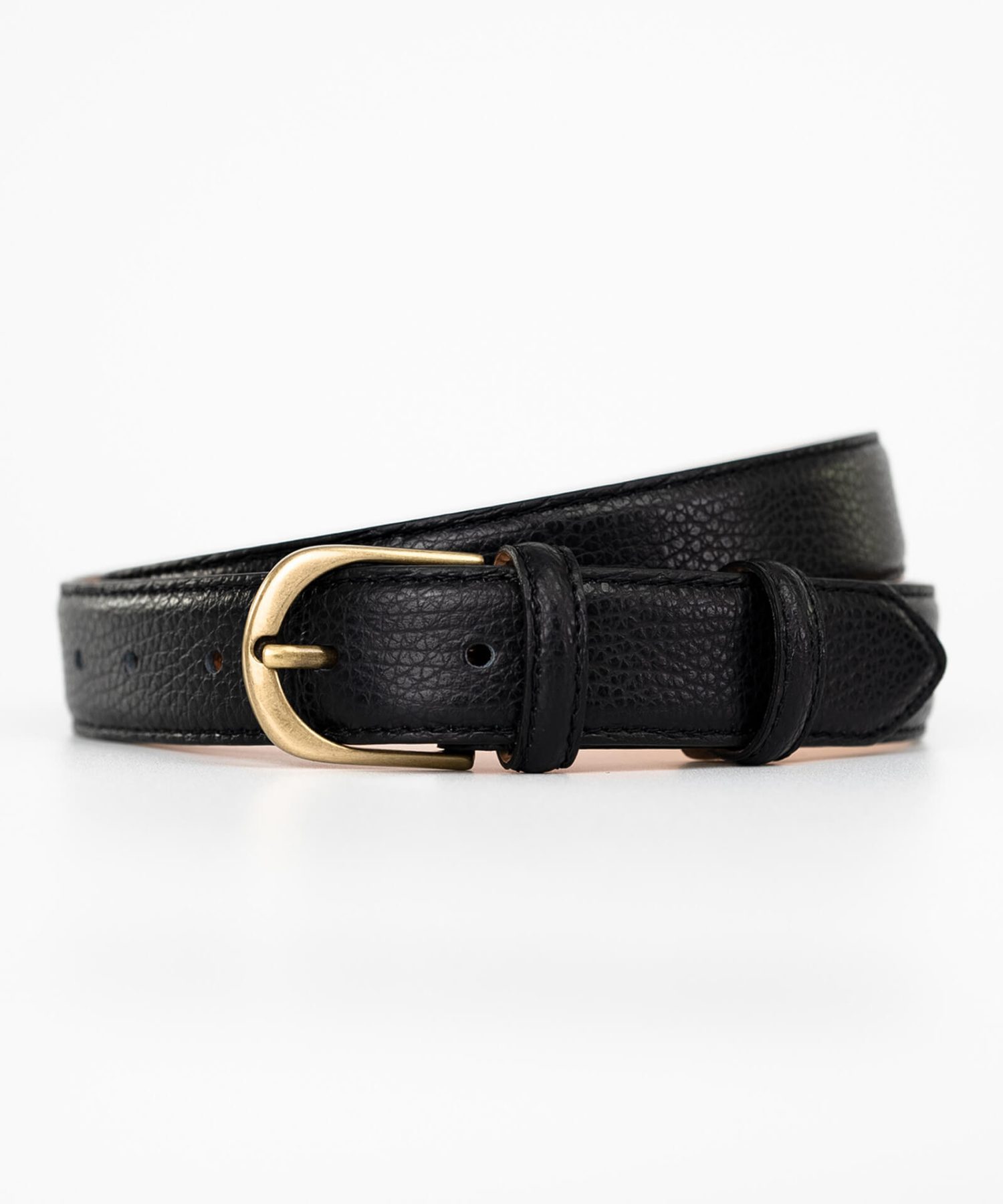
Belt or Suspenders: Though not always considered an “accessory” by some (because they’re functional), belts and suspenders (braces) play a role in the suited look. Belts: If your suit trousers have belt loops, you should wear a belt. The belt should ideally be leather, in a color that matches your shoes (black belt with black shoes, brown belt with brown shoes, etc.), and fairly dressy (a simple, understated buckle, usually in silver or gold tone). The width of a dress belt is typically around 1.25 to 1.5 inches. Avoid casual belts (distressed leather, big cowboy buckles, fabric belts) with suits. A sleek black or dark brown calf leather belt with a small rectangular buckle is the standard. Suspenders/Braces: These are an old-school alternative to belts, and some suit pants come with side adjusters or brace buttons for this purpose. Wearing suspenders (especially the kind that button in, not clip-on) is a classic choice that actually often holds trousers at a better line (no waist cinching as belts do). If you wear suspenders, you do not wear a belt (and indeed your trousers should ideally not have loops if you go this route – though some ignore that and just tuck loops in). Suspenders can be a style statement; in conservative form they might be solid navy, black, or gray silk. In more rakish form, one might wear colored or subtly patterned braces that only show when your jacket is off. It’s worth noting that in some circles, braces are seen as a mark of a well-dressed gent who cares for tradition. Just ensure they are high quality and use proper buttons (many tailors can add interior buttons to trousers for you). Whichever method you choose, one thing stands: match your metals – if your belt buckle is visible, coordinate it with your watch and cufflinks metals. If wearing suspenders, consider the color relative to your shirt and tie (e.g., navy suspenders on a white shirt under a charcoal suit very elegant and low-key). Neither belts nor suspenders are “must accessorize” items, but since they are functional, do them right and they’ll complement your outfit rather than detract.
-
Shoes and Socks: Again, shoes are more than an accessory (they’re a necessity), but in the context of completing your suited look, they deserve mention. Quality leather shoes, well shined, are absolutely essential to do justice to a good suit. Oxford dress shoes or sleek derbies in black or brown cover most needs (oxfords for the most formal/business, brown brogues or oxford for navy suits, etc.). The style of shoe can also tailor the vibe (cap-toe Oxfords for conservative business, double-monks or tassel loafers for a bit more stylish flair in social contexts, for example). Socks are an often-overlooked accessory. A general rule: match your socks to your trousers (navy socks with navy pants, charcoal with gray pants, etc.) for a seamless, lengthening look. But you can also use socks to inject subtle personality: argyle patterns, stripe or dot patterns, or a contrasting color that picks up another accent in your outfit (e.g., burgundy socks if you have a burgundy tie, in an otherwise gray suit ensemble). Just ensure the sock color doesn’t clash and that your socks are long enough that no bare calf shows when you sit down. Coordinating socks and other accessories is optional, but when done carefully it shows a next-level thought (like a hint of purple in your pocket square echoed by a purple stripe in your socks).
In summary, the essential suit accessories include your watch, tie, pocket square, cufflinks (if applicable), tie bar (optional), lapel pin (optional), belt or braces, and one could add shoes, socks, and even a briefcase or quality bag to the list. Each serves a purpose and an aesthetic function. The overriding guideline is coordination – the metals should have a common theme, the leathers should match, and colors/patterns should complement, not fight each other. When in doubt, stick with classics: a white pocket square, silver links, black oxfords, etc. When confident, you can play a bit more with patterns and colors in a controlled way. By minding these accessories, you’ll not only look sharp but will present an image of someone who cares about the details.

Tips for Coordinating Suit Accessories for Men
To ensure all your accessories work in harmony, here are a few quick tips:
-
Match Metals and Leathers: As mentioned, if your watch has a silver case, try to have your cufflinks, belt buckle, and tie bar (if used) in a similar silver tone. If you wear gold, do the opposite. Similarly, match your belt and shoes in color and general finish (e.g., don’t wear a shiny patent leather shoe with a matte suede belt). Brown leathers should be in the same family (they don’t have to be exact, but close; dark brown with dark brown, light tan with light tan, etc.).
-
Balance Patterns: If your tie is very bold (say a strong paisley or bright color), then go subtle or solid with the pocket square and shirt. If your tie is plain, you have more leeway to use a patterned pocket square or even a patterned shirt. Generally keep to no more than two patterned pieces in your shirt-tie-square combination; one of them should be relatively subdued. For instance, stripe shirt + solid tie + patterned square works, or solid shirt + patterned tie + subtle pattern square, but pattern in all three is tough to pull off gracefully.
-
Consider Proportions: A wide lapel suit looks best with a wider tie and perhaps larger tie knot and cufflinks; a slim-cut suit with narrow lapels calls for a slimmer tie, smaller knot, and minimalist accessories. Also, if you’re a larger gent, you might wear slightly larger accessories (like a pocket square puff a bit fuller, a watch on the larger side of average) versus a very petite person who may opt for smaller watch face, etc. Keep things proportional to your build and your outfit’s scale.
-
Less Is More (Often): You don’t need to wear all these accessories at once. In fact, it’s rare someone would have every single one (tie, square, links, pin, bar, etc.) simultaneously, unless it’s a truly formal event. It’s perfectly fine with just a tie and pocket square and watch for most occasions. Or tie + cufflinks (no square) in a conservative business meeting. Evaluate the occasion for a job interview, you might skip flashy extras and stick to the basics. For a friend’s wedding, you might add more flourish. The key is you don’t want accessories to overwhelm or look costume-y. They should accent, not dominate.
-
Quality Over Quantity: It’s better to have a few high-quality, versatile accessories than a drawer full of cheap ones. A solid pair of sterling or stainless cufflinks will last a lifetime. A handcrafted silk tie in a classic pattern can be worn for decades if cared for. So, invest in quality materials they look better (rich silk, fine leather, polished metal) and also perform better (e.g., a good umbrella that won’t flip in wind, a sturdy leather belt that won’t crack). People often notice a cheap plastic watch or fraying belt quickly; on the flip side, they’ll notice the shine of real shoes or the weight of a nice watch. As the saying goes, “the devil is in the details,” and quality details make a positive statement about you.
By coordinating your accessories well, you demonstrate sartorial savvy. It shows that your great suit isn’t an accident but a canvas you’ve deliberately painted with touches of style.
Frequently Asked Questions (FAQ): Suit Accessories
What accessories should a man always wear with a suit?
At minimum, you should wear a good watch and the appropriate shoes/belt with a suit. A classic wristwatch (analog, with a clear dial) instantly adds sophistication and utility – it’s often said a watch is one of the only acceptable suit accessories for men in a formal context. Additionally, ensure you have dress shoes that match the formality of the suit (oxfords or polished derbies for business/formal suits, loafers or brogues for slightly more casual suits) and a matching leather belt (if your trousers have loops). Beyond those basics, a necktie is expected for most formal or business occasions (unless it’s intentionally a no-tie look). A pocket square is not mandatory but strongly recommended if you want a more elegant look – even a simple white square can make a difference in polish. If your shirt has French cuffs, then cufflinks are obviously required to fasten them.
In summary: a watch, tie, belt, and shoes are the fundamental suit accessories for a classic suited look, with pocket square and cufflinks as common enhancements. Other items like tie bars or lapel pins are optional based on personal style.
How do I choose the right watch to wear with my suit?
Choose a dress watch that complements the formality and color scheme of your suit. For business and formal suits, a watch with a clean, understated dial (white, black, or metallic face; minimal complications) is best. The watch casing should be relatively thin so it slides under your shirt cuff without bulging. Strap material matters: a leather strap (black or brown) often looks more formal and pairs nicely with leather shoes/belt. If you go with a metal bracelet watch, ensure the metal tone doesn’t clash with other metals you’re wearing (e.g., a steel watch is fine with a gray or navy suit; if you wear a gold watch, maybe have gold-tone cufflinks). Consider watch color: A silver case/white dial watch with a black leather strap is extremely versatile it can go with virtually any suit color from navy to gray to black. A gold case/brown strap is a bit warmer in tone and can pair nicely with earth-tone suits or navy, but might clash with black or very cool-toned outfits. Avoid digital or sporty watches with suits; even smartwatches should be dressed up with a leather strap if you must wear one. Ultimately, the right watch is one that is proportional to your wrist and doesn’t scream for attention it should complement, not dominate. A classic example: a 40mm white dial, simple indices, brown leather strap watch with a navy suit looks effortlessly elegant. On the other hand, if you have a unique style and the event isn’t ultra-conservative, some men do wear luxury sports watches (like a Rolex Submariner or Omega Speedmaster) with suits it can work if the watch is high-quality and in good taste, but generally, the simpler dress watch is the safest and most traditional choice for a suited ensemble.
Should my tie and pocket square match?
They should complement, not match exactly. Avoid using the exact same fabric for tie and pocket square (like those sets where both are identical patterns) that tends to look overly matched and less sophisticated. Instead, coordinate them by color family or theme. For example, if you have a navy tie with red stripes, you could use a pocket square that has a hint of red (maybe a white linen square with red border, or a paisley that includes navy and red accents) – this picks up the tie’s color without mirroring it exactly. A solid tie often pairs well with a subtly patterned square that includes the tie’s color somewhere in the pattern. Conversely, a patterned tie might call for a mostly solid or gentle-pattern pocket square echoing a background or accent hue of the tie. One easy fail-safe: a white pocket square (especially in presidential fold) goes with any tie it’s clean and classic. Another example: a dark green tie could be complemented by a cream pocket square with a green edge or print. If in doubt, choose one dominant color from your tie or shirt and have the pocket square incorporate that color in a minor way. This approach creates a harmonious look where the pocket square looks like it belongs to the same “story” as the rest of the outfit without being a duplicate. Ultimately, the goal is an effortless coordination you want it to seem like these pieces naturally go together, rather than a “paint by numbers” match.
Are cufflinks necessary, and can I wear them with any shirt?
Cufflinks are only necessary if you are wearing a shirt with French cuffs (double cuffs). Standard dress shirts come with button cuffs (barrel cuffs) that don’t require cufflinks in fact, you can’t use cufflinks on those because there’s no opening for them. So, you’ll wear cufflinks on special shirts designed for them. Many gentlemen choose French cuff shirts for formal events, important meetings, or whenever they want a bit of extra elegance; those shirts will have the extended cuffs that fold back and have holes for cufflinks. In such cases, yes, cufflinks are necessary to fasten the cuffs closed. If you’re not wearing a French cuff shirt, then you don’t wear cufflinks at all you’d use the normal sewn-on buttons. Can you convert a regular shirt to use cufflinks? Not really, unless it has convertible cuffs (some shirts have dual option cuffs where you can either button or use links). For the average suit-wearer day to day, cufflinks are optional because French cuff shirts are optional. But if your aim is a more distinguished look or it’s a black-tie event, a French cuff with cufflinks is very appropriate. When you do wear them, make sure to pay attention to the style: keep them fairly simple and classy for business (e.g., silver knots, small discs), and you can go a bit flashier or themed for social events (e.g., red silk knots for a pop of color, novelty links for a fun party, etc., as long as it suits the occasion). Remember to line up the monogram or design on the link facing outward on your wrist for display. In summary: cufflinks aren’t an everyday must, but they are a great accessory when called for by the shirt or occasion.
What color shoes go best with navy or gray suits?
For a navy suit, the classic shoe colors are black, dark brown, or burgundy/oxblood. Black shoes with navy give a very formal, business look it’s sharp and straightforward (common in business contexts). Dark brown shoes (especially with some brogueing or richness in color) can complement navy beautifully, offering a slightly more relaxed yet refined style this combination is often seen in less formal business environments or daytime events. Burgundy or oxblood (a deep reddish-brown) shoes are a stylish choice with navy, adding a bit of personality while still looking elegant; many fashion-conscious professionals love this combo for how the reddish tone plays against navy. Avoid light tan shoes with a dark navy suit, as the contrast can be a bit high if you go lighter, it should be a deliberate, more casual spring/summer take. For a gray suit, it depends on the shade of gray: charcoal gray (almost black) suits pair best with black shoes (brown can work but often black looks more cohesive with the cool dark tone). Mid-gray suits are very versatile – you can do black shoes for a crisp, formal look, or brown shoes for a slightly warmer, more contemporary look. Dark brown works well, and burgundy/oxblood also pairs nicely with gray, adding color. Light gray suits (and summer suits in gray tones) often look good with brown, tan, or oxblood shoes these lighter tones make the ensemble feel more relaxed and seasonal. As a rule of thumb, black shoes are the most formal and safe for all suit colors (especially navy, charcoal, black suits). Brown shoes (ranging from medium to dark chocolate brown) add a bit more flair and are very appropriate for navy and medium grays just ensure your belt matches the brown tone. Oxblood/burgundy shoes are like the joker in the pack surprisingly versatile, going well with navy, medium gray, and even charcoal to some degree; they show you have a bit of style confidence. The key is the shade: the darker the suit, the darker the shoe ideally (black or very dark brown for charcoal; medium or dark brown for medium gray; etc.). And always make sure the shoes are well-shined dull, scuffed shoes will mar even the best suit.
Can I skip the tie and still look put-together in a suit?
Yes, you can go open-collar with a suit for a more modern, relaxed look this is often referred to as “smart casual” or simply a dressed-down suit. To pull it off while still looking intentional, pay attention to a few things: First, your shirt collar it should ideally be a somewhat structured collar (like a spread or semi-spread collar) that can stand up nicely without a tie; some collars collapse or flop when unbuttoned, which looks messy. You might even consider shirts made for no-tie looks (with a slightly shorter collar or hidden button-down collars to keep them in place). Second, fit and grooming become even more important without a tie, since more of your upper chest/neck is visible – ensure your shirt fits well (no gaping, not too tight) and maybe leave only the top one (or at most two) buttons undone, nothing more. The suit itself can be a touch less formal if no tie for instance, a suit with some texture, or a patterned shirt, can make the no-tie look appear more cohesive, rather than it looking like you just forgot a tie. Accessorize in other ways: if you skip the tie, you might definitely use a pocket square to give a pop of visual interest where the tie would have been. A nicely folded white square or one that adds a subtle pattern can compensate for the missing tie color. Your watch and other accessories become a bit more prominent too. Many style-savvy men wear suits without ties, especially for social events, semi-formal gatherings, or creative workplaces. Think of celebrities on talk shows in open-shirt suits it can look very suave. That said, without a tie, a suit does inherently look less formal, so ensure it’s appropriate for the occasion (don’t skip the tie for a strict business meeting or formal wedding unless you’re sure it’s acceptable). If done right, you’ll look polished but approachable. Just maintain that the rest of your outfit is on point if you omit the tie, everything else (from hair to shoes) should be immaculate so it’s clear the choice was stylistic, not sloppy.
Any advice on storing and caring for accessories like ties and pocket squares?
Certainly taking care of your accessories will prolong their life and keep them looking sharp:
Ties: Invest in a tie rack or hanger to keep them hanging untied, which helps prevent deep wrinkles. After wearing a tie, gently unknot it (don’t leave it knotted) and hang it up; this allows creases from the knot to relax. For removing wrinkles, you can either roll the tie loosely and leave it overnight (sometimes this helps), use a garment steamer on a low setting to carefully steam out wrinkles (be cautious with silk don’t soak it, just gentle steam), or put the tie under a pile of clothes overnight to press it lightly. Avoid ironing ties directly, especially silk, as it can damage the fabric. If a tie gets stained, spot-treat immediately with a damp cloth; for serious stains, a professional dry cleaner who specializes in ties is best (mention the stain type and that it’s a tie). Also, rotate your ties don’t wear the same one day after day to give the fabric time to recover its shape.
Pocket Squares: If they’re silk, you’ll likely just need to air them out after use (silk naturally resists wrinkles if not crushed; minor wrinkles actually don’t matter much once it’s puffed in your pocket). You can gently hand wash many linen or cotton pocket squares and then iron them flat for a crisp look (check if any have specific instructions). Store pocket squares folded or rolled in a drawer or box to keep them neat separating by material is a good idea (silk ones shouldn’t snag on rough cotton ones, for instance).
Cufflinks and Metal Accessories: Keep them in a jewelry box or a dedicated drawer so they don’t get lost. Storing cufflinks as pairs (through a piece of cardboard or in small compartments) will save you scrambling to find matches. Occasionally, give them a polish with a soft cloth; if they are sterling silver and have tarnished, a bit of silver polish will restore shine. For tie bars, same id keep them in a box so they don’t scratch other items or get scratched.
Leather Belts: Store hanging if possible (so they keep shape) or rolled loosely. If the belt gets dry or dull, use a tiny bit of leather conditioner or polish (in matching color) to keep it supple and vibrant especially for high-quality leather belts, this can extend their life and appearance. And remember to use different holes over time to avoid permanent creasing at one point (though inevitably a belt will crease where you buckle it).
Watches: If you have mechanical watches and rotate them, consider a watch winder for automatics so they keep time/power. For quartz, just store in a dry place. Wipe down the watch case and strap after wearing to remove sweat or oils (especially leather straps). If your watch is waterproof, an occasional gentle soap and water clean of the band (metal) can keep it shiny. And service mechanical watches every few years to keep them in top shape.
Caring for your accessories ensures they’re always ready to impress when you need them. A wrinkle-free tie, a sparkling set of cufflinks, and well-kept shoes can collectively make a powerful statement that you are a man who respects his attire.
Is it acceptable to mix metals (for example, gold cufflinks with a silver watch)?
Style conventions traditionally suggest you coordinate metals for a harmonious look. The ideal is to keep all visible metal accessories in the same tone e.g., if you have a stainless steel (silver-tone) watch, then silver-tone cufflinks, a silver tie bar, and a belt buckle in a similar finish. It presents a uniform, intentional impression. That being said, minor mixing is not the end of the world, and some modern fashionistos do mix metals subtly (like a two-tone watch that has both silver and gold elements, which can actually bridge the gap). If you do mix, it should look deliberate: for instance, wearing a two-tone watch can justify wearing either gold or silver elsewhere. Or if your wedding band is gold and you always wear it, don’t fret that small ring of gold is fine even if the rest is silver (most people give a pass to wedding jewelry). But if you were to, say, wear gold cufflinks, a gold tie bar, and a big gold watch, then having a random chrome belt buckle might appear as an oversight. The eye tends to catch repetition, so mismatched metals can be jarring if they’re large pieces. In summary, try to match significant pieces (watch, cufflinks, belt buckle, ring if it’s a signet or something) when possible. If you must mix keep it subtle (one gold accent among mostly silver, etc.). Fashion rules are not absolute; what matters is the overall cohesion of your look. If everything else is immaculate, a slight metal mix might go unnoticed or could even seem intentional if done confidently. But if you’re aiming for classic elegance, aligning metal tones is a safe practice to maintain that sleek, coordinated aesthetic.
What’s a simple way to upgrade my suit game if I’m new to accessories?
Start with one or two high-impact, easy suit accessories. The simplest might be adding a pocket square to your suit jackets if you haven’t before – a white linen or cotton pocket square in a straight fold is incredibly elegant and requires minimal effort, yet many men don’t utilize it. You’ll find it instantly makes you look more “dressed.” Another easy upgrade is ensuring you have a quality leather belt and shoes that match; if you’ve been wearing the same scuffed shoes, getting a nice pair of cap-toe Oxfords and keeping them shined elevates your overall look dramatically. Also, consider the watch: if you’ve been using a casual or digital watch, switch to a clean analog dress watch. It doesn’t need to be very expensive—there are affordable brands with minimalist designs that look great, but it signals refinement. If you don’t have shirts that can take cufflinks, perhaps invest in one good French cuff shirt and a pair of simple cufflinks; wear that on occasions where you want to feel extra sharp. It feels different and upscale. Also, pay attention to grooming (a well-groomed hairstyle, maybe a pocket comb with you, etc.) and fit (ensure your suit is tailored well)—these aren’t suit accessories per se, but they go hand-in-hand with them.
In short: add a pocket square, wear a nice watch, match your leathers, and keep things neat. Once you’re comfortable with those suit accessories, you can experiment further with tie bars, different tie knots, or more adventurous pocket square folds and colors. But even the simple changes above will noticeably upgrade your suit game.