
Custom Suits Guide
What is a Custom Suit?
A custom suit can be defined in many different ways. To help clarify, let’s break down the three classic definitions within this category.


The Bespoke Suit
At the top of the pyramid, you’ll find the Bespoke suit—the pinnacle of custom tailoring. A bespoke suit is made entirely from scratch, based on the client’s exact measurements, preferences, and body nuances.
When working with a bespoke tailor, the first step involves taking all the key measurements required to create the perfect suit. Once the measurements are taken, the tailor uses a pattern block as a foundational base. The pattern block is typically designed to fit a general body shape, but it will be adjusted to match the client’s specific measurements. This ensures that the final garment will fit the client’s body perfectly.
Based on the client’s measurements—such as chest, waist, hips, shoulder width, etc.—the patternmaker makes necessary adjustments to the block. These changes may include adding or removing ease, altering the darts or seams, or modifying the overall shape to better match the client’s silhouette. Additionally, decisions regarding the style and design of the garment are made during this stage, including choices about the lapel type, button-positioning, and overall fit.
The next step is the cutting of the fabric. Once the pattern has been adapted and finalised, it is placed on the fabric. At this stage, the fabric is cut following the lines of the adjusted pattern. The patternmaker or cutter carefully cuts the fabric pieces based on the pattern, ensuring everything aligns properly, from the shoulder seams to the side seams.
After this, you’ll enter the final stage: the sewing of the garment. Once the fabric pieces are cut, they are sewn together according to the design and structure of the garment. The sewing process involves joining the pieces, often with fittings along the way to ensure that the garment fits the client’s body perfectly. At this stage, the garment may go through several fittings to fine-tune the fit and ensure the final result is exactly what the client wants.
The Bespoke Suit: Explained
Bespoke tailoring is a time-intensive and high-cost process that delivers a perfectly customised suit.
The journey begins with an initial consultation, where the tailor takes precise measurements and discusses fabric, style, and design preferences. This consultation typically lasts 1 to 2 hours. Afterward, the tailor creates or adjusts a pattern block based on the client’s measurements, which can take several days to a week. Once the pattern is ready, 2 to 3 fittings are scheduled, typically spaced over a few weeks. Each fitting lasts around 1 to 2 hours and allows the tailor to make adjustments for a perfect fit.
After the fittings, the final suit is sewn by hand, a process that can take several more weeks, depending on the suit’s complexity.
The cost of a bespoke suit generally ranges from €3,000 to over €10,000, depending on factors like fabric choice, customisation, and the tailor’s reputation. Some high-end tailoring houses may charge significantly more, especially for luxury fabrics or renowned tailors. The entire bespoke process, while costly and time-consuming, offers a completely personalised, hand-crafted suit that ensures the “perfect’” fit and design tailored to the client’s exact preferences.
Is bespoke tailoring always perfection, and is it worth every penny? Or should it, like many other clothing concepts and experiences, be viewed as a trial and error process—a reality check between expectations and results?
Bespoke tailoring, while highly personalised and crafted to the highest standards, doesn’t guarantee absolute perfection every time. The process can vary depending on the skill of the tailor, the materials chosen, and the client’s specific body and preferences. As the article by Bernhard Roetzel on Parisian Gentleman explains, bespoke tailoring is as much an art as it is a science, with room for both triumph and imperfection.


The Custom Tailored Suit (MTM)
A custom-tailored suit or made-to-measure suit can also be divided into several categories, as the quality and craftsmanship can vary significantly depending on the manufacturer, the fabrics used, and the overall making process. While these suits are tailored to the client’s measurements, the level of personalisation and attention to detail can differ greatly. Some manufacturers offer a more standardised approach with limited customisation, while others provide a higher level of tailoring, similar to bespoke, but with some differences in the process and adjustments to the block.
The range of options available allows clients to choose a suit that aligns with their preferences and budget, but the end result can vary based on the chosen manufacturer (store/concept), materials, and the making process involved.
By choosing the right concept and store for your custom suits (MTM suits), you’ll get great value for your money as well as quality craftsmanship. The price points within the custom-tailored suit concept can vary, but a good indication is that high-quality suits and craftsmanship cannot be achieved for under 800€.
The better the manufacturer, the more alterations in fit are possible, as well as additional design and construction-related options.
Breakdown: Custom Suits – Approaching Bespoke “Perfection” or Not?
Custom-tailored suits, also known as made-to-measure (MTM) suits, offer an excellent balance between quality, personalisation, and value for money. While they don’t reach the full level of bespoke tailoring, MTM suits come remarkably close—often achieving a near-perfect fit for a fraction of the price. With prices typically starting around 800€, you can expect high-quality craftsmanship, premium fabrics, and a wide range of design options.
One of the key advantages of MTM suits is the faster delivery time compared to bespoke tailoring, often taking just a few weeks from measurement to final fitting. Additionally, the better the manufacturer, the more adjustments can be made to the fit, design, and construction, allowing for a highly personalised suit that reflects your style and body shape. For many, MTM offers the perfect combination of craftsmanship, efficiency, and affordability—delivering a tailored experience without the bespoke price tag.
There’s also the fear that the price tag of the bespoke experience might not meet your expectations, as it often involves buying a ‘house-cut’ and following the tailor’s opinion, rather than focusing on your preferences as the consumer. However, with a great custom tailoring house, the client’s wishes, personal taste, and preferences are the only things that matter, though the clothier will, of course, always suggest and offer the most flattering and classic solutions.


The “Tailored” Suit: Off-the-Rack Meets Personal Fit
The last option is the “tailored suit.” Some people might think this is the same as a custom suit or made-to-measure suit, but in all honesty, it’s just a regular suit that is adjusted to fit you as well as possible. It’s not a bad solution if your aim is to get something quick and good-looking. However, if you’re trying to create your own personal style and build a wardrobe to last, this can be a poor investment, as most fits and styles will be based on trends.
Most stores offer this solution nowadays, but some, fewer than others, have an in-store “tailor” or someone they work with who can quickly handle the adjustments. The price tag for suits of this quality typically ranges from 200€ to around 600€. Of course, you can find famous brands and renowned makers who offer off-the-rack suits of extremely high quality, with prices ranging from 1000€ to 6000€. In such cases, you’re paying for the highest quality construction, fabrics, and production standards, but you’re still mostly paying for the brand.
A tailored suit isn’t a bad option, and that’s why it remains the most common solution. However, at the end of the day, choosing something custom or bespoke offers a different level of emotional connection and results in a more thoughtfully crafted product.
The Tailored Suit: An Accessible Option but Lacking Personalisation.
A tailored suit is often mistaken for a custom or made-to-measure suit, but in reality, it’s a standard suit that is adjusted to fit your body. While it’s a good choice for those looking for something quick and stylish, it may not be the best investment for building a long-lasting wardrobe or personal style, as it typically follows trends. Most stores offer this option, with prices ranging from 200€ to 600€, though high-end brands may charge significantly more for off-the-rack suits of exceptional quality. While you’re paying for quality craftsmanship, fabrics, and production, the price is often inflated by the brand name.
Ultimately, a tailored suit is a practical solution, but for those seeking a more personalized and thoughtfully crafted garment, custom or bespoke options provide a deeper emotional connection and a unique fit that reflects your true style.

Why Choose a Custom Suit?
Now that we understand the different ways this expression is used, let’s explore why a custom-tailored suit from MOND stands out. It’s not just about fit—it’s about craftsmanship, construction, and the ability to customise every detail to your preferences.
The Superiority of Half Canvas Construction
At MOND, half canvas construction is the standard, ensuring superior craftsmanship compared to glued alternatives. Here’s why it makes a difference:
- Improved Drape and Silhouette: Conforms naturally to your body over time, enhancing the fit and overall look.
- Breathability and Comfort: Provides excellent airflow, keeping you cool and comfortable even during long days.
- Longevity and Resilience: Maintains its shape and structure, ensuring durability and making it a smart long-term investment.
- Tailoring Versatility: Allows for precise adjustments, offering a perfect fit tailored to your unique measurements.
Upgrading to Full Canvas Construction
For those seeking the pinnacle of tailoring, MOND offers full canvas construction. This option adds even more structure, refinement, and luxury, enhancing both the drape and longevity of your suit.
Custom Shoulder Constructions
Your suit’s shoulder style defines its overall aesthetic. Choose the construction that best fits your personal style:
- Roped Shoulder: Adds structure for a sharp, authoritative look with enhanced sleeve definition.
- Soft Shoulder: Offers a relaxed, natural silhouette with minimal padding for comfort and a casual elegance.
- Normal Shoulder: Balances formality and modern style with moderate padding—ideal for both business and formal occasions.
- Natural Pleated Shoulder: Showcases artisanal craftsmanship with subtle pleats for a softer, more relaxed appearance.


Fabric Matters
The Key to a Superior Custom Suit
Weight, Quality and Merchant Matters
Many people tend to think that just because a fabric is expensive, it should offer exceptional durability and remain wrinkle-free. However, this has nothing to do with the price of the fabric. The same misconception applies to lower-quality fabrics or those containing synthetic fibers—they are not necessarily bad or low-quality, nor are they only made for comfort.
Some even base their judgment on wool classification, assuming it indicates superior quality. However, the classification only tells you about the feel of the fabric, not its overall quality.
Wool grades and how they’re measured and categorised can vary from merchant to merchant. Some adhere to stricter classification standards, while others may use it as a unique selling point without maintaining the same level of rigour.
Your primary focus should be:
Where to Source Your Fabric
When selecting fabric for your custom suit, the first step is to source from reputable mills and merchants renowned for their high-quality materials. Whether it’s a prestigious Italian mill or an established British textile maker, the reputation of the source is a key indicator of the fabric’s quality, ensuring you get the desired benefits from your suit.
Matching Quality with Purpose
The fabric you select should match the intended use of the suit. Consider factors like climate, occasion, and frequency of wear. A wedding suit may require something lighter and more breathable, while an everyday office suit might need a durable, versatile fabric that withstands regular wear. Make sure the fabric complements the purpose it’s intended for to ensure both comfort and longevity.
Weave and Weight of the Fabric
The weave and weight of the fabric play a crucial role in its drape, comfort, and overall appearance. Lighter fabrics with finer weaves are ideal for warmer climates or formal events, while heavier fabrics are better suited for colder conditions and year-round wear. You can also choose weaves that enhance air circulation, even in heavier, more durable fabrics. Similarly, lighter fabrics can feature weaves that offer a balance of breathability and structure, such as the high-twist weave. This is precisely why we’ve curated and crafted our versatile and exceptional TwistAir collection.
A World of Fabrics at Your Fingertips
At MOND, we pride ourselves on offering an extensive selection of premium fabrics sourced from the world’s most prestigious mills. Each mill represents a rich heritage of textile craftsmanship, ensuring your custom suit is crafted from the finest materials available.
- Loro Piana (Italy): Synonymous with luxury, Loro Piana is renowned for its ultra-soft cashmere, fine wool, and rare vicuña fabrics, combining Italian elegance with unparalleled quality.
- Drapers (Italy): A leading name in refined fabrics, Drapers offers sophisticated wool and blended textiles, celebrated for their vibrant colors and smooth textures.
- Huddersfield (UK): Based in the heart of England’s textile industry, Huddersfield produces traditional British worsted fabrics known for durability, structure, and timeless appeal.
- Dugdale Bros & Co. (UK): Established in 1896, Dugdale is revered for classic English tailoring fabrics, specialising in robust tweeds, flannels, and worsteds with rich textures.
- Drago (Italy): Combining modern technology with Italian tradition, Drago produces lightweight, high-performance wool fabrics ideal for elegant yet comfortable suiting.
- Scabal (Belgium/UK): A global luxury conglomerate with roots in Savile Row, Scabal offers innovative, high-end fabrics featuring unique blends and exquisite finishes.
- Ariston (Naples, Italy): Known for bold patterns and contemporary flair, Ariston’s fabrics reflect Neapolitan style, offering vibrant, fashion-forward options with exceptional drape.
- Holland & Sherry (UK): A cornerstone of British tailoring since 1836, Holland & Sherry provides luxury wool, cashmere, and silk blends, revered for their rich textures and refined finish.
- Vitale Barberis Canonico (VBC, Italy): One of the oldest mills in the world, VBC has crafted exquisite wool fabrics since 1663, blending Italian artistry with sustainable practices.
- Baird McNutt (UK): Specialising in Irish linen, Baird McNutt is celebrated for lightweight, breathable fabrics perfect for summer suiting with a crisp, natural texture.
And many, many more…
With MOND, you’re not just choosing a suit—you’re selecting from the finest fabrics the world has to offer, tailored to your unique style.
Key Factors to Ensure the Best Custom Suit
Focus on These Essentials to Guarantee Superior Quality, Making, and Fit in Your Custom Suit
Key Factors
Broader concepts:
Buying a custom suit can be challenging, as many stores position themselves as experts in this area within their broader concept. The truth is, generally speaking, you shouldn’t purchase a custom suit from a store where it isn’t the primary focus. In custom tailoring, the margin for error, attention to detail, and return on investment are often too significant for stores that mainly rely on off-the-rack sales. The trial-and-error process is simply too extensive. As with any craft that requires consistent practice to maintain the highest standards, off-the-rack stores can’t truly compete in this space. This should be your first red flag.
Price Point:
Another important factor to consider is the entry-level and general price point. While a low price might seem appealing, a custom suit shouldn’t start at anything below €600/$600. Achieving the level of quality, craftsmanship, and fit discussed earlier in this article is simply not possible at a lower price point. The only exception is if you’re willing to compromise on key elements like proper construction, shoulder design, or fabric quality. In fact, 9 out of 10 times, an off-the-rack suit tailored to fit you would result in a better overall product.
With that being your second red flag, let’s move on to the last three major qualities to look for when buying a custom suit.
Suit Construction:
If you have limited or no options to modify the construction of your suit, that’s a clear warning sign. This doesn’t just refer to the type of lining—whether it’s half-lined, unconstructed, or fully-lined—but also the canvas construction of the suit itself. If you’re not presented with the option to choose or aren’t even informed about the standard construction of your custom suit, it’s a major red flag.
The Fabrics:
If the fabrics you’re considering have no identifiable name or the merchant isn’t clearly stated or shown, you might be purchasing something that doesn’t meet your expectations or the quality standards we uphold in Europe. That’s why sourcing from renowned mills ensures you receive fabric that meets the highest standards of quality and craftsmanship.
The Fitting:
The fewer the adjustments the clothier can offer, the lower the quality of Custom tailoring/MTM they are possibly offering. It’s not always about the amount of alterations possible, but also which alterations the concept offers. For exemple, sleeve rotation, posture alterations, positioning of the shoulders, collar-gap are all very important points at the jacket.
Regarding the trousers, rise, obviously, is very important, but once again the posture focussed alterations can take a pair of trousers from terrible to almost perfect.
Boiled down to the essence of custom suits: Keep these key factors in mind and watch out for red flags—otherwise, you might be better off with off-the-rack options if the concept doesn’t offer “the real deal.”
Look for brands that provide full transparency, clearly explaining what is possible and what isn’t. Always test the process before committing to a purchase. Once you’ve experienced different concepts and stores, you’ll confidently know which one is the right choice.
-
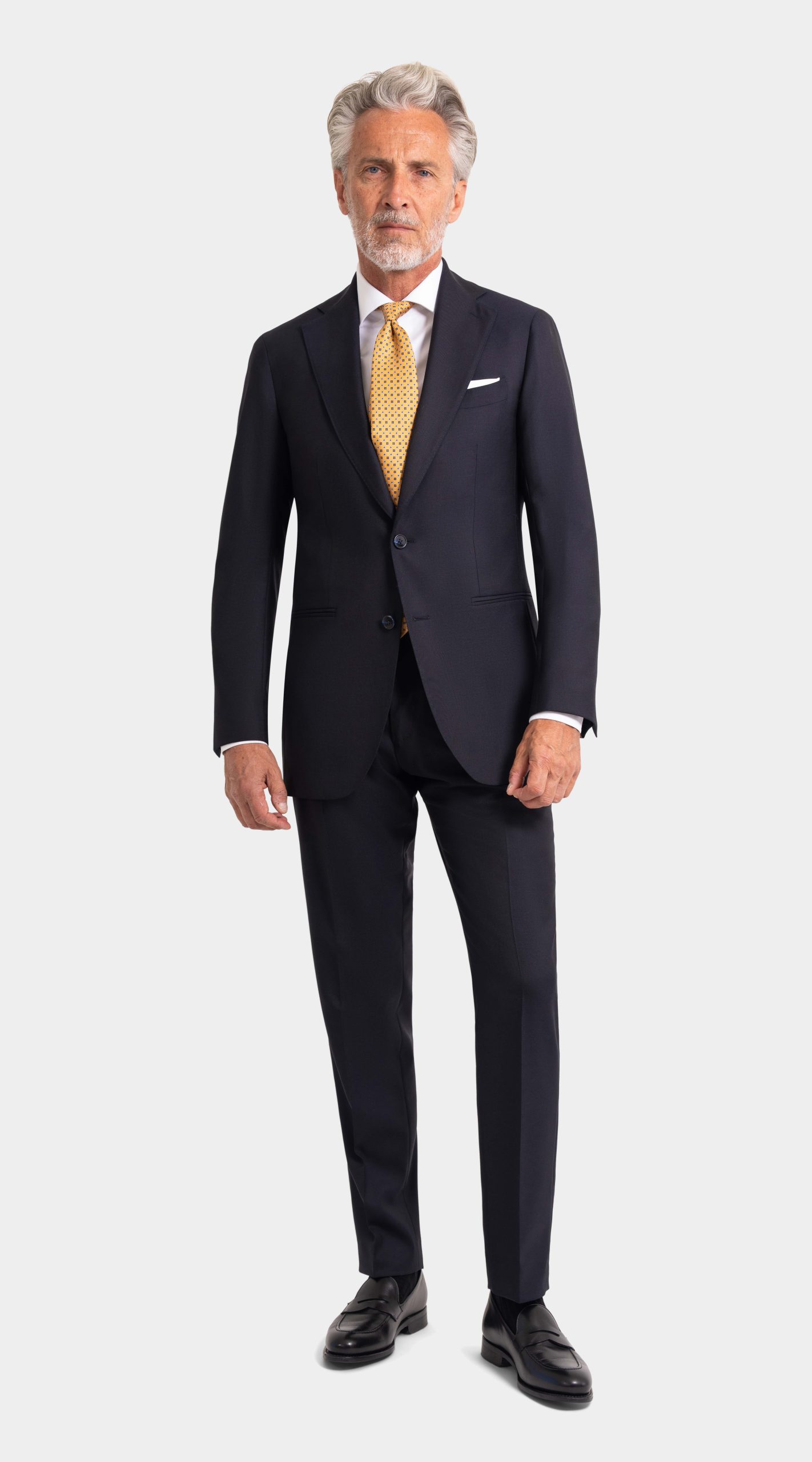 989 €
989 €Superior Wool Suit Collection: Dark Navy suit in an Italian Super 130’s wool, 310g fabric with perfect drape, durability, and a luxurious matte finish.
-
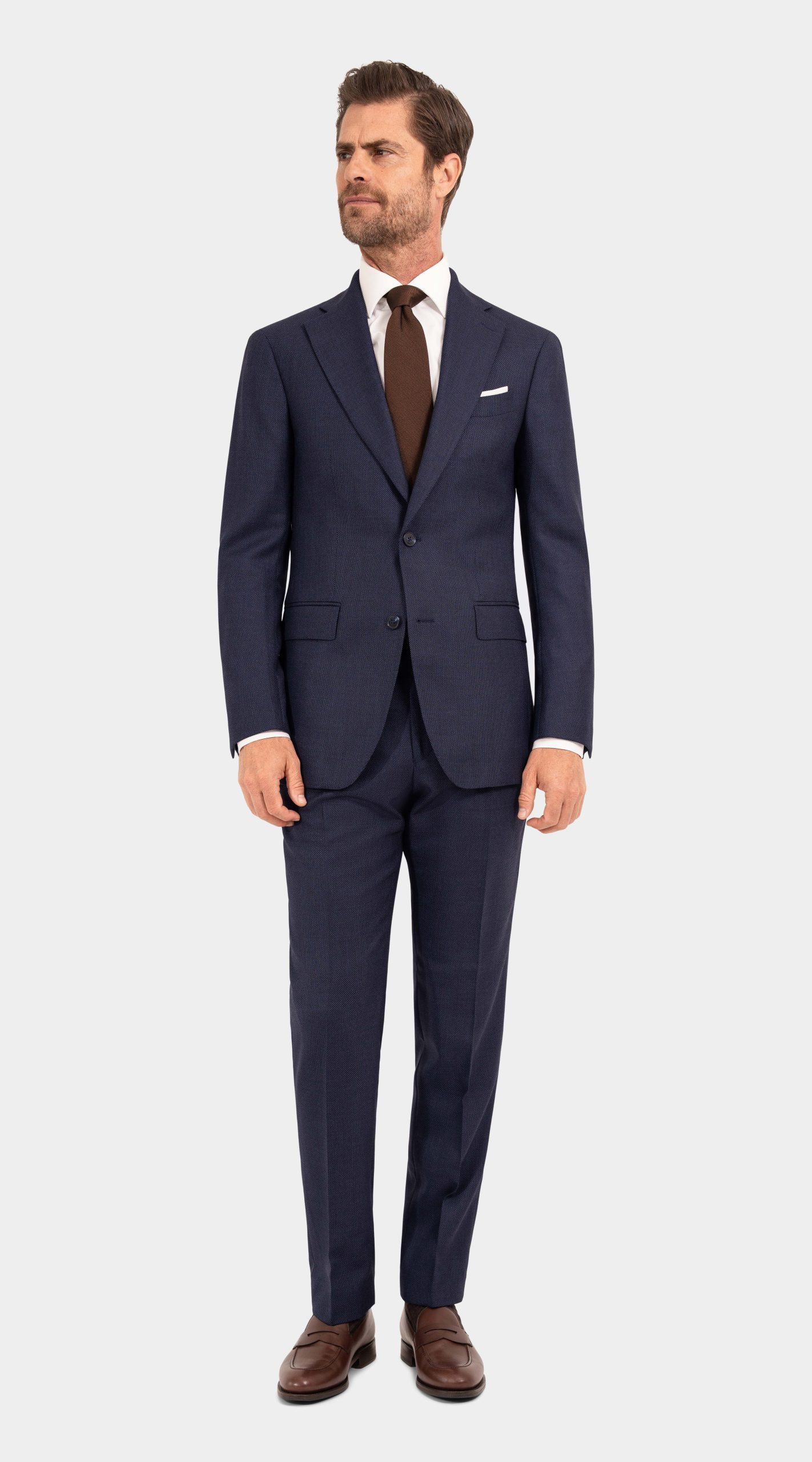 989 €
989 €Superior Wool Suit Collection: Navy Birdseye suit in an Italian Super 130’s wool, 310g fabric with perfect drape, durability, and a luxurious matte finish.
-
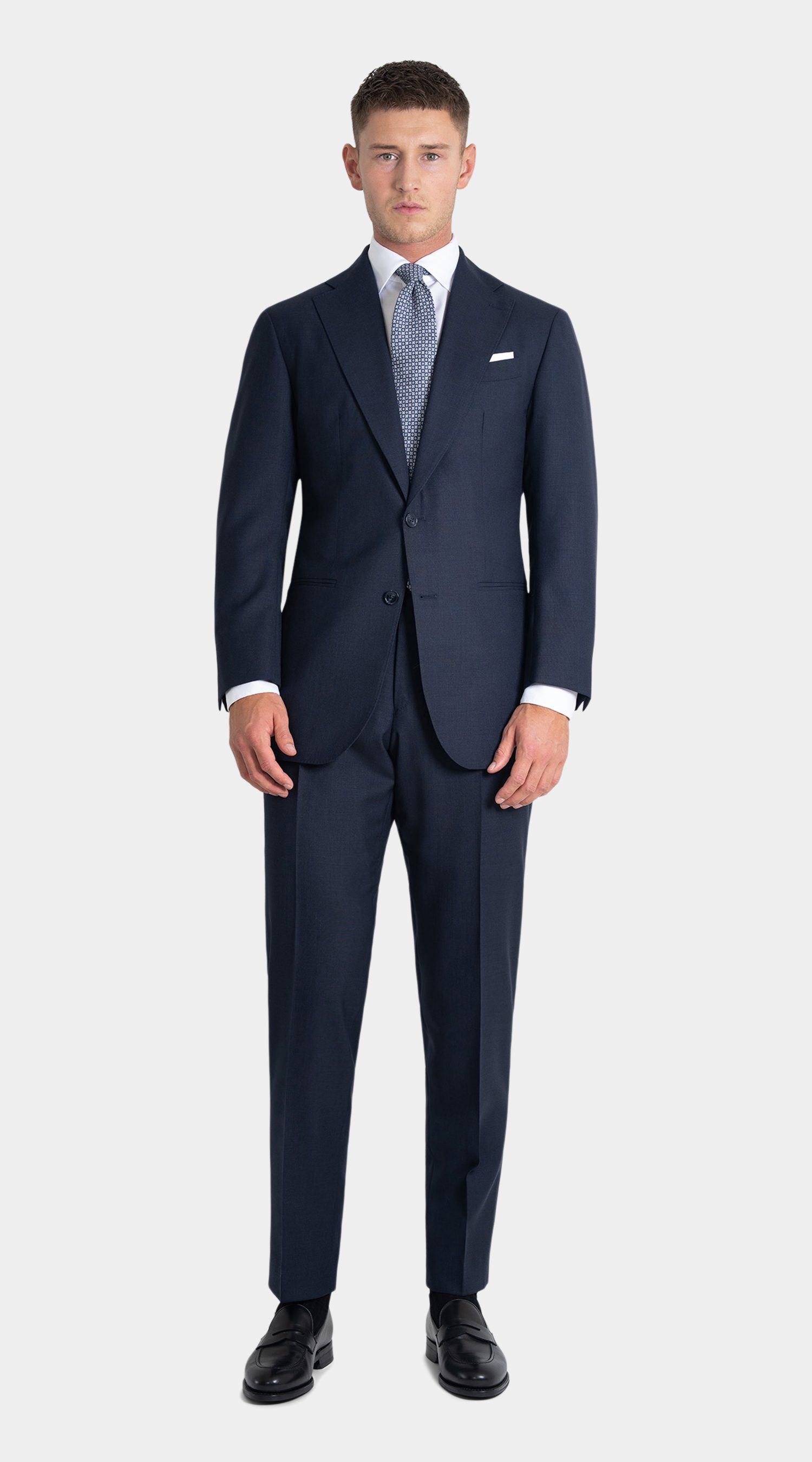 989 €
989 €Our Navy Blue Melange TwistAir Suit is always a winner. Our navy melange suit adds the perfect twist to the classic dark suit. By using three different thread colors, we have created a navy blue suit that stands out from the crowd while still meeting all the classic criteria of a traditional dark suit.


Wrapping Up:
Why Custom Tailoring is the Ultimate Choice
Custom tailoring and made-to-measure offer the best of both worlds—personalization, premium quality, and great value. While bespoke suits represent the pinnacle of luxury, they require a substantial investment of both time and money, and off-the-rack suits, although convenient, often lack the perfect fit. A well-crafted custom suit strikes the perfect balance, offering high-quality materials from some of the most renowned mills around the world, expert craftsmanship, and a truly tailored fit. With options like half or full canvas construction, and a wide range of premium fabrics, you get a product built to last. More importantly, you’re investing in something timeless, reducing waste in an industry flooded with fast fashion, while ensuring a garment that’s uniquely designed to match your style and stand the test of time. It’s a refined, sustainable choice that brings exceptional craftsmanship without compromise.