
The Art of Layering
The Art of Layering: How to Pair Custom Suits with Outerwear
In the realm of men’s style, few concepts are as essential yet nuanced as layering. For the gentleman who invests in bespoke tailoring, mastering the art of layering is crucial. It allows one to maintain elegance and comfort in all weather conditions without compromising the clean lines and silhouette of a finely tailored suit.
At Mond, we believe that true style lies not only in the suit itself but in how it is worn and complemented by outerwear. Layering is both a practical necessity and an opportunity to showcase refinement and personal style. Here, we explore how to pair custom suits with outerwear, ensuring that your bespoke wardrobe serves you impeccably, season after season.

Why Layering Matters
Layering is more than simply adding extra garments to protect against the cold. When done correctly, it preserves the suit’s silhouette, ensures comfort, and adds visual depth to your ensemble. In colder climates or transitional seasons, proper layering enables you to wear your bespoke pieces year-round without sacrificing style or fit.
Poorly chosen outerwear can ruin the lines of a custom suit, causing wrinkles, excessive bulk, or a mismatched aesthetic. A well-chosen coat, on the other hand, can enhance your tailored attire, creating a harmonious, sophisticated look that remains true to the elegance of bespoke clothing.
Essential Outerwear Pieces for Layering Over a Custom Suit
When selecting outerwear to pair with a custom suit, several key factors should be considered: fit, length, fabric, and overall style. Here are some timeless options that integrate seamlessly with bespoke tailoring.
The Overcoat
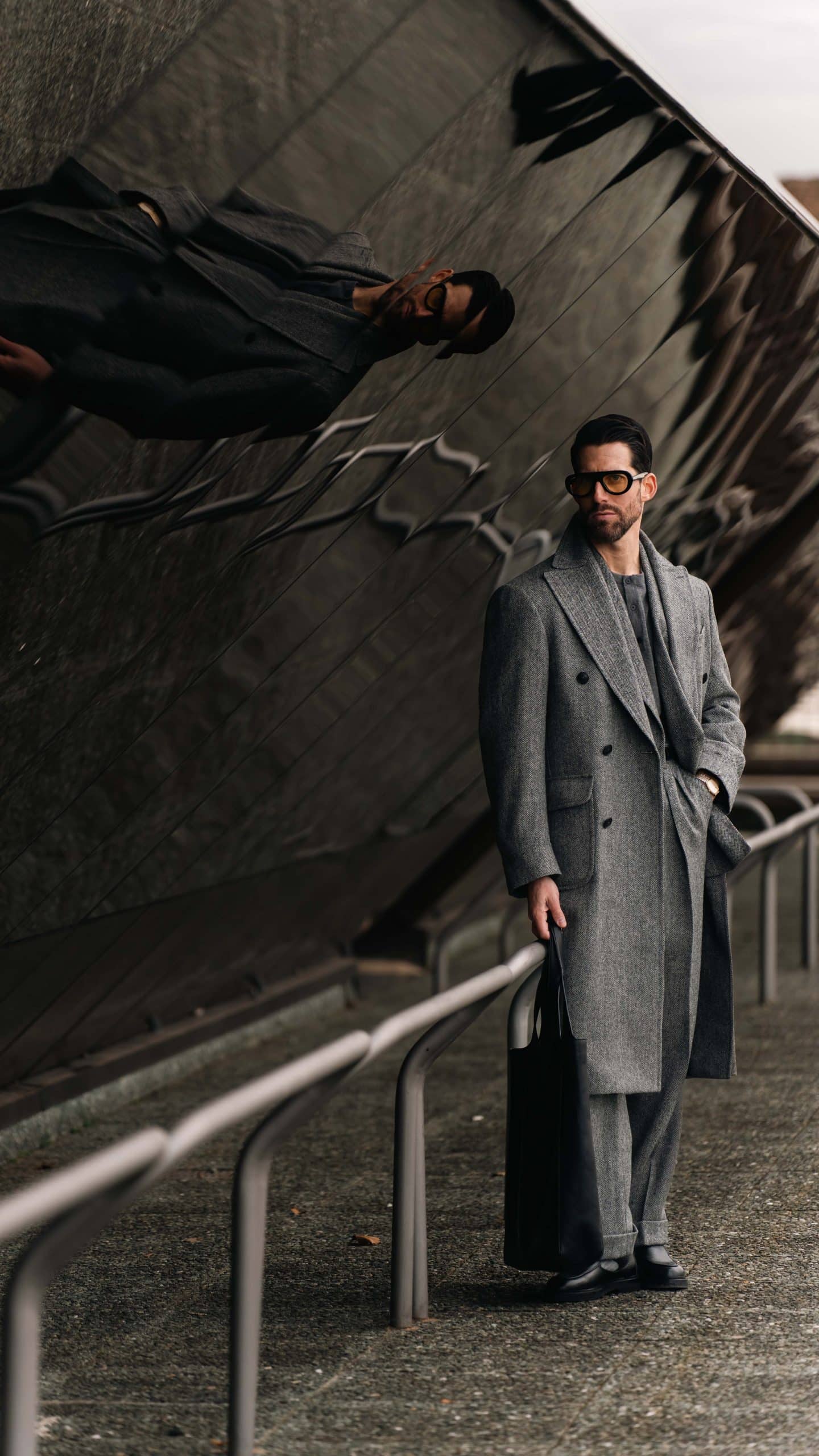
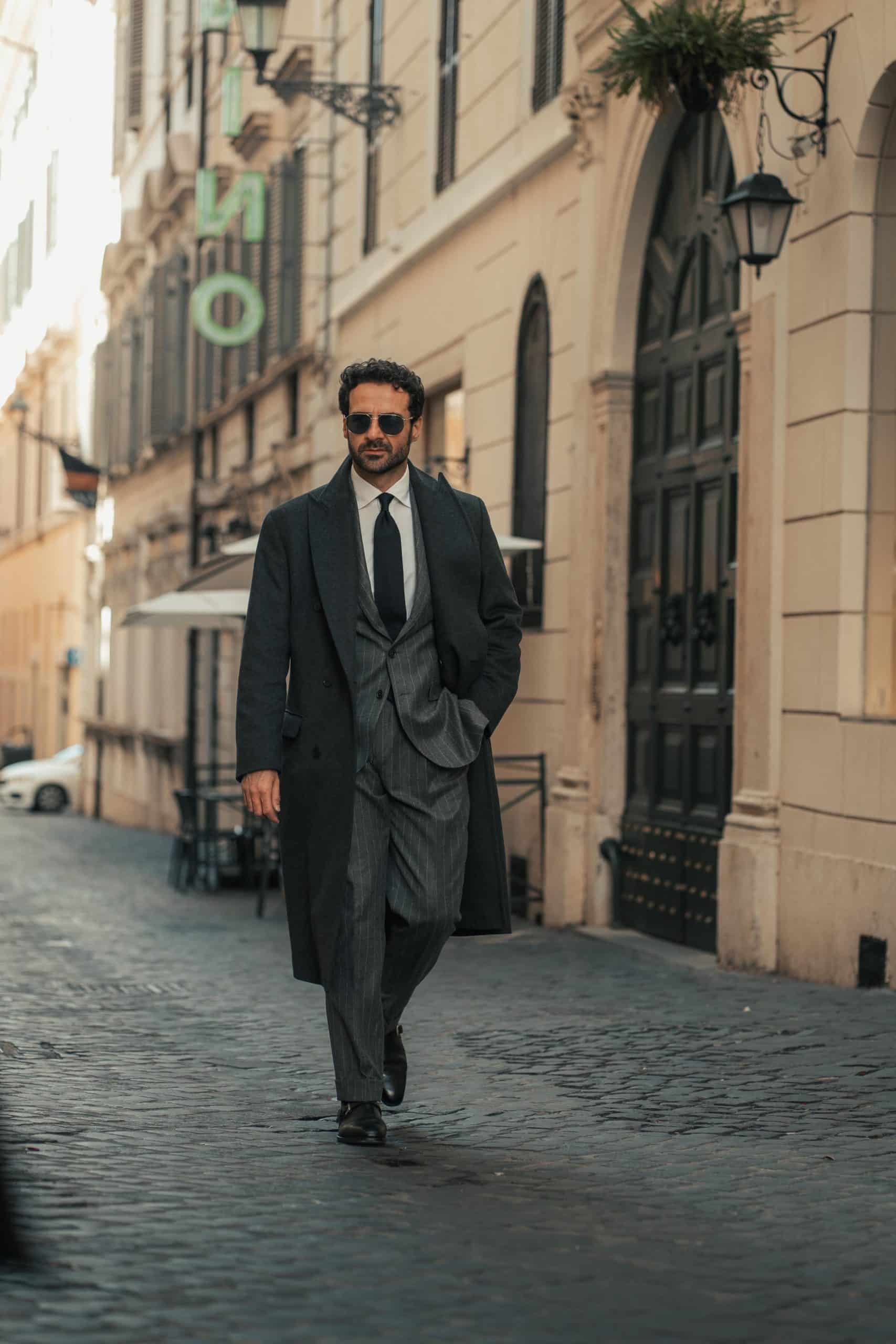
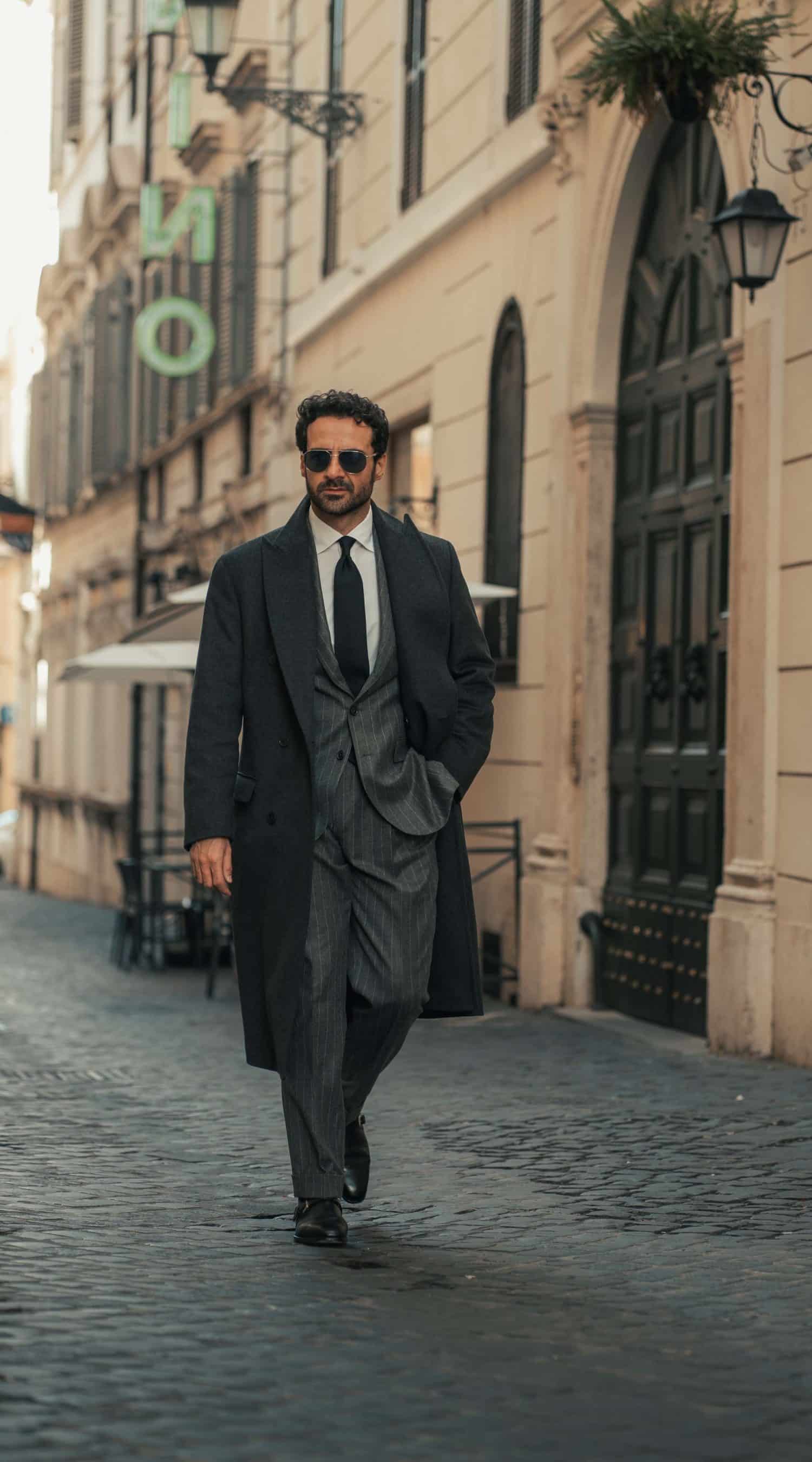
An overcoat remains the most traditional and elegant choice for wearing over a suit. Its longer length ensures that the suit jacket is fully covered, protecting the fine fabric underneath from rain, wind, and cold.
A well-tailored overcoat should fit comfortably over your suit without excessive looseness. Choose classic fabrics such as wool or cashmere in versatile colours like navy, charcoal, camel, or black. These shades complement most suit colours and provide understated sophistication. For those seeking subtle individuality, a bespoke overcoat allows customisation in lapel style, length, lining, and details, ensuring it harmonises perfectly with your existing wardrobe.
The Peacoat
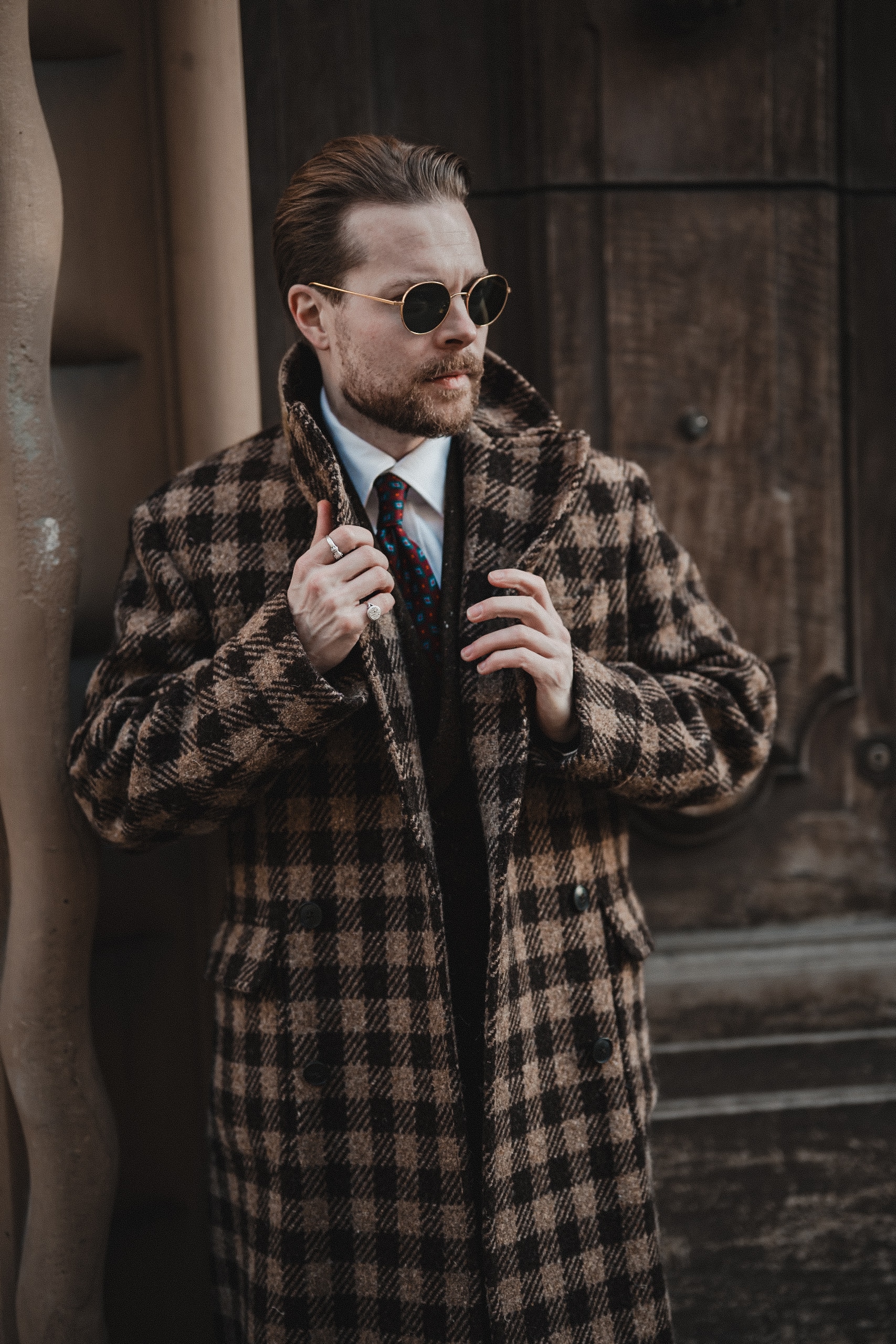
While shorter than an overcoat, a peacoat can still be worn over a suit, particularly for less formal occasions. Traditionally made of heavy navy wool, the peacoat is double-breasted, offering warmth and a sharp naval-inspired aesthetic.
For pairing with a suit, ensure your peacoat is long enough to cover the suit jacket entirely. Opt for a slim fit that allows enough room in the shoulders and chest for comfortable layering. While not suitable for very formal business settings, it is an excellent choice for smart-casual or business-casual environments.
The Trench Coat
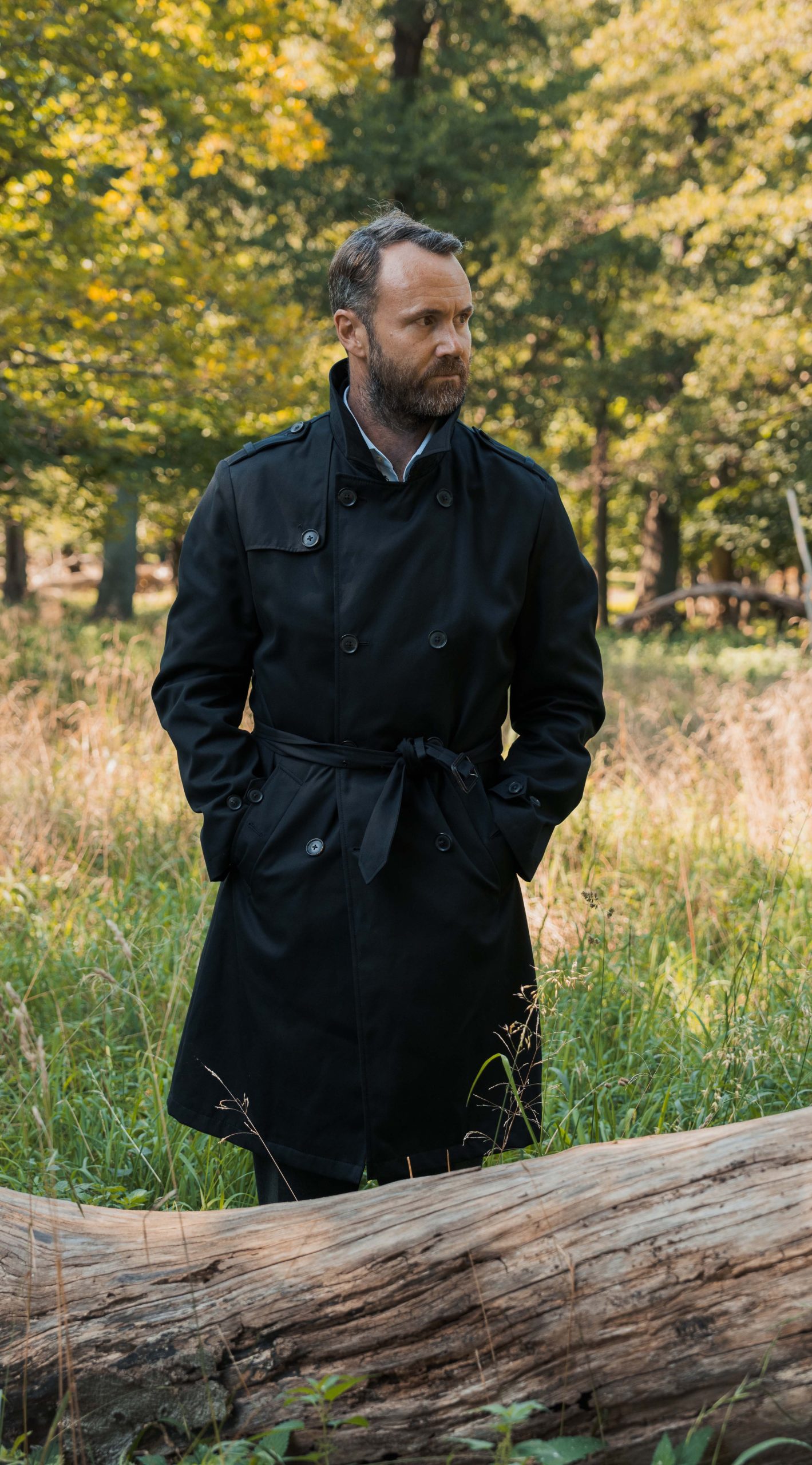
A trench coat is an excellent choice for transitional weather, offering protection from rain without heavy insulation. It is lightweight, typically mid-thigh to knee-length, and provides a clean, sharp silhouette that works well over a suit.
Classic trench coats in beige or navy are versatile and timeless. A properly fitted trench should be neither too tight nor excessively loose over your suit. Look for adjustable belts and cuff straps to help tailor the fit to your body, maintaining the elegant lines of your bespoke tailoring beneath.
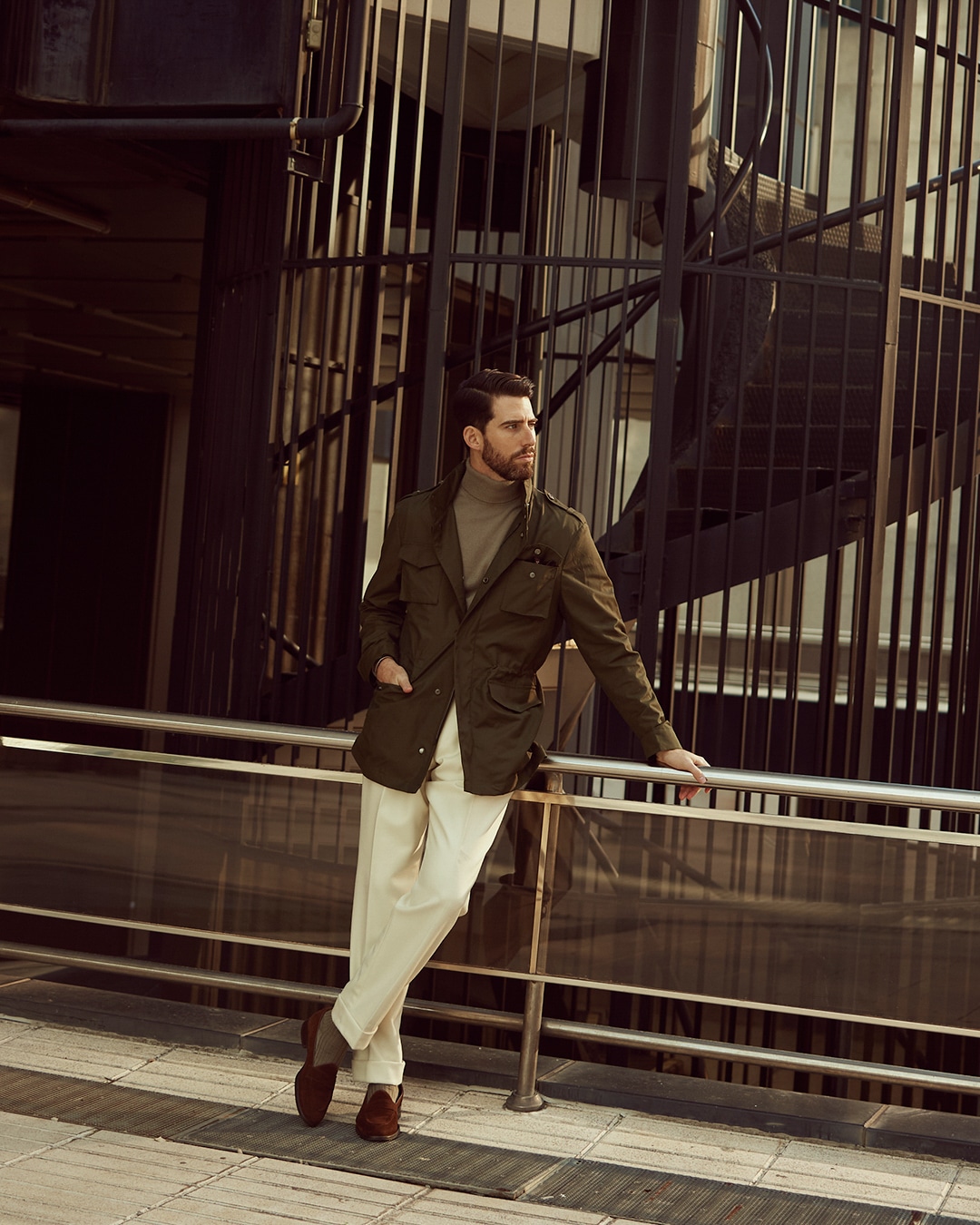
The Field Jacket
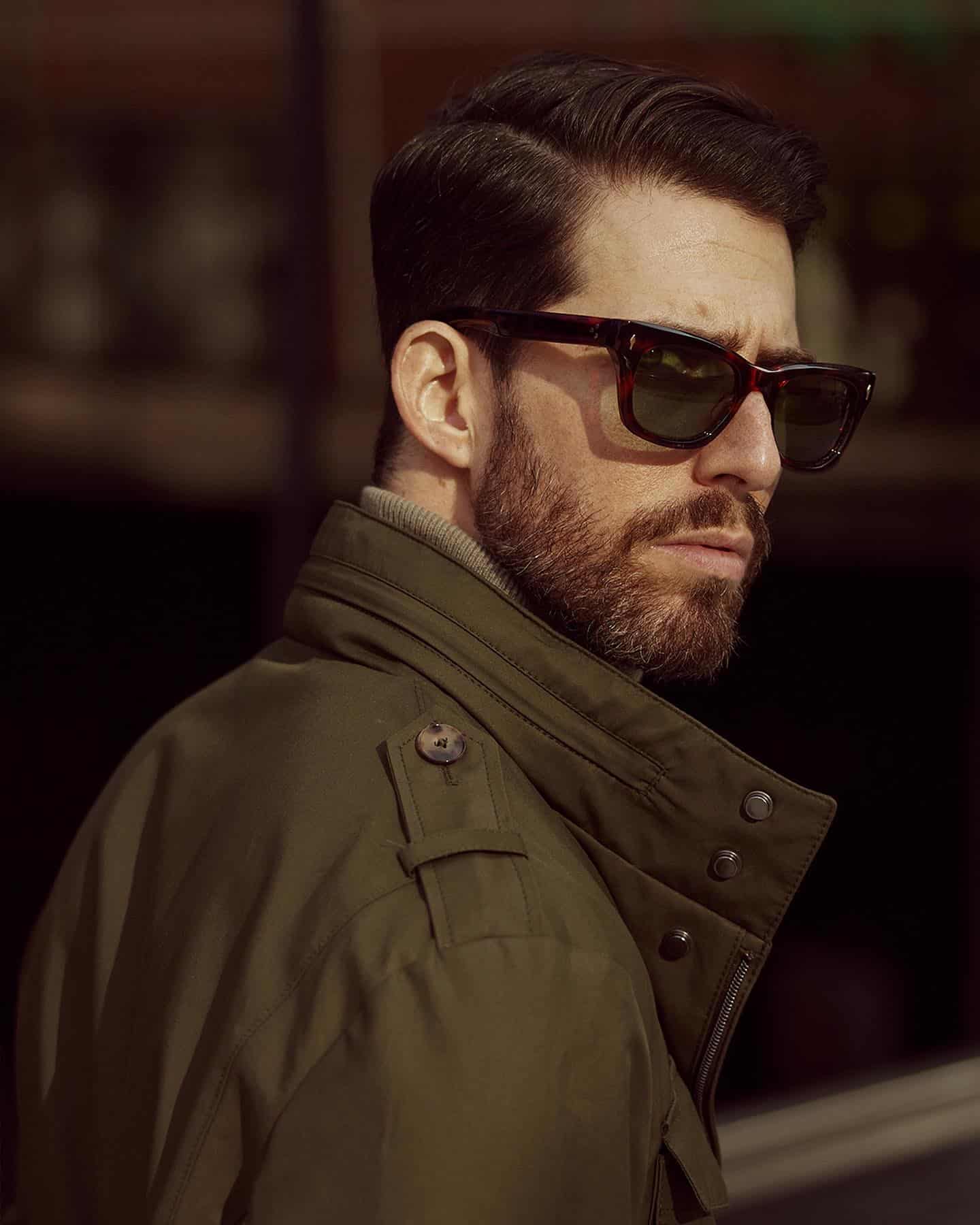
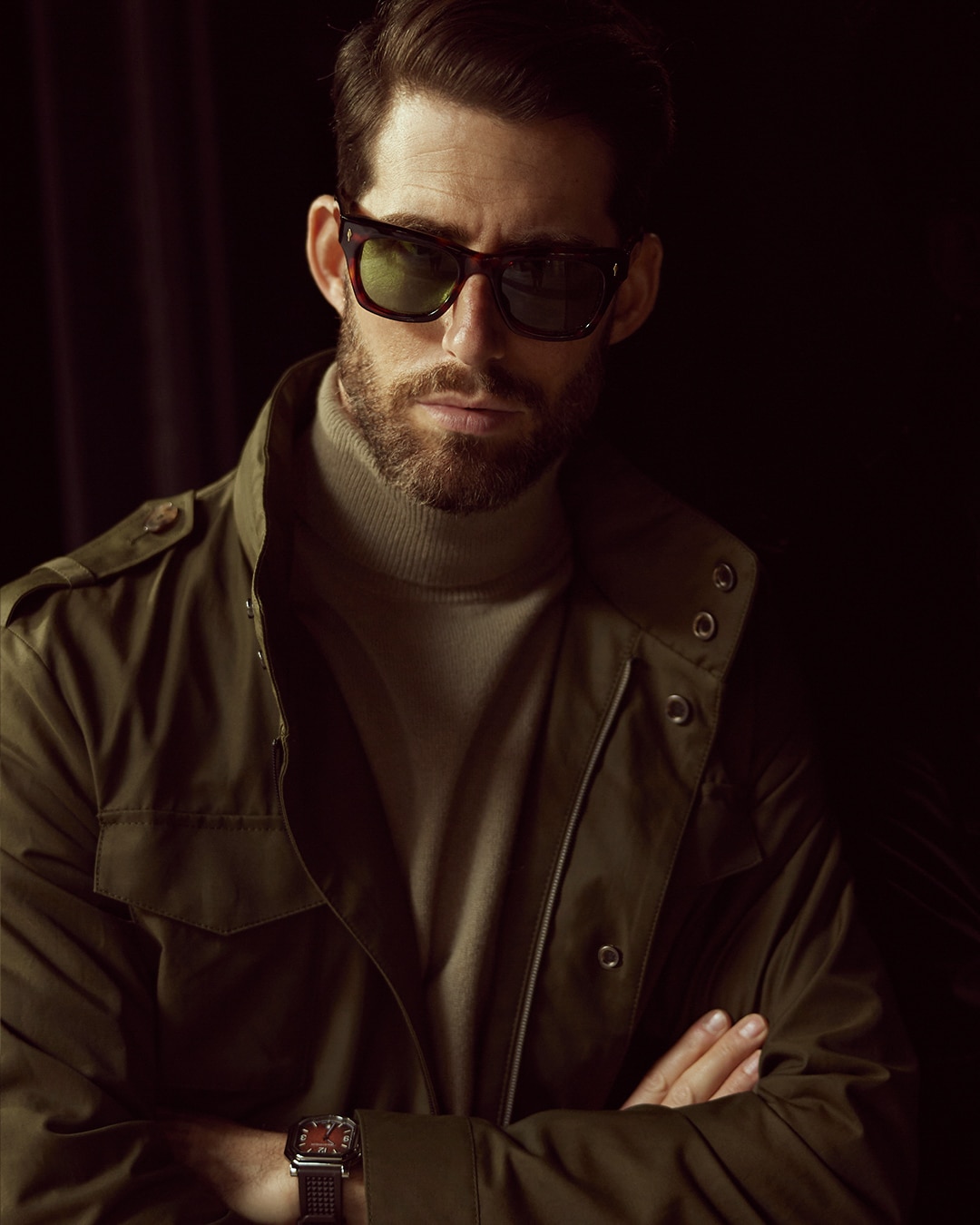
For more casual occasions, a field jacket offers a stylish yet relaxed alternative. Though less traditional than the overcoat, a field jacket crafted from quality materials can complement a suit in less formal settings.
Earth tones such as olive, brown, or navy work best, pairing well with many suit fabrics and colours. While field jackets are inherently casual, choosing a streamlined silhouette and avoiding excessive pockets or bulky detailing can maintain a refined appearance suitable for modern smart-casual wardrobes.
The Body Warmer
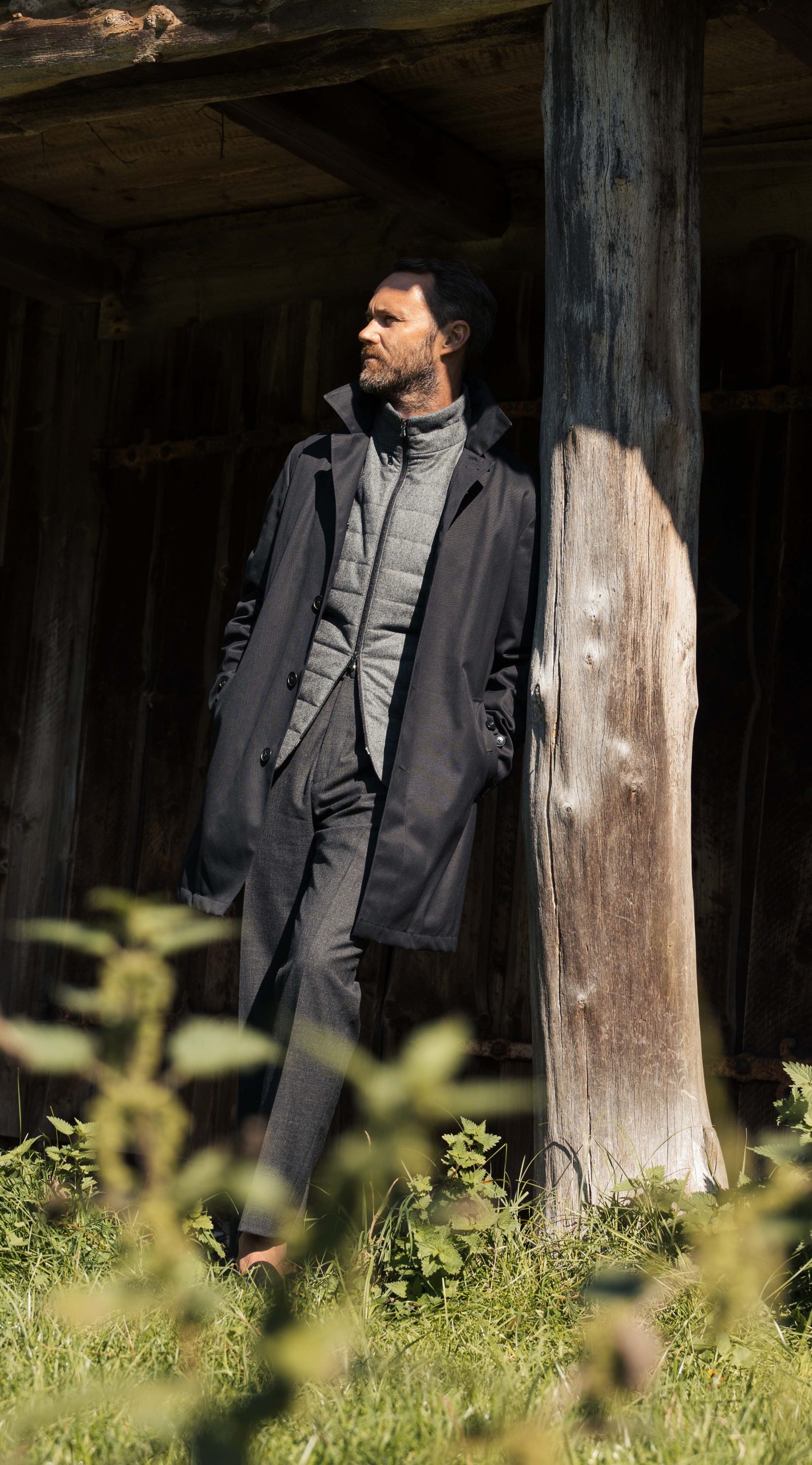
A body warmer, also known as a gilet, has become an increasingly popular layering piece for men who value both warmth and freedom of movement. While unconventional over a suit jacket, it can be worn beneath an overcoat for added insulation or over a suit in casual settings where a full coat might be unnecessary.
Select a slim-fit style in neutral shades for the most versatile use. Quilted versions add subtle texture and can lend a contemporary edge when layered thoughtfully. It is crucial, however, that the body warmer does not disrupt the suit’s structure or add excessive bulk.
-
 615,20 €
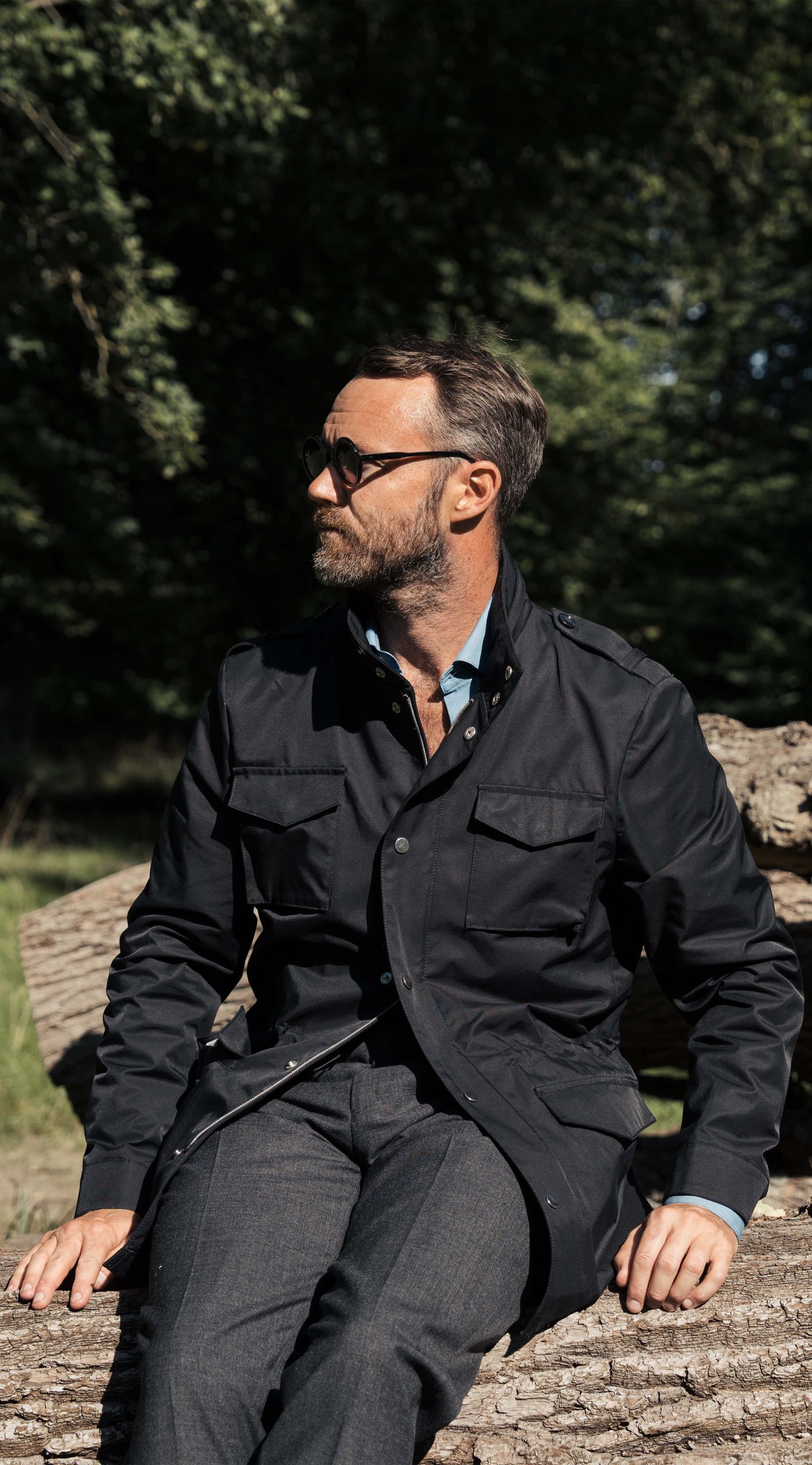
Introducing The Rain Repellent Field Jacket, featuring four front pockets, shoulder flaps, and a two-way zipper.
Our field jacket fabrics are made by Olmetex, a fabric mill in Como, Italy. This fabric is a 3-layer technical cotton and polyester blend that has undergone a special finishing process, making it water-resistant while ensuring strength and durability for practical wear. This results in excellent wind resistance and insulation.
This garment is tailored to your measurements and you can customize it as follows:
- Zipper color: Your choice
- Lining color: Your choice
- Monograms: Add them on the top of the lining at the back
- Available in the following colors: Black, Navy and Olive.
As with all our outerwear, the fabric is produced sustainably, free from harmful chemicals.The following details are standard on the field jacket:
- Shoulder straps: With shoulder straps
- Closure style: zip closure with hidden snaps -
 639,20 €
This Wool blend overcoat fabric encapsulate everything we want in a coat. Weight, drape and touch is outstanding and makes some of the finest cloth.
-
 399,20 €
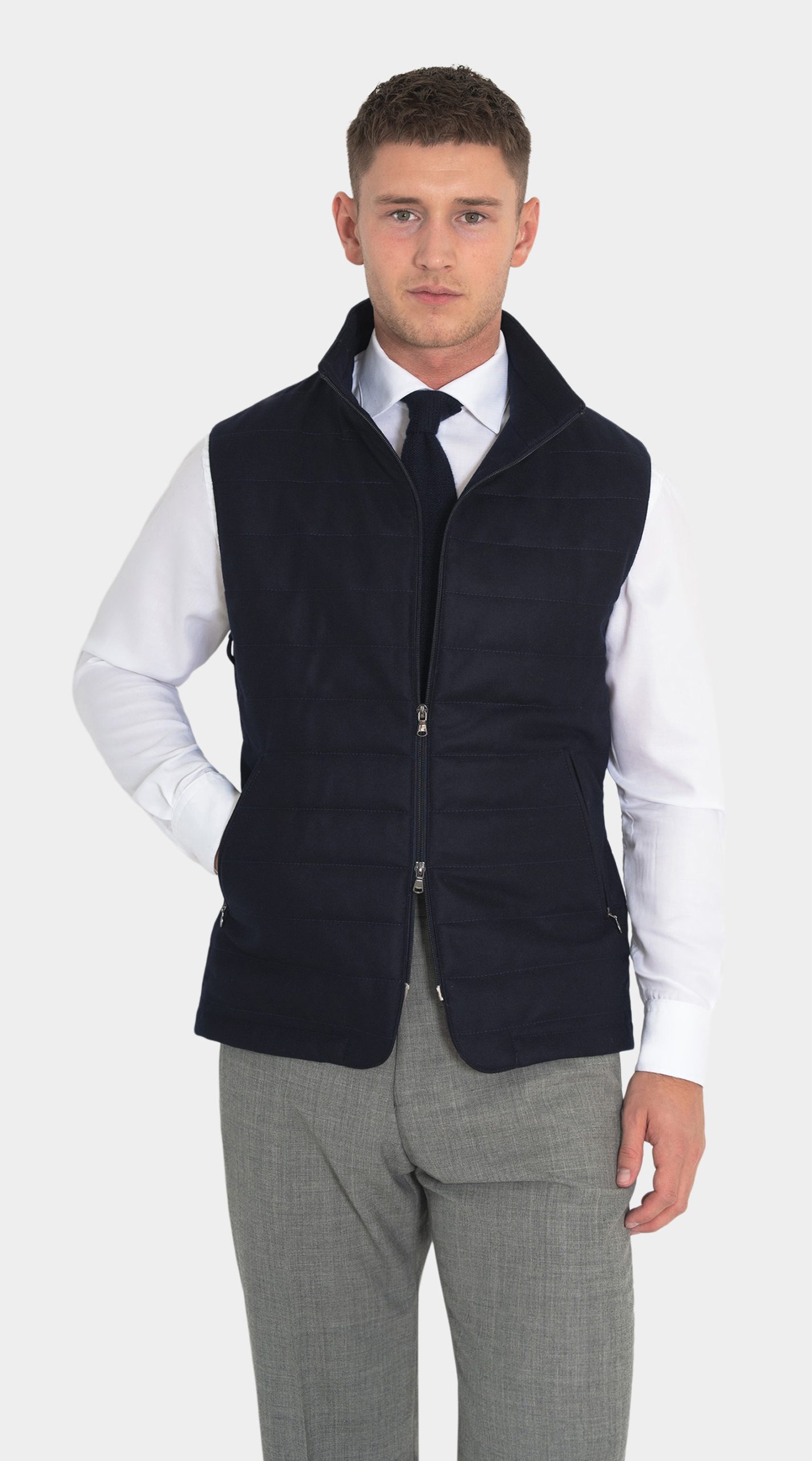
Introducing the newest addition to our collection: The Bodywarmer.
Our bodywarmers are crafted from heavy flannel, a warm, durable, and comfortable fabric with a subtle texture. They feature a two-sided zipper, allowing you to easily adjust the front look. On each side, there is a strap which offers flexibility for tailoring the fit around your waist.The bodywarmer is custom made to your measurements, and you have the freedom to adjust the details to suit your preferences. You can opt for a square collar, as seen in the picture, or choose a rounded one. The lining and zipper colors can also be selected to your liking. For a personal touch, consider adding an embroidered monogram to the lining. We offer a variety of fabrics and colors to choose from.
Styling is a breeze - the bodywarmer serves as an ideal layering piece year-round. You have numerous options, from pairing it with t-shirts, shirts, and knitwear to teaming it with your favorite suit trousers, denim or chinos.



How to Layer Without Sacrificing the Suit’s Fit
A bespoke suit is tailored to follow the lines of the body precisely. Adding layers risks disturbing this clean silhouette. To avoid compromising your suit’s fit:
-
Choose outerwear that has been sized to accommodate a suit beneath. An overcoat, for example, should have slightly more room in the chest and shoulders than a casual coat worn over knitwear alone.
-
Opt for high-quality fabrics with structure but not excessive stiffness, ensuring the coat drapes elegantly over the suit.
-
Keep inner layers thin. For instance, select lightweight merino wool sweaters instead of thick knitwear if layering beneath your suit jacket.
-
Avoid overloading pockets with bulky items, which can distort the lines of both suit and outerwear.
By considering these details, you ensure that the bespoke elegance of your suit remains undiminished, even in layered ensembles.
Layering for Different Occasions
Understanding the context in which you are dressing is essential when layering outerwear over a suit.
-
Business Settings: An overcoat or trench coat in neutral colours maintains formality and elegance. Accessories such as scarves in fine wool or cashmere add warmth without compromising professionalism.
-
Casual or Smart-Casual Settings: A peacoat or field jacket offers a slightly more relaxed appearance while still preserving the sophistication of a suit.
-
Travel: Lightweight trench coats or body warmers provide practicality without unnecessary bulk, ensuring comfort in changing climates.
Each layering choice should reflect the event, environment, and personal style of the wearer.

Investing in Bespoke Outerwear
For those who value a seamless aesthetic, bespoke outerwear offers an ideal solution. A custom overcoat, trench, or even field jacket can be designed to coordinate perfectly with your suits, matching shoulder structure, lapel styles, and precise measurements.
At Mond of Copenhagen, we believe that outerwear should be as meticulously crafted as the garments it protects. Investing in bespoke outerwear ensures not only superior fit and comfort but also the satisfaction of wearing a piece created expressly for you.
Frequently Asked Questions
Can I wear an overcoat over my bespoke suit without ruining the fit?
Yes. An overcoat should be tailored to fit comfortably over your suit, allowing room through the chest and shoulders without excessive bulk. A bespoke overcoat ensures a precise fit that complements your suit’s silhouette.
Is a trench coat formal enough to wear over a suit?
A trench coat in a classic colour such as beige or navy is perfectly suitable for wearing over a suit, particularly during transitional seasons. It offers protection from rain while maintaining a sharp, elegant appearance appropriate for business or formal settings.
Are peacoats appropriate for wearing over a suit?
Peacoats can work over a suit for smart-casual or business-casual occasions, but they are generally less formal than overcoats. Ensure the peacoat fully covers your suit jacket and choose a slimmer fit for a clean silhouette.
How should I layer if I want to avoid bulk under my suit?
Select thin, high-quality fabrics for inner layers, such as lightweight merino wool. Avoid thick sweaters or bulky scarves that could distort the suit’s shape. Ensure your outerwear is tailored with sufficient room to accommodate the suit beneath without constriction.
Should outerwear match my suit colour?
Outerwear does not have to match your suit exactly, but choosing neutral or classic colours like navy, grey, black, or camel ensures versatility. A bespoke outercoat can be customised in colour and details to coordinate seamlessly with your bespoke suits.