
Business Casual
In the modern office, business casual attire strikes a balance between professional and relaxed. It’s less formal than a full suit, but more polished than jeans and a t-shirt. One versatile piece gaining popularity in stylish business casual wardrobes is the bodywarmer (also known as a gilet or vest). A bodywarmer is essentially a sleeveless jacket that provides warmth and layering depth without the rigidity of a blazer. Incorporating a high-quality bodywarmer into your outfit can add both practicality and a touch of sartorial flair, helping you stay comfortable and look refined in a business casual setting. Below, we’ll explore how to integrate this piece into your wardrobe, why quality matters, and how it can enhance your overall appearance.
Understanding Business Casual and Where a Bodywarmer Fits
Business casual for men typically means pairing items like chinos or tailored trousers with collared shirts, sweaters, or sport coats, while forgoing the full formal suit and tie. The goal is to appear professional yet approachable. Optional layers are a hallmark of business casual – for example, you might wear a dress shirt under a light sweater or a blazer over an open-collar shirt. This is where a bodywarmer comes in as an ideal layering piece.
A bodywarmer is sleeveless and often lightweight, designed to keep your core warm without restricting arm movement. In a business casual ensemble, it can replace a sport coat on more casual days or serve as an insulating mid-layer on colder days. For instance, on a crisp fall day, you might wear a dress shirt, tie optional, with a wool bodywarmer on top, combined with chinos and loafers – achieving a look that’s both professional and relaxed. The bodywarmer adds a bit of visual interest and texture, signalling that you have a sense of style while still respecting the office dress code.
Importantly, not all vests are equal in this role. Casual puffer vests (the kind meant for outdoor sports) might be too rugged or bulky for a polished office look. Instead, opt for a tailored bodywarmer made from refined materials like wool, flannel, or quilted cotton. These have cleaner lines and a slimmer profile, complementing dress shirts and trousers nicely. High-quality fabrics also breathe better and look more luxe, aligning with the “good quality” aspect that discerning professionals seek. In essence, a bodywarmer designed for smart casual wear can seamlessly blend into your business casual lineup, offering comfort without sacrificing style.
As a man, you should focus on elongating your lines. One key factor is the length of the trousers, and another is the rise. By getting these two elements right, you can significantly enhance your overall appearance, something that can only truly be achieved with tailored trousers.
The Benefits of a Quality Bodywarmer
How to Style a Bodywarmer in Business Casual Outfits
One of the strengths of a bodywarmer is how easily it integrates with typical business casual staples. Here are some styling ideas and guidelines to make the most of this garment:
-
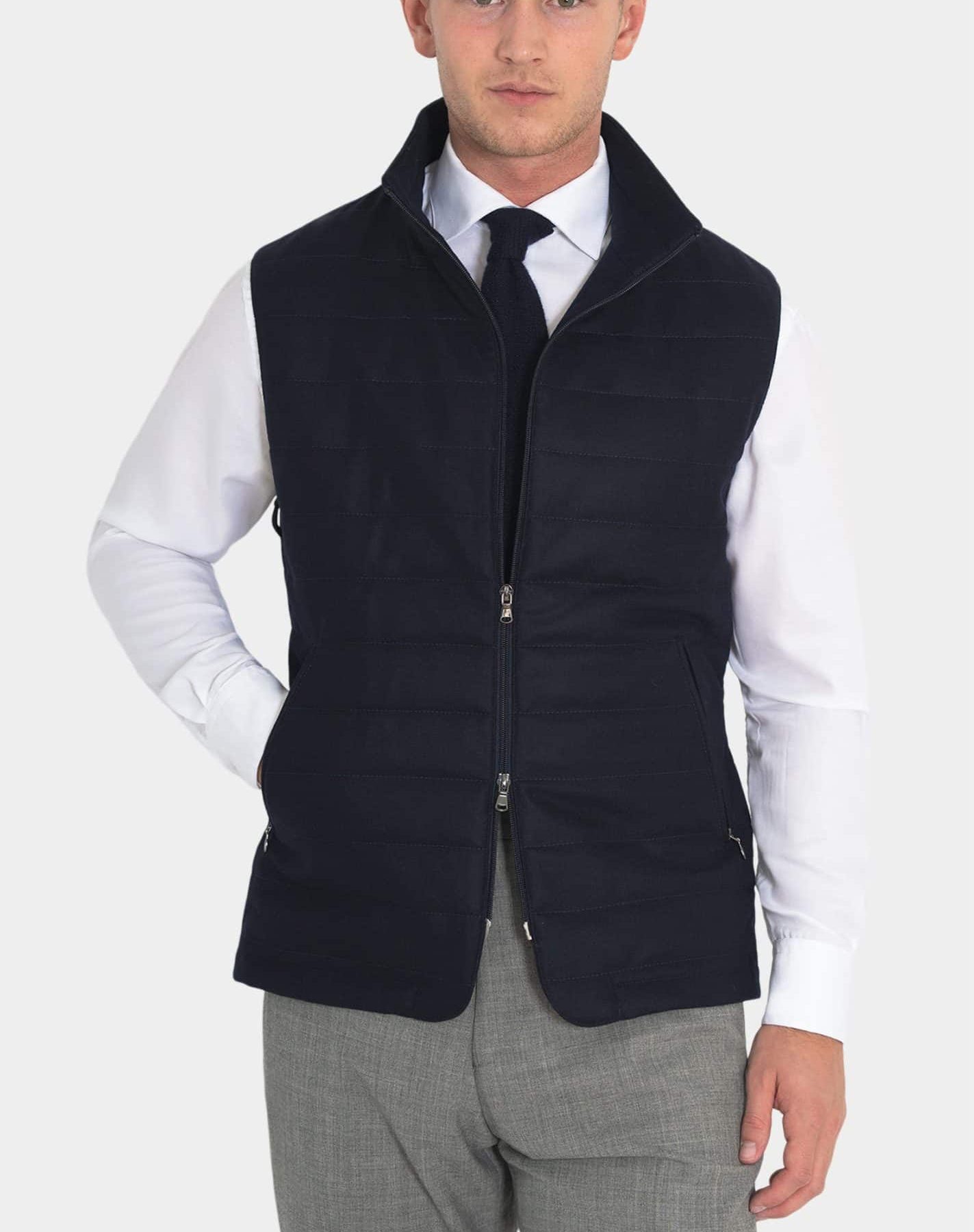
Over a Dress Shirt: The simplest way to incorporate a bodywarmer is to wear it over a crisp long-sleeve dress shirt. This combination is a go-to look for many, especially in environments where a full blazer might be too formal or restrictive. For example, pair a navy wool bodywarmer with a light blue or white shirt, and add beige chinos and brown loafers or brogues. This creates a polished outfit suitable for most offices. The bodywarmer in this case takes the place of a sport coat, giving you a structured look but with a bit more ease. You can leave the shirt collar open for a relaxed vibe, or add a knit tie if you want a dash more formality. As seen in style observations, “men’s gilets pair perfectly with shirts, making for an ideal mid-season outfit on milder days… as frequently spotted in city finance districts – gilets and smart shirts are a match made in heaven.” In other words, this look has been embraced from tech startups to more traditional offices as a smart business casual uniform.
-
Layered with Knitwear: For cooler days or just for variety, try layering your bodywarmer over a thin sweater or turtleneck. A classic combo is a grey or navy sleeveless vest over a fine-gauge merino wool sweater (crewneck or turtleneck) worn with wool trousers. This adds warmth and a rich mix of textures – the knit, the flannel of the vest, the wool trouser – yet stays within a professional palette. Ensure the sweater is not too bulky; lightweight knits work best so that the vest can zip comfortably. You can also do a shirt + sweater + bodywarmer layered trio: for example, a white Oxford shirt, under a burgundy V-neck sweater, topped with a navy bodywarmer. This not only keeps you very warm in winter, but also creates a refined layered look perfect for business casual settings that lean a bit dressier. Just keep the colors complementary and muted (earth tones and neutrals are easiest to coordinate). A tip from style experts: when layering a vest over a zip-neck or high-collar sweater, zip the vest up just slightly lower than the sweater’s collar zip, and fold both collars over neatly this creates a clean, intentional layered collar effect.
-
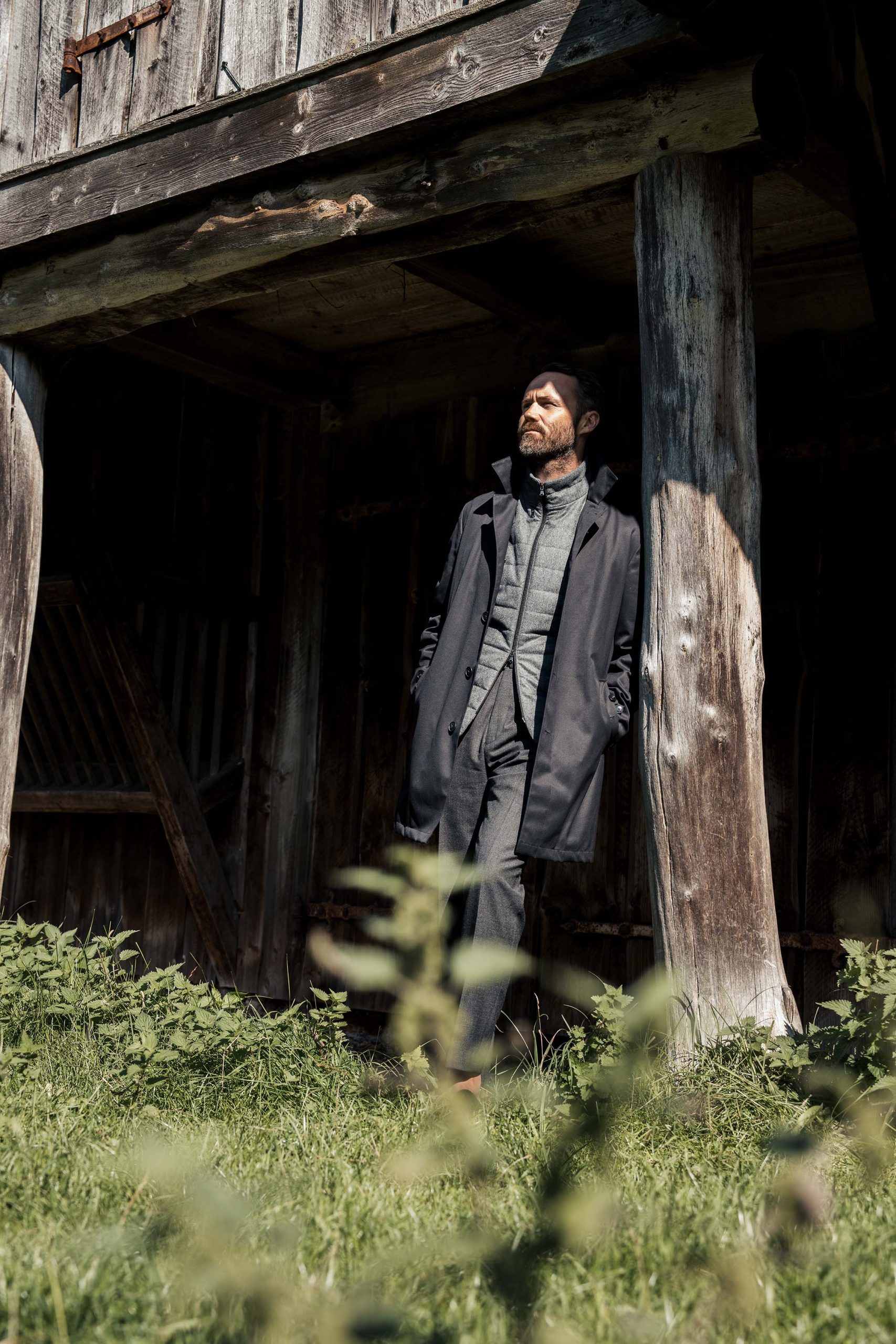
With Casual Jackets: On days when you do wear a blazer or sport coat, a very thin bodywarmer can sometimes be worn underneath it as a mid-layer (provided the vest is lightweight and the jacket is cut generously enough). More commonly, though, the bodywarmer can be an outer layer over a casual unstructured blazer. For instance, a trend in some sartorial circles is wearing a lightweight down gilet over a suit or jacket for commuting. For business casual, you could wear a tweed or unlined cotton blazer and throw a complementary-color bodywarmer on top when stepping outside then remove the vest in the office. However, if you plan to keep the vest on indoors, it usually replaces the jacket entirely, to avoid looking over-layered. A bodywarmer also pairs well with more casual outerwear like a field jacket or trench coat, serving as an insulating lining of sorts. This flexibility makes it a great travel piece you can adapt to weather by adding or removing it as needed, without losing the polished look.
-
Pairing with Trousers: What you wear on your lower half matters too. Bodywarmers work best with chinos, dress trousers, or dark denim (if your office allows jeans). The general rule is to maintain a smart look so if you do jeans, choose a dark wash, straight or tailored fit with no distressing, to keep it business appropriate. Chinos in classic colors (khaki, navy, olive, gray) are perfect partners. You can tuck your shirt in and wear a belt as usual; the vest will partially cover the belt area, which can actually result in a cleaner visual line (especially helpful if you want to hide a bit of midsection). If your vest is a neutral color like navy, you can be a bit more adventurous with trouser colors or patterns (e.g., burgundy chinos or grey plaid pants) since the vest will tone down the ensemble. Conversely, if your bodywarmer has a standout color like a rich tan or olive green, keep the pants more classic. One style suggestion from experts: “wear gilets with jeans or chinos for a streamlined silhouette, so that the focus remains firmly on your upper half and bodywarmer”. This emphasizes that a bodywarmer naturally draws the eye upward, which can be flattering and also means you can keep the bottom simple.
-
Color Coordination: Treat your bodywarmer like you would a jacket or sweater in terms of color coordination. Neutral shades (navy, black, gray, tan) are easiest to integrate and tend to look the most professional. Navy, for example, pairs with almost any shirt and trouser combination you’d wear white shirt/gray pants, blue shirt/beige chinos, etc. Grey is similarly versatile. Tan or olive can add a bit more visual interest while still being office-friendly, especially in autumnal outfits. If you want a bit of pop, some might choose a vest in a subtle plaid or herringbone pattern (in muted tones) just ensure the rest of your outfit is solid to avoid clashing. And generally, avoid very bright or neon colors for office vests; those are more the realm of sporty casual wear. A tasteful two-tone interior lining or a slight contrast piping is fine if it’s a custom piece (something you enjoy personally when putting it on), but outwardly the vest should contribute to a cohesive color story in your outfit, not steal the show entirely.
-
Dress it Up or Down: The beauty of a bodywarmer in a business casual context is its adaptability. Have a casual Friday or a more relaxed office? You might wear a checked button-down shirt, leave it open-collar, add the bodywarmer and some well-fitted dark jeans with chukka boots – a blend of casual and polished. For a slightly more formal meeting, that same vest could be layered over a crisp shirt with a tie, worn with wool slacks and Derbies, giving an ensemble that is just a notch below a suit in formality. Pay attention to the footwear and accessories to fine-tune the formality: sneakers would dress it down, leather shoes or loafers dress it up. A bodywarmer by itself is neutral – it can lean casual or dressy based on context. It’s up to you to balance it with the right supporting pieces.
In all these styling scenarios, the key is that a bodywarmer adds dimension and can either complement or replace other layers. It offers a modern, slightly European-inspired touch (since gilets have been popular in European menswear for years) to a business casual wardrobe. By choosing a high-quality vest and pairing it thoughtfully, you demonstrate an attention to style that goes beyond the basics, which can subtly set you apart in a professional setting.
-
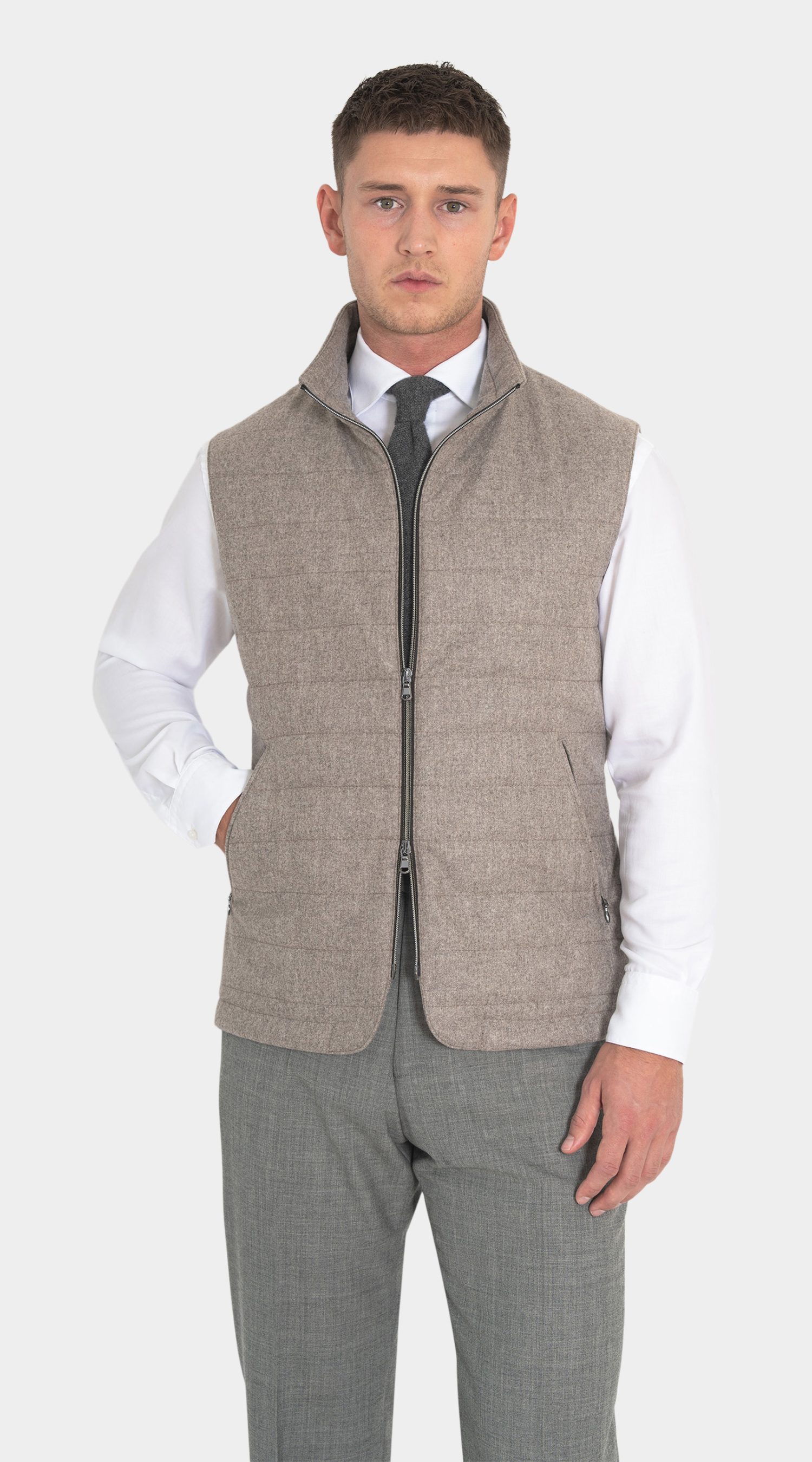 499 €Introducing the newest addition to our collection: The Bodywarmer. Our bodywarmers are crafted from heavy flannel, a warm, durable, and comfortable fabric with a subtle texture. They feature a two-sided zipper, allowing you to easily adjust the front look. On each side, there is a strap which offers flexibility for…
 -
 499 €
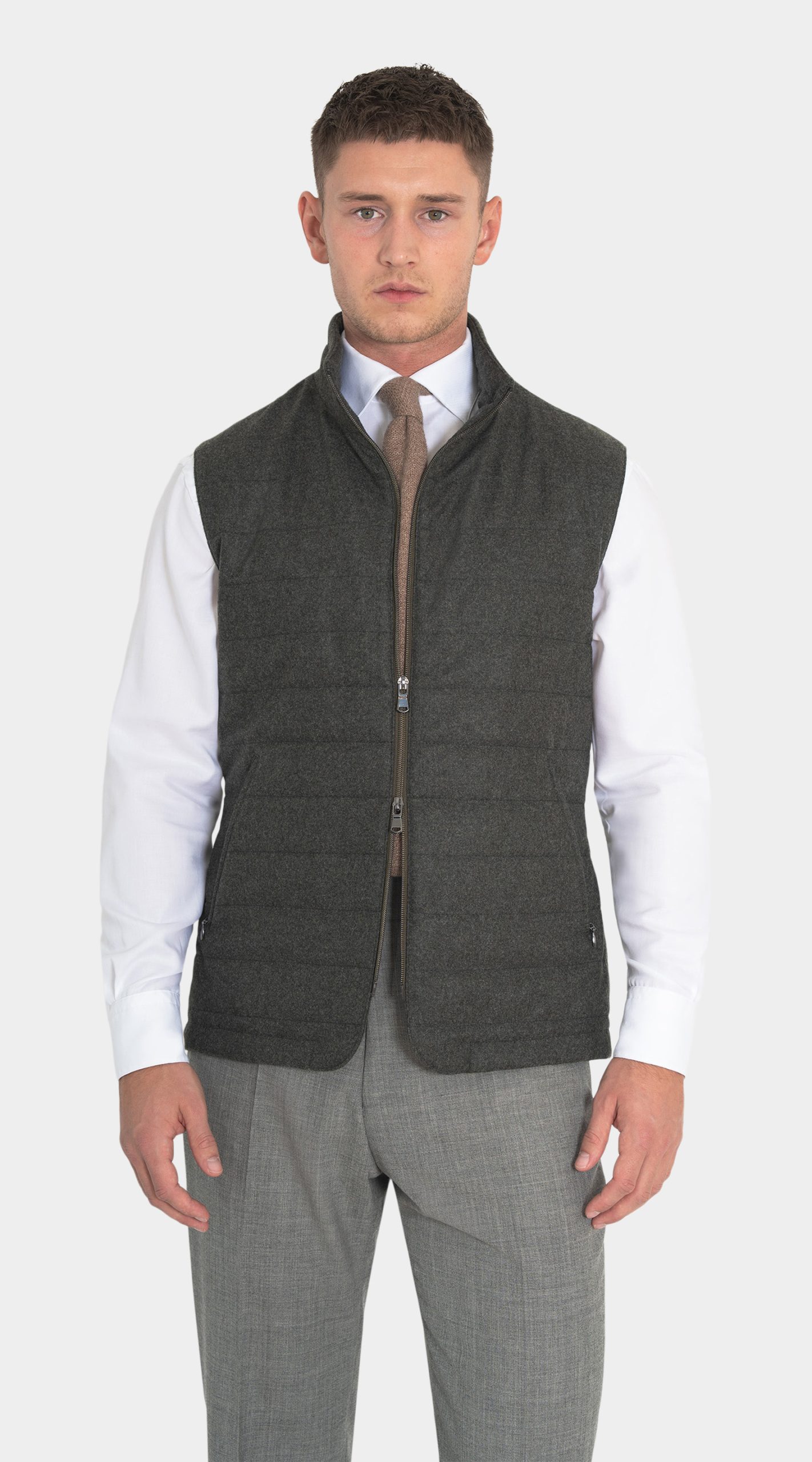
499 €Introducing the newest addition to our collection: The Bodywarmer.
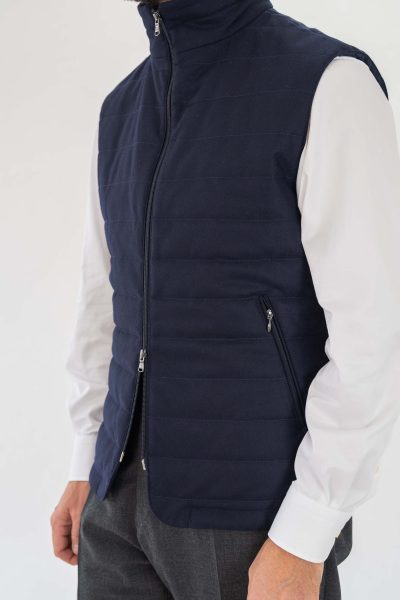
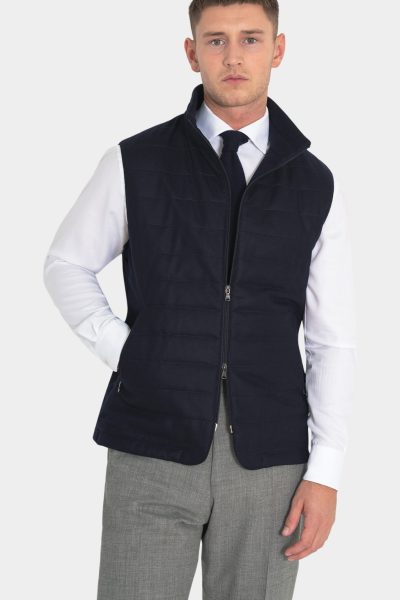
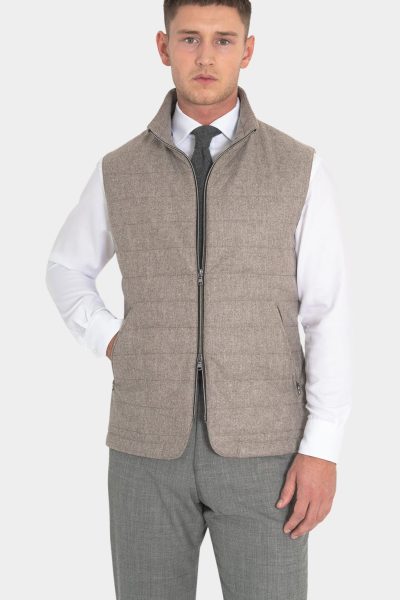
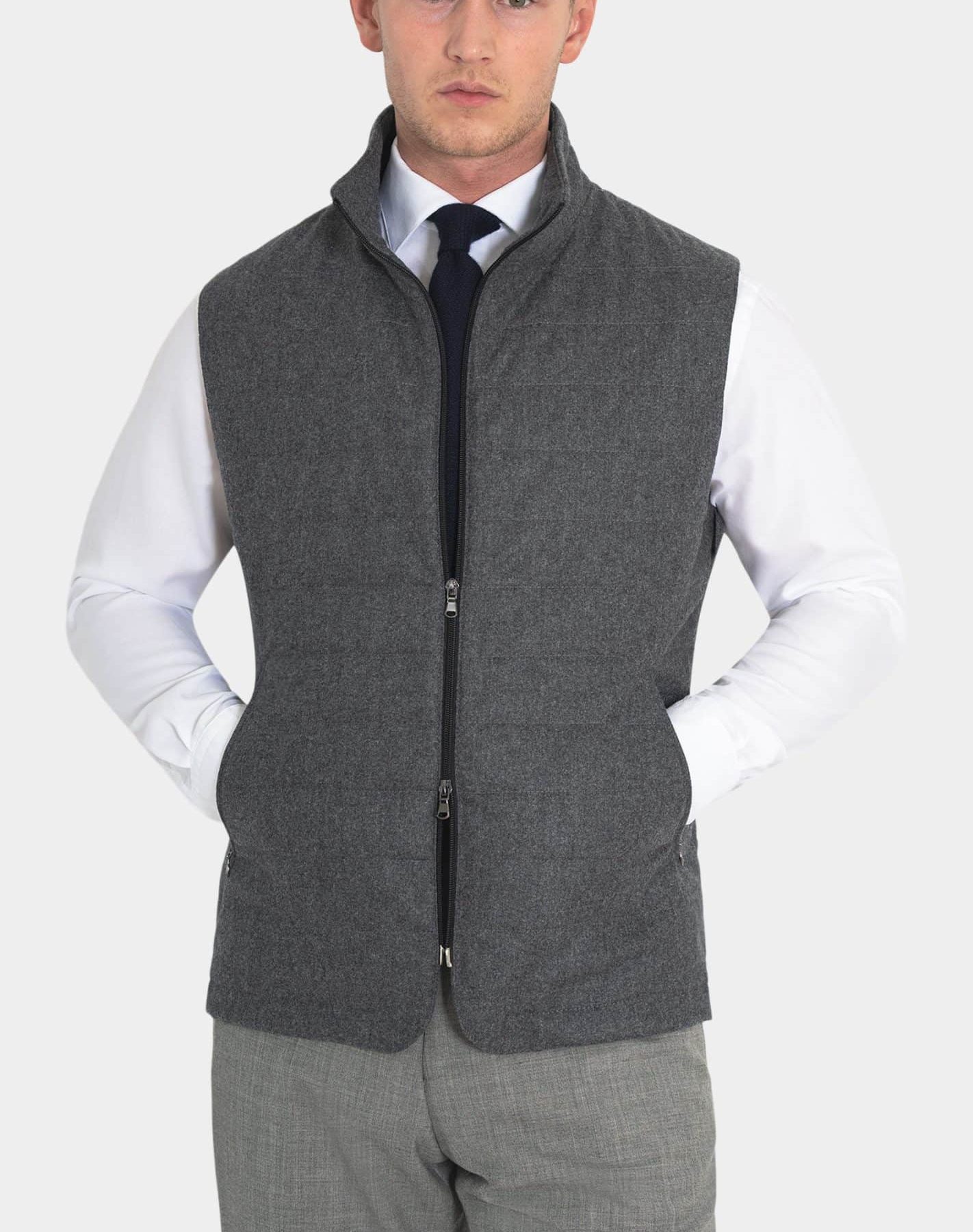
Our bodywarmers are crafted from heavy flannel, a warm, durable, and comfortable fabric with a subtle texture. They feature a two-sided zipper, allowing you to easily adjust the front look. On each side, there is a strap which offers flexibility for tailoring the fit around your waist.
The bodywarmer is custom made to your measurements, and you have the freedom to adjust the details to suit your preferences. You can opt for a square collar, as seen in the picture, or choose a rounded one. The lining and zipper colors can also be selected to your liking. For a personal touch, consider adding an embroidered monogram to the lining. We offer a variety of fabrics and colors to choose from.
Styling is a breeze - the bodywarmer serves as an ideal layering piece year-round. You have numerous options, from pairing it with t-shirts, shirts, and knitwear to teaming it with your favorite suit trousers, denim or chinos. -
 499 €
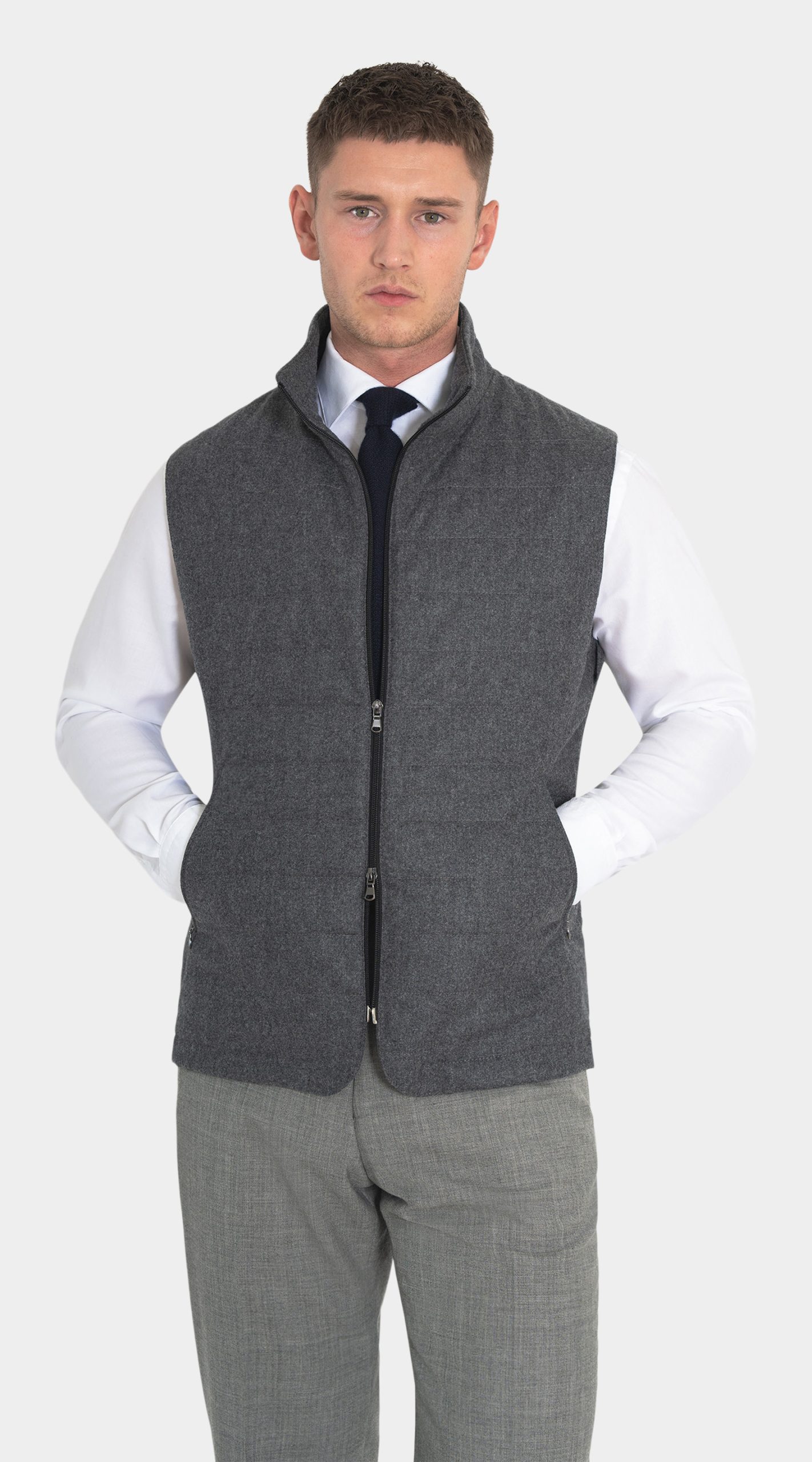
499 €Introducing the newest addition to our collection: The Bodywarmer.
Our bodywarmers are crafted from heavy flannel, a warm, durable, and comfortable fabric with a subtle texture. They feature a two-sided zipper, allowing you to easily adjust the front look. On each side, there is a strap which offers flexibility for tailoring the fit around your waist.The bodywarmer is custom made to your measurements, and you have the freedom to adjust the details to suit your preferences. You can opt for a square collar, as seen in the picture, or choose a rounded one. The lining and zipper colors can also be selected to your liking. For a personal touch, consider adding an embroidered monogram to the lining. We offer a variety of fabrics and colors to choose from.
Styling is a breeze - the bodywarmer serves as an ideal layering piece year-round. You have numerous options, from pairing it with t-shirts, shirts, and knitwear to teaming it with your favorite suit trousers, denim or chinos.
-
 499 €
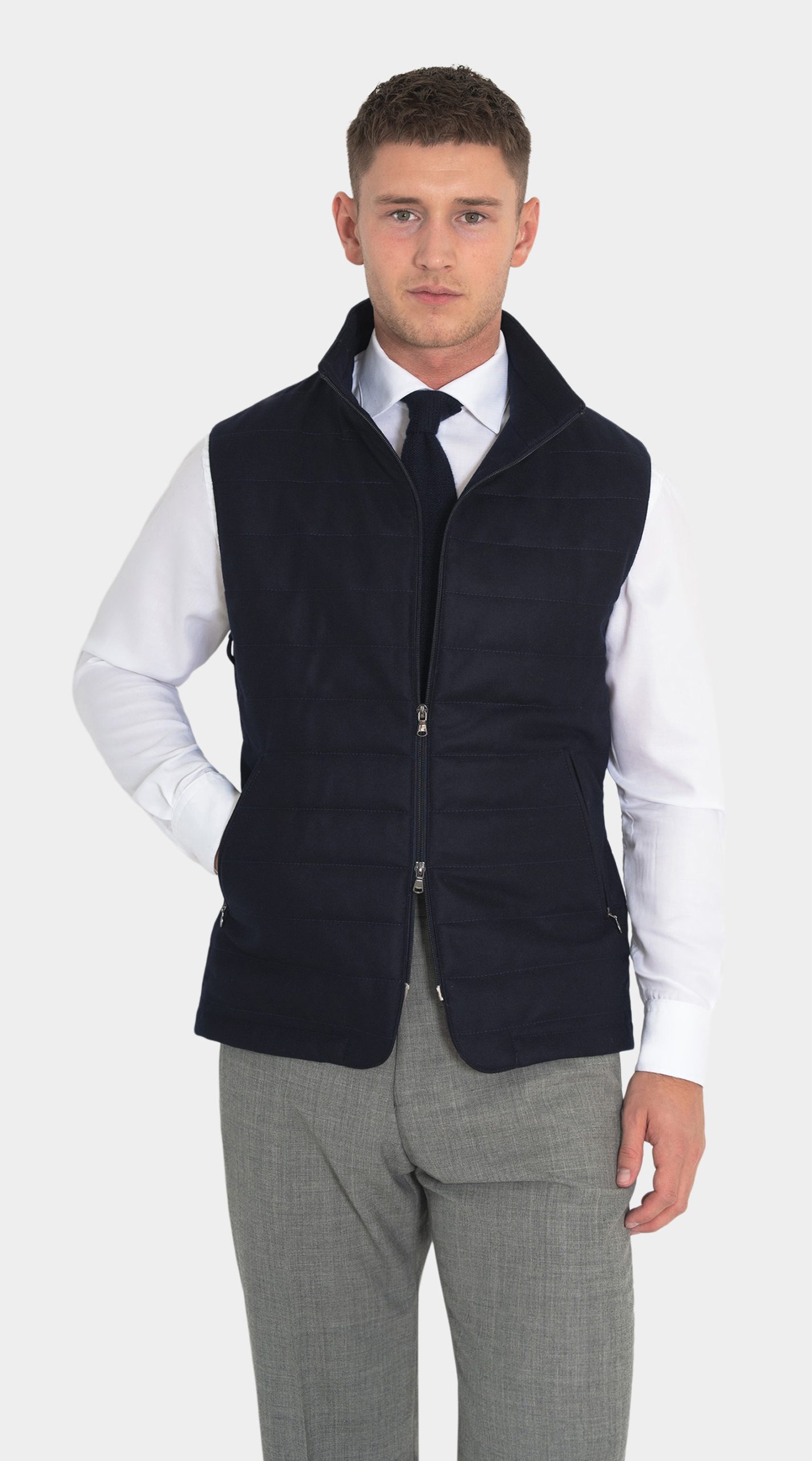
499 €Introducing the newest addition to our collection: The Bodywarmer.
Our bodywarmers are crafted from heavy flannel, a warm, durable, and comfortable fabric with a subtle texture. They feature a two-sided zipper, allowing you to easily adjust the front look. On each side, there is a strap which offers flexibility for tailoring the fit around your waist.The bodywarmer is custom made to your measurements, and you have the freedom to adjust the details to suit your preferences. You can opt for a square collar, as seen in the picture, or choose a rounded one. The lining and zipper colors can also be selected to your liking. For a personal touch, consider adding an embroidered monogram to the lining. We offer a variety of fabrics and colors to choose from.
Styling is a breeze - the bodywarmer serves as an ideal layering piece year-round. You have numerous options, from pairing it with t-shirts, shirts, and knitwear to teaming it with your favorite suit trousers, denim or chinos.


FAQs Business Casual and Bodywarmers
What exactly is a “bodywarmer” in menswear?
A bodywarmer is essentially a sleeveless, vest-like jacket meant to keep your torso warm. The term is often used interchangeably with “gilet.” Bodywarmers typically zip or button up the front and come in various materials, from sporty quilted nylon to refined wool flannel. In the context of business casual fashion, a bodywarmer usually refers to a smarter version of this garment – for example, a tailored wool or cotton vest with light padding or lining, rather than a bulky outdoor puffer. It provides an extra layer of warmth and style while leaving your arms free. Think of it as a cross between a suit vest (waistcoat) and a lightweight jacket, offering the best of both: some structure and polish, but with casual ease.
Is a bodywarmer appropriate for the office?
Yes, a sleek, well-fitted bodywarmer can be very appropriate for many office environments, especially those with a business casual or smart casual dress code. It’s a modern layering piece that’s gained acceptance in workplaces ranging from tech companies to more traditional firms on less formal days. The key is to choose the right style of bodywarmer. In an office, you’ll want one that is made of dressy materials (like wool, flannel, or a tailored quilted fabric) in a neutral color, and that has a slim profile. Avoid very shiny or overly padded vests that look like winter sports gear. When styled properly – say, over a collared shirt with chinos a bodywarmer conveys a neat, professional look. Of course, office norms vary: if you work in a very conservative industry with strict attire rules, you might not see many bodywarmers around. But in most business casual settings, it’s not only appropriate but quite stylish and practical.
How do I layer a bodywarmer with other clothing?
Layering with a bodywarmer is straightforward and flexible. The typical way is to wear it as your top layer over a shirt (and tie, if you wear one) or over a lightweight sweater. This means instead of a blazer or sport coat, you’re using the bodywarmer to add that extra layer of warmth and style. You can leave it unzipped for a more relaxed look that shows your shirt and tie, or zip it up partway for a cleaner silhouette. In colder weather, you can also layer a thin bodywarmer under a jacket or coat. For instance, you might wear a dress shirt, then a thin merino wool sweater, then the bodywarmer, and finally an overcoat when outdoors. Once indoors, you could shed the overcoat and still have the vest as part of your outfit. Just make sure the fit of each layer is considered (the bodywarmer should be trim so it doesn’t bulk under a coat, and your coat slightly roomy if you plan to layer over a vest). Experiment with combinations e.g., bodywarmer over a turtleneck, or over a suit jacket if it’s a very casual/eccentric style day but generally, over a simple dress shirt or sweater is the foolproof method.
What are the best colors for a bodywarmer to ensure it goes with my business casual clothes? A: Neutral, versatile colors
Neutral, versatile colors are your best bet. Navy blue is arguably the most popular and versatile it pairs well with white, blue, pink shirts, and with gray, khaki, brown trousers. Gray (charcoal or mid-gray) is another excellent choice and works with blues, whites, blacks, etc. Black can be okay, though in some settings a black vest might resemble security attire; if your style leans minimalist, black can look sharp (especially over a white or light gray shirt). Olive green or camel/tan are slightly more eye-catching but still coordinate with many business casual staples (they go nicely with blues and whites, for example). These earth tones can add a bit of personality while staying classy. It’s wise to avoid extremely bright colors or loud patterns in a work gilet save those for casual weekends. If you do want a pattern, something subtle like a dark plaid or herringbone in muted tones could work as long as the rest of your outfit is solid. Remember, the bodywarmer is an accent layer; choosing a versatile color means you’ll get more use out of it and it will seamlessly integrate into different outfits.
Bodywarmer vs. suit vest – what’s the difference, and can a suit waistcoat be worn as business casual?
A suit vest (waistcoat) is a dressy garment, usually made of the same fine suiting fabric as the suit itself, and is meant to be worn buttoned up under a suit jacket as part of a three-piece suit. It typically has a tailored fit, buttons, and an open back or silk back panel. A bodywarmer (gilet), on the other hand, is more like outerwear; it usually zips up and is often made of thicker or more casual materials (like padded nylon, fleece, or wool flannel). Bodywarmers might have pockets on the outside, a stand collar, and are designed to provide warmth as well as style. While both are sleeveless, their use is a bit different. You can incorporate a suit vest into a business casual look (for instance, wearing an odd waistcoat from a suit with mismatched trousers and no jacket can be a stylish smart casual ensemble), but it will give off a more formal vibe than a bodywarmer. A suit vest also doesn’t provide as much warmth and is usually slimmer and not meant to be layered over thick shirts or sweaters. Conversely, a bodywarmer isn’t typically worn with a formal suit; it’s more often an outer layer. So, if your aim is business casual, a bodywarmer is generally more appropriate and easier to work with. You could think of it this way: a suit vest is part of the formal wardrobe dressing “down,” whereas a bodywarmer is a casual piece dressing “up.” Both can exist in the business casual sphere, but they create different aesthetics.
Can I wear a tie with a bodywarmer, or is it strictly a casual look?
Yes, you can definitely wear a tie with a bodywarmer for a smart business casual appearance. The combination of a tie, dress shirt, and bodywarmer can look quite sharp it shows you’re dressed professionally (because of the tie) but you’ve substituted the usual jacket for a vest, signaling a more relaxed environment. For example, a check or solid tie under a navy bodywarmer, paired with tailored trousers, can be a great look for office or networking events when a full suit isn’t required. Just ensure the tie isn’t too formal or shiny (matte textures like knits, wools, or twills tend to pair well with the more textured look of a vest). Also, coordinate the vest and tie colors harmoniously if the vest is dark and solid, you could use the tie to introduce a pattern or color pop, or vice versa. One thing to note: because a bodywarmer has a front zipper or buttons and a higher collar than a suit jacket, it will partially cover the tie. You might keep the vest unzipped a few inches to let the tie show more. Overall, wearing a tie with a bodywarmer leans towards the dressier end of business casual (almost “smart casual”), whereas skipping the tie makes it more casual. Both are valid depending on the occasion and your personal style.
What are some mistakes to avoid when incorporating a bodywarmer into my business casual outfit?
A few things to watch out for:
1. Choosing the Wrong Style of Vest: Avoid very puffy, brightly colored, or technical hiking-style vests for the office these read as too casual or sporty. Stick to slim, understated designs.
2. Poor Fit: A vest that is too large will look sloppy (excess fabric bunching) and one too small will look awkward (can’t zip it up comfortably, or it’s too tight at the waist). Aim for a trim fit that still allows you to move and sit easily. If you see the shoulders of the vest drooping off your own shoulders, it’s too big.
3. Clashing Layers: If your shirt is very wrinkled or untucked, throwing a vest over it won’t magically fix that maintain neat base layers. Also be mindful of shirt sleeve length; since your arms are visible, ensure your shirt sleeves fit well and are either rolled neatly or at full length (but not billowing).
4. Overdoing Pockets: If your bodywarmer has multiple utility pockets, be cautious not to fill them so much that the vest bulges. In a business setting, you likely don’t need to use those pockets extensively maybe just slip a phone or access card in briefly. A clean line is more professional.
5. Neglecting the Rest: Don’t let the relative novelty of a vest make you ignore the basics of your outfit. You still need polished shoes, a matching belt (if visible), and well-fitted pants. The vest is an enhancer, not a cover-up for poor dressing elsewhere. Make sure everything works together.
By avoiding these pitfalls, you’ll ensure the bodywarmer truly shines as a stylish addition rather than a distracting element.
I’ve never worn a bodywarmer before any tips for starting out?
Start with a neutral, versatile vest for example, a medium grey or navy wool blend bodywarmer. These colors will pair with most of your existing shirts and trousers, so it’s hard to go wrong. Try an outfit at home: put on your usual business casual (say, an Oxford shirt and chinos), then add the zipped vest and look in the mirror. It might at first feel different if you’re used to jackets, but notice how it adds a contemporary, slightly sporty elegance. Wear it during a normal workday and see how you feel. Often, newcomers quickly appreciate the freedom of movement and comfort (“Why wasn’t I using this piece before!”). Because the bodywarmer is less common than, say, a sweater or jacket, it also tends to draw mild compliments colleagues might say “Nice vest!” – which can boost your confidence in styling it. From there, you can experiment with different under-layer combinations (ties, knits, etc.). Another tip: check the weather and office temperature you’ll enjoy a bodywarmer most on days when it’s cool enough to need an extra layer, but not freezing to where you’d need full sleeves. Those in-between days are where it truly becomes your best friend. Lastly, if you’re unsure how it will be received at your workplace, choose a casual Friday or a day without big client meetings to debut your business casual vest look. You’ll likely find it’s perfectly well-received, and you’ll gain confidence to make it a regular part of your wardrobe rotation.