
Tailored Trousers
This is a brief introduction to men’s tailored trousers and their significance in the world of tailoring.
Why are custom-tailored trousers so important for a refined wardrobe? First of all, they might be the most versatile and useful tailored piece you can add to your collection. Many people start with the jacket, but we would argue that beginning with the trousers is the better choice.
Many brands and makers have mastered the art of crafting a great jacket, but trousers are often overlooked. By getting your trousers tailored, you’re already one step ahead of your peers.
How Should They Fit?
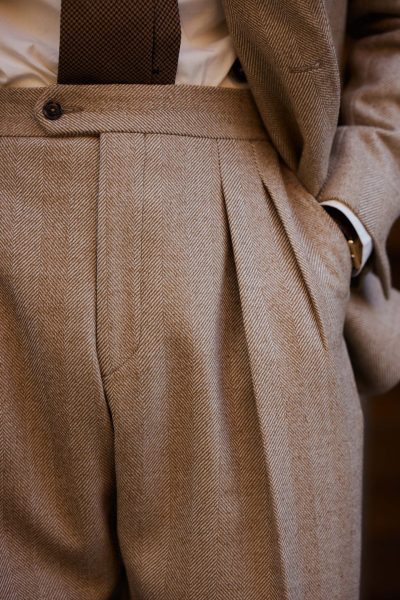
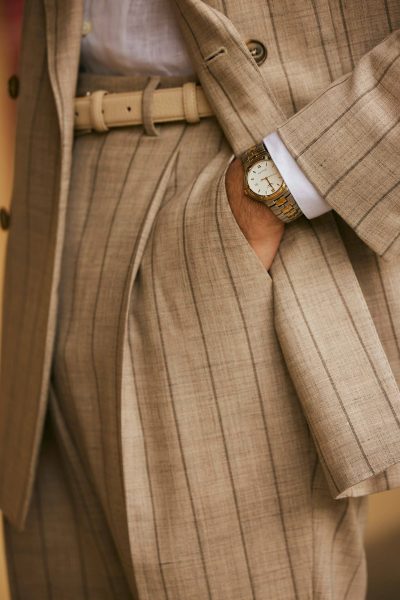
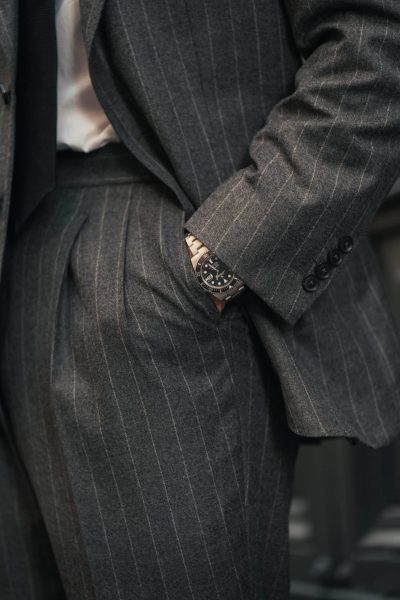
Tailored trousers allow you to achieve the exact cut and design you desire. The fit is entirely up to the wearer. The only recommendation one could give is: “Consider your body’s proportions and how you can create balance where there are natural imbalances.”
At the end of the day, tailoring is not just about making the trousers conform to your body shape—it’s about enhancing your silhouette in the most flattering way while ensuring comfort. The goal is to achieve a balanced, proportionate look without compromising on visual appeal.
As a man, you should focus on elongating your lines. One key factor is the length of the trousers, and another is the rise. By getting these two elements right, you can significantly enhance your overall appearance—something that can only truly be achieved with tailored trousers.
Waist, Seat & Rise Considerations
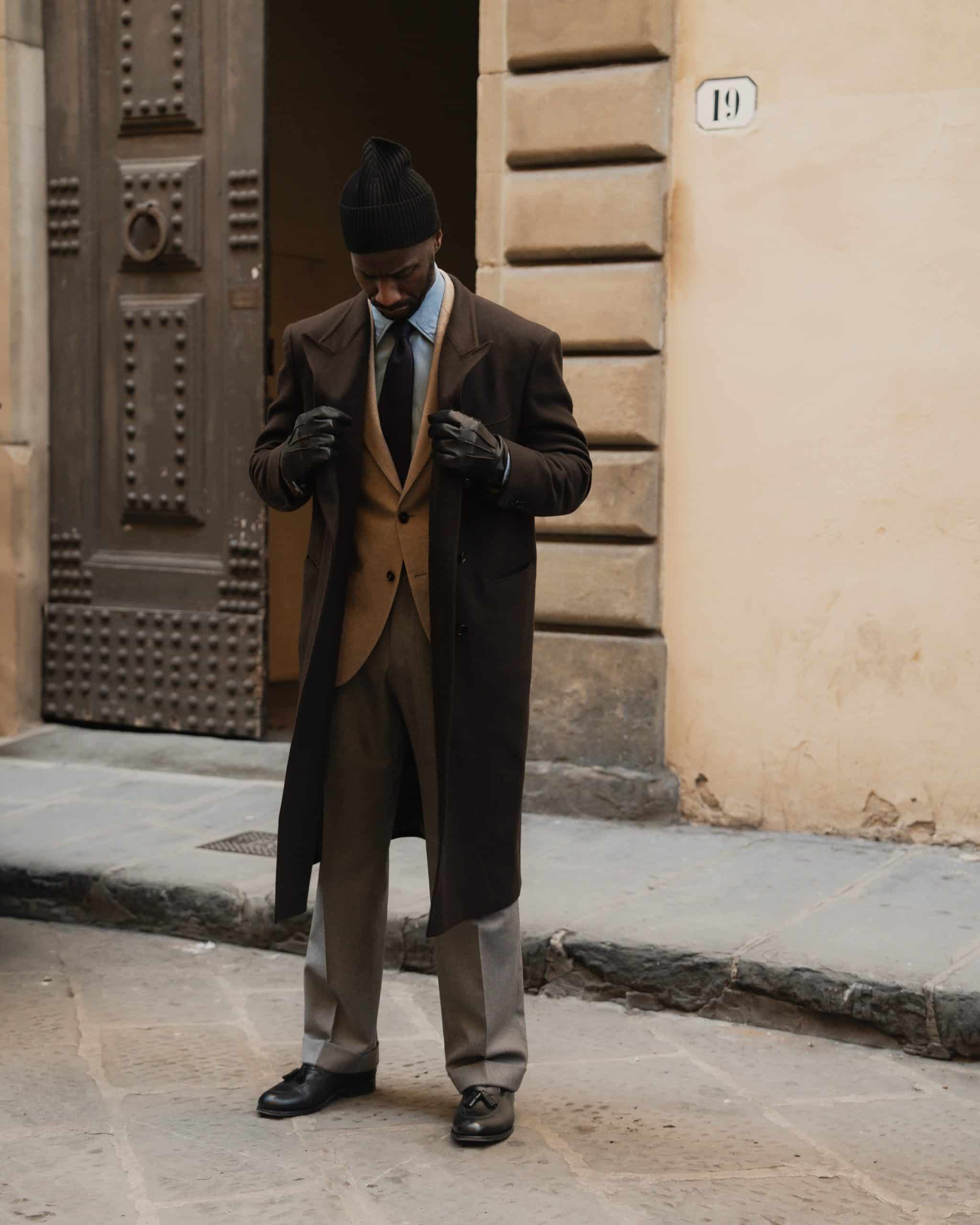
Leg Shape
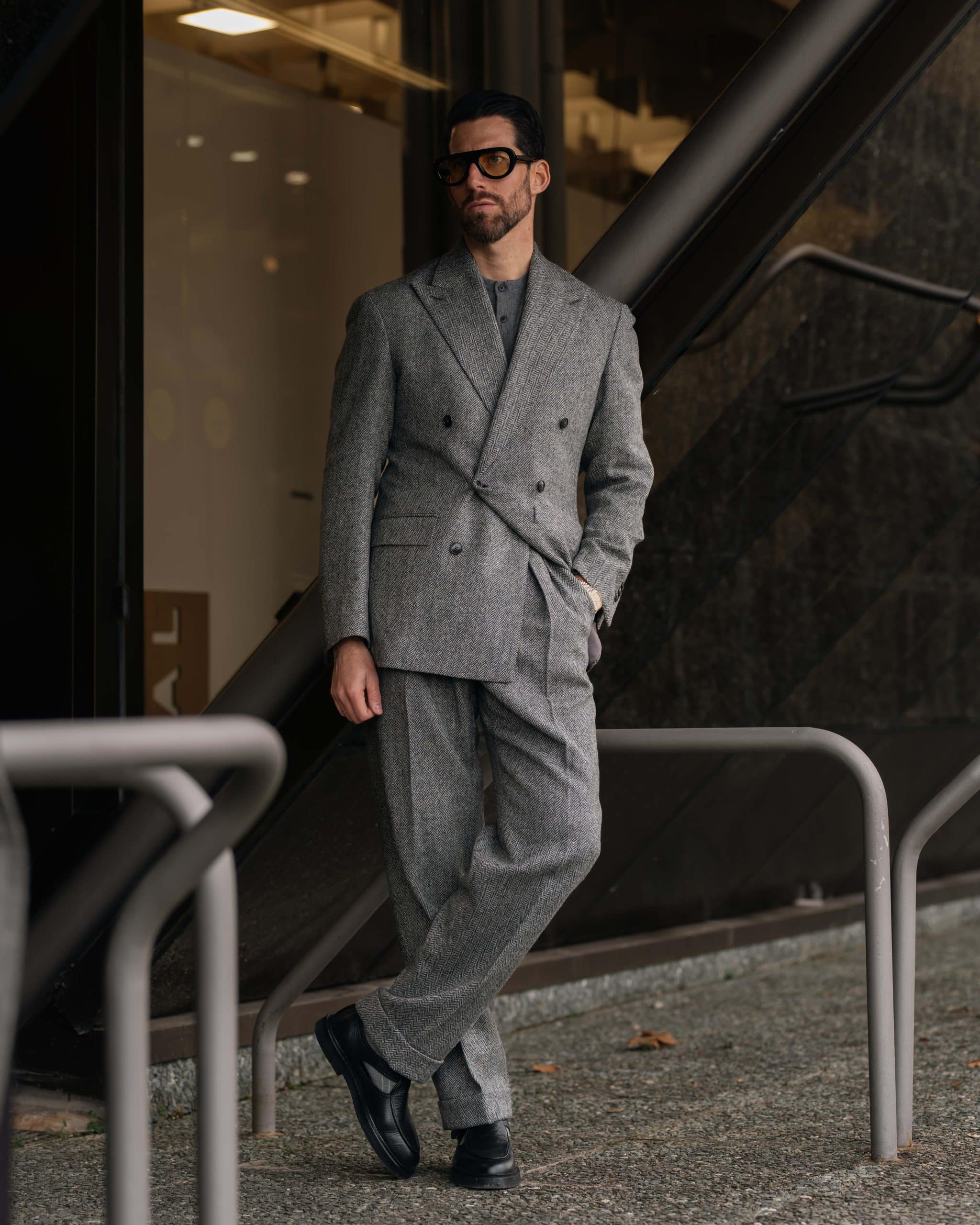
The width of the tailored trousers should always be proportionate to your upper body. One key factor is, of course, the size of the upper body, but the fit of the jacket should also be taken into consideration. Ideally, these aspects have already been addressed when fitting the jacket—but that’s a topic for another article.
Most importantly, you want an uninterrupted leg line, meaning the crease should appear razor-sharp and straight. The size of your legs, whether large or small, should not determine whether the tailored trousers are tighter or looser. Instead, the margin of width should remain consistent, ensuring the fit appears balanced when the trousers are properly tailored. Once again, a well-tailored pair of trousers is the only way to ensure these important aspects are properly addressed.
The main tip is that your tailored trousers should feel as comfortable as your favorite sweatpants or pajamas—they should not restrict your movement or comfort throughout the day. For many, transitioning from the tighter, Thom Browne-inspired suit trousers to a more traditional and classically tailored cut can seem daunting. However, in the long run, classic tailored trousers offer a more flattering, comfortable, and timeless appeal.


Breaks
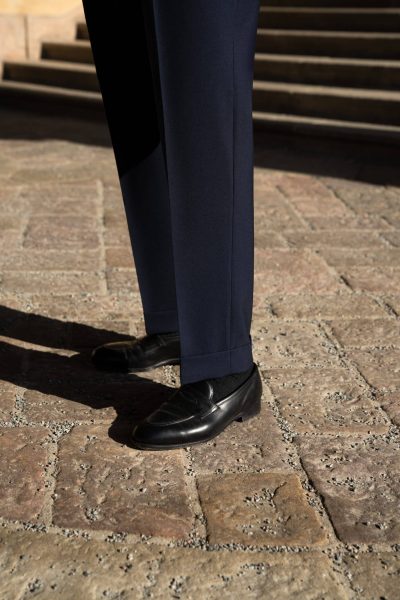
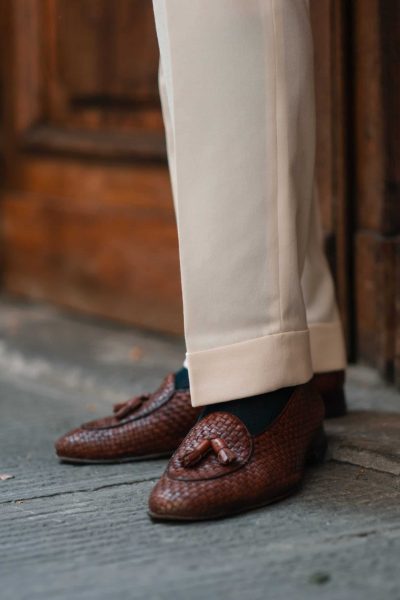
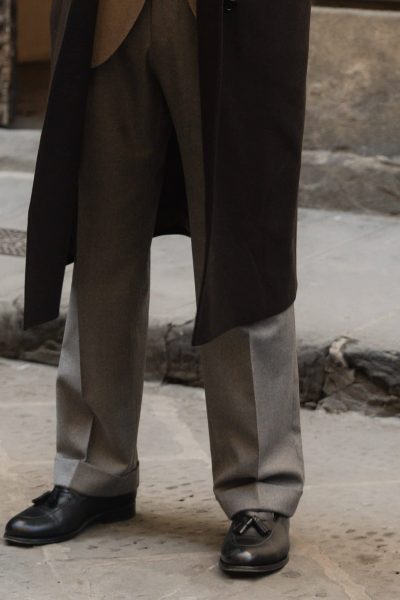
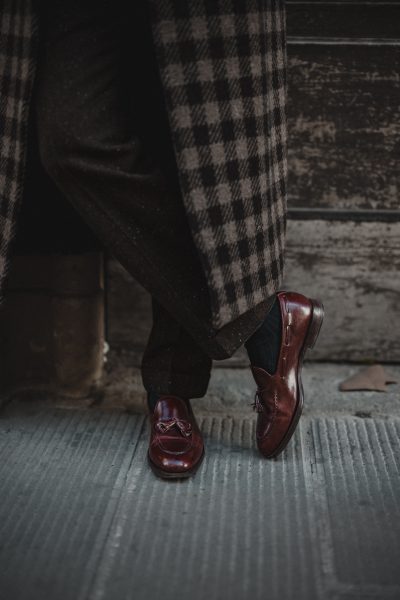
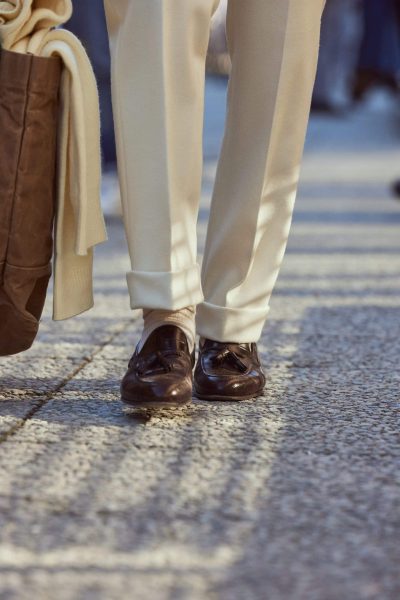
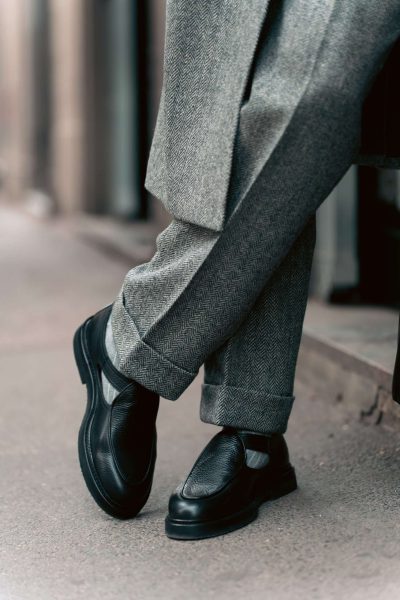
Last but not least, we have the break of the tailored trousers. This is closely related to their width, and many people have strong opinions on it—which makes sense, as it is quite a significant visual detail.
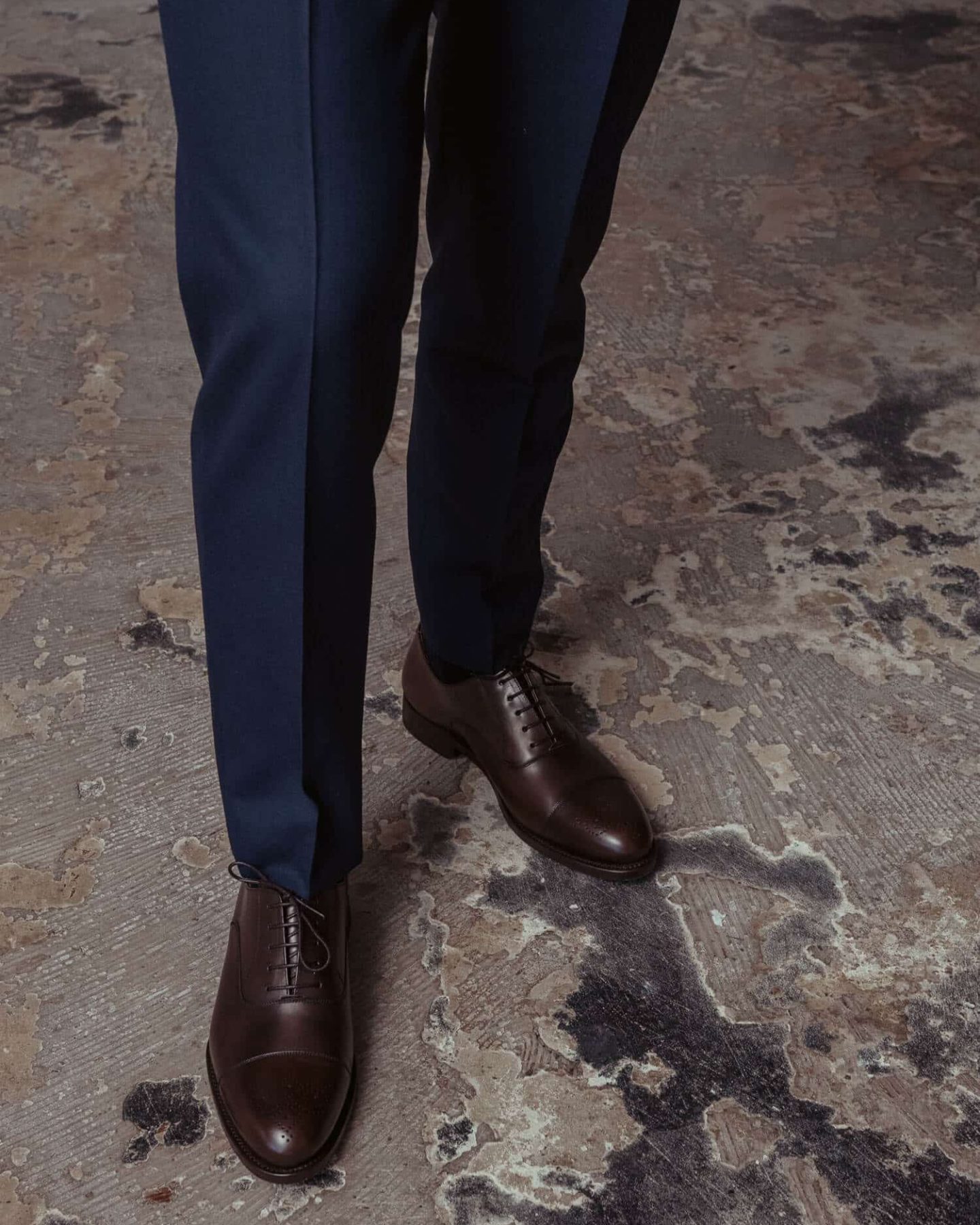
In general, the length of the tailored trousers should be determined solely by their width. The idea is that the circumference of the leg opening dictates where the trousers rest on the shoes. The wider the opening, the longer the trousers can be. The slimmer the opening, the shorter the length—essentially.
One factor to consider is the size of the break. The break is more than just a visual detail—it can also be influenced by the season. During the colder months, when heavier fabrics are worn, a slightly deeper break can be both visually appealing and practical, offering extra warmth.
Conversely, in the sunnier and warmer months, a slight or even no break can feel more appropriate and comfortable. The only rule to always keep in mind: wear dress socks with your tailored trousers.
Let's Talk Pleats
One of the most asked questions in the stores are pleated trousers, so let’s take a closer look at pleated trousers, and why they remain an evergreen within classical tailoring.
What Are Reverse Pleats?
Reverse pleats are a type of pleat construction where the pleats are directed towards the hip and pocket of the trousers. This style creates more room around the hips and seat area, making it ideal for those who prefer extra comfort or need more space in these areas. Reverse pleats lend a more traditional, classic look and are often seen in more formal or vintage-inspired styles. While they may add some volume, they provide ease of movement and a relaxed, elegant silhouette.
Reverse pleats
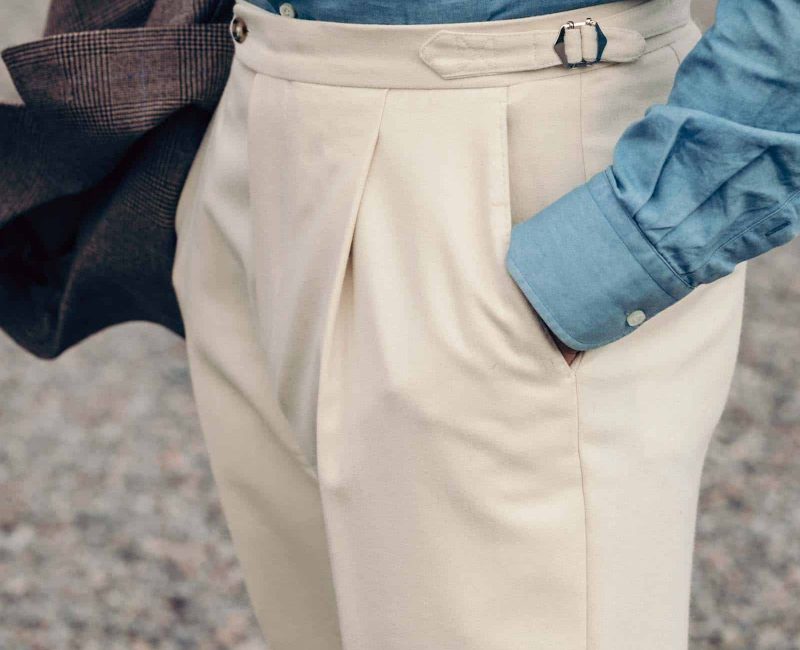
What Are Forward Pleats?
Forward pleats, also known as English pleats, are pleats that point towards the fly of the trousers. Although not the most common style, they are favoured by some for their practical benefits. Forward pleats allow the outer half of the trousers to remain cleaner and more streamlined, without adding volume to the hip or seat area, as reverse pleats might. This style provides a more tailored, flattering fit while maintaining comfort and ease of movement. It is particularly well-suited for heavier, British-inspired fabrics.
Inverted pleats
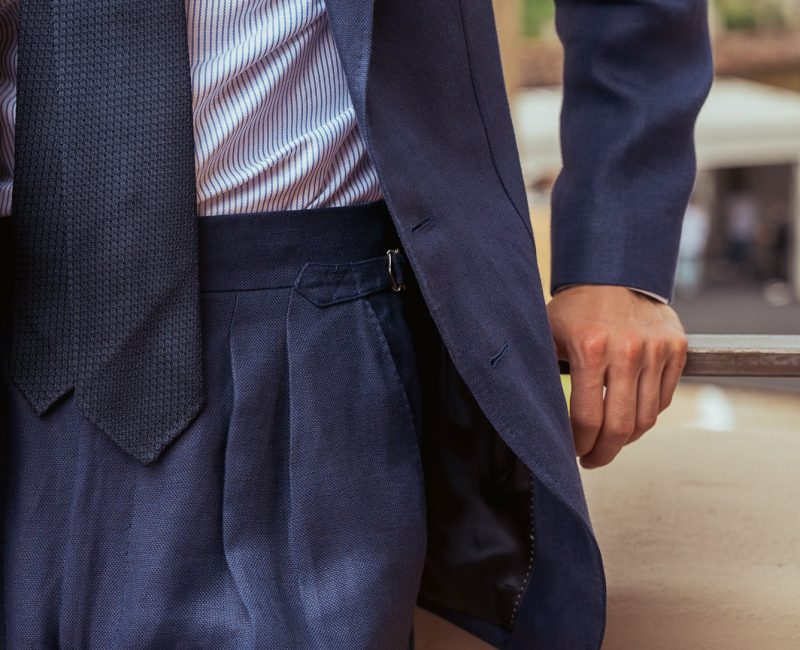
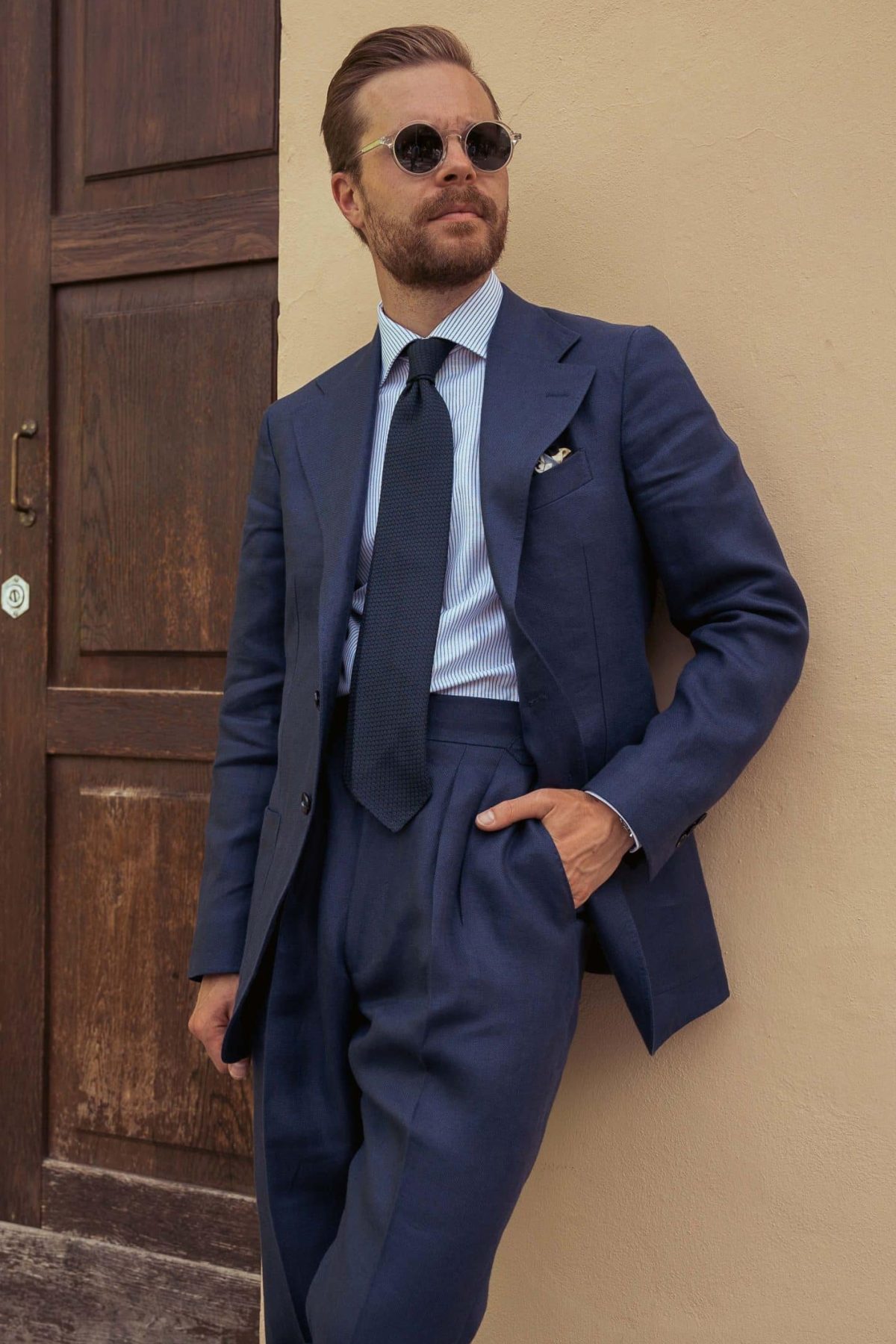
At MOND, we offer three different types of fronts for your custom trousers: no pleats, single pleats, and double pleats.
The number of pleats can be customised regardless of the style you choose. For instance, as pictured above, you can opt for a single reversed pleat or double inverted pleats. If you prefer two reversed pleats or a single inverted pleat, that is also possible. This flexibility makes tailoring your own trousers even more interesting and comfortable, especially since many off-the-rack options rarely offer pleats at all.
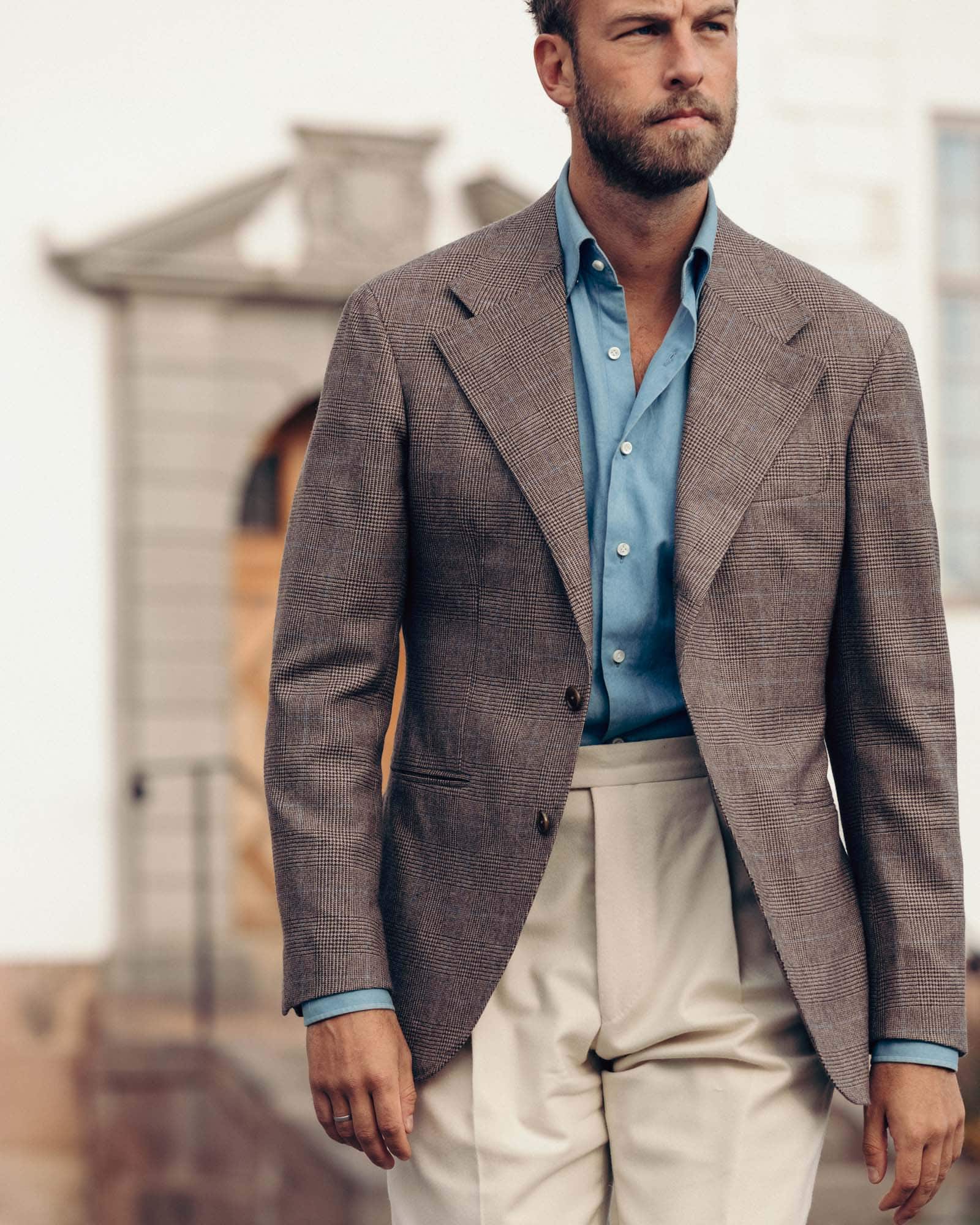
Pleats should only be used with high-waisted trousers, as the rise of the trousers is crucial for ensuring the pleat falls clean and straight. The shorter the rise, the more pressure on the pleat, causing it to open in an unflattering way. Additionally, you want the rise and pleats to make your waist and hips appear leaner and elongate your lines, not broad and compact.
Cuffs/Turn-ups
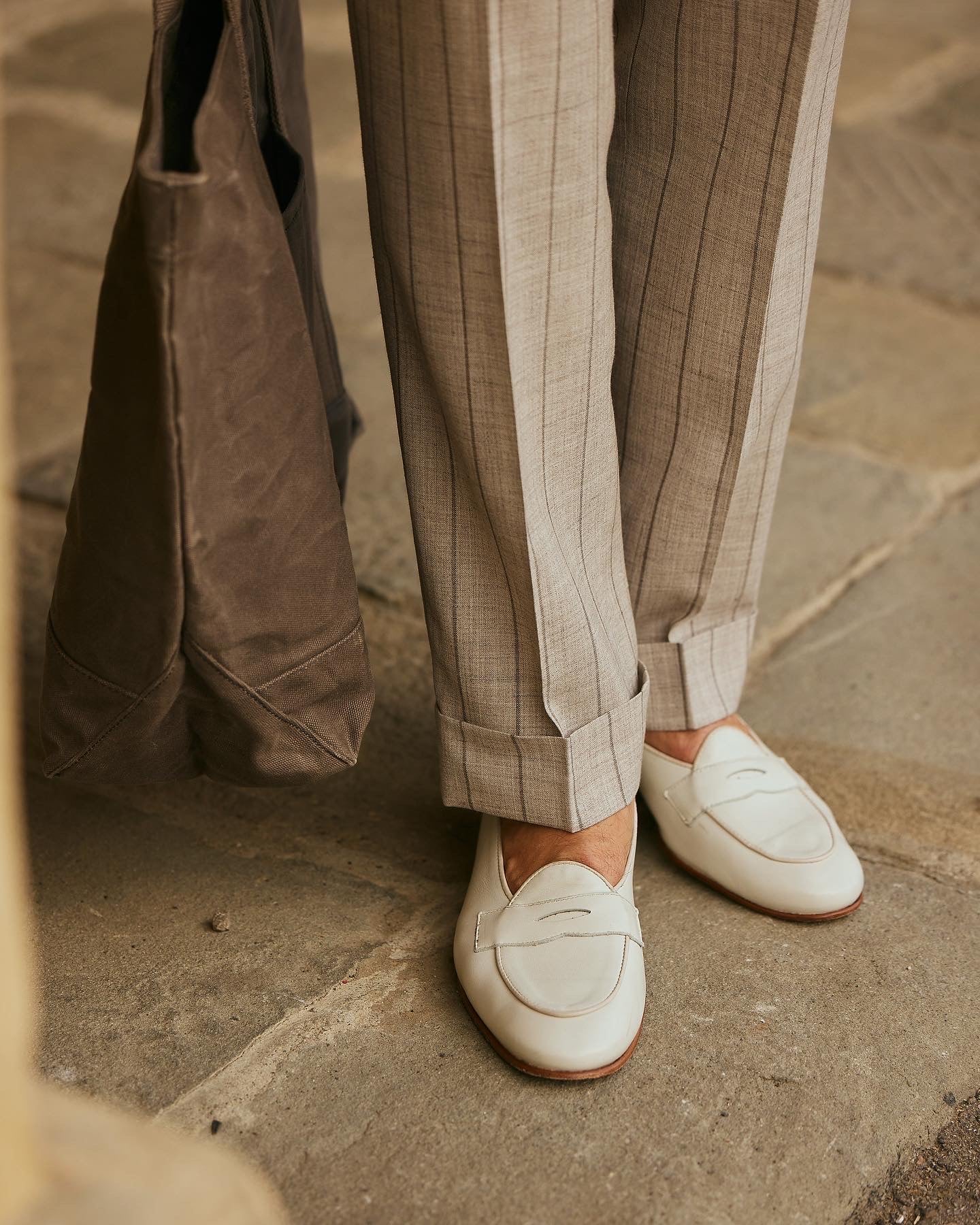
When it comes to tailored trousers, deciding whether you want a cuff or turn-up at the bottom is a matter of personal style and tradition. Cuffs can add weight to the fabric, which helps the trousers fall with a clean line, or they can be purely decorative. Adding the weight of the cuffs gives the trousers a sharper and cleaner press, enhancing your overall appearance. Whether you opt for no cuff or a specific turn-up width, each choice brings a different aesthetic to your look.
No Cuff / Turn-Up
The absence of cuffs gives a sleek, minimalist look. This option is ideal for those who want a more contemporary or streamlined appearance, especially with lighter fabrics or a modern slim fit.
3 cm Cuffs / Turn-Ups
A classic and versatile choice, the 3 cm cuff provides just enough structure to balance the proportions of most trousers without overpowering the overall silhouette. It’s a traditional look that works well for both business and casual styles.
4 cm Cuffs / Turn-Ups
A slightly wider cuff at 4 cm gives a more pronounced, sophisticated finish. This width is often chosen for a more elegant, formal appearance, and pairs particularly well with heavier fabrics like wool. It adds a touch of distinction while maintaining a balanced look.
5 cm Cuffs / Turn-Ups
The 5 cm cuff creates a bold statement, perfect for those who want a more dramatic, eye-catching detail. This wider cuff is typically associated with a traditional or vintage style, and is ideal for trousers made from thicker fabrics. It evokes a sense of classic tailoring and is often seen in more formal or high-fashion contexts.
Belt, Side-adjusters or Nothing?
A detail that has gained a lot of interest in men’s formal trousers is the design of the trouser waistband.
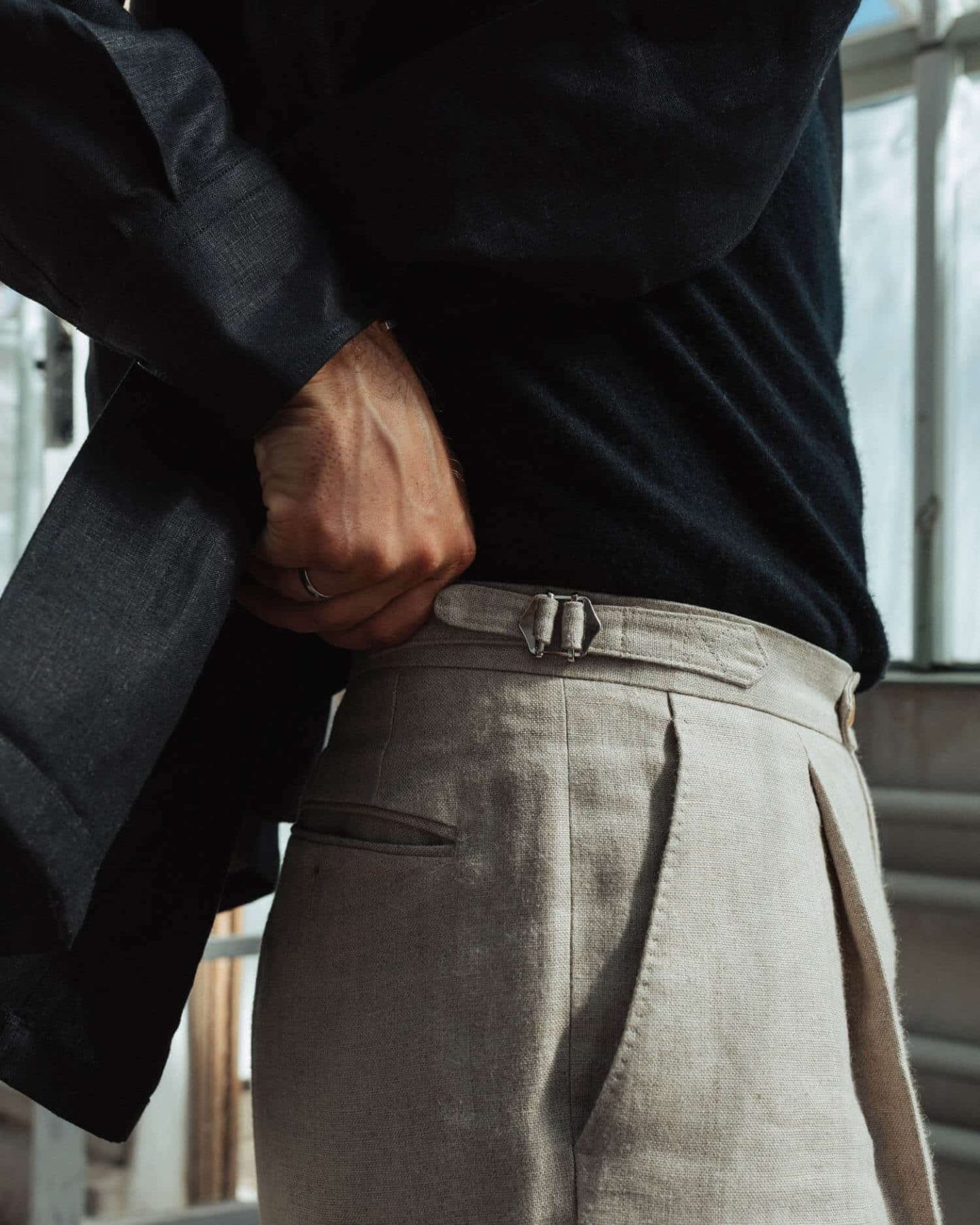
Side adjusters, in particular, seem to catch the attention of most men. But when should you opt for side adjusters instead of belt loops? And when is the right time to wear your trousers with braces/suspenders, without any visible fastening details on your tailored trousers?
Why choose side-adjusters?
It’s no secret—we sell side adjusters with our tailored suits 8 out of 10 times. The reason? Their visual advantages.
As we’ve established earlier, men often seek long, uninterrupted vertical lines to enhance their overall appearance. Side adjusters allow you to easily adjust the waist of your trousers without visually dividing your body into two halves, as a belt would. This creates a more seamless, refined look, ensuring your outfit appears cohesive—and that you look your absolute best.
Additionally, side adjusters provide a cool, functional detail that attracts attention and compliments from others, enhancing your overall look.
When Should You Opt for a Belt?
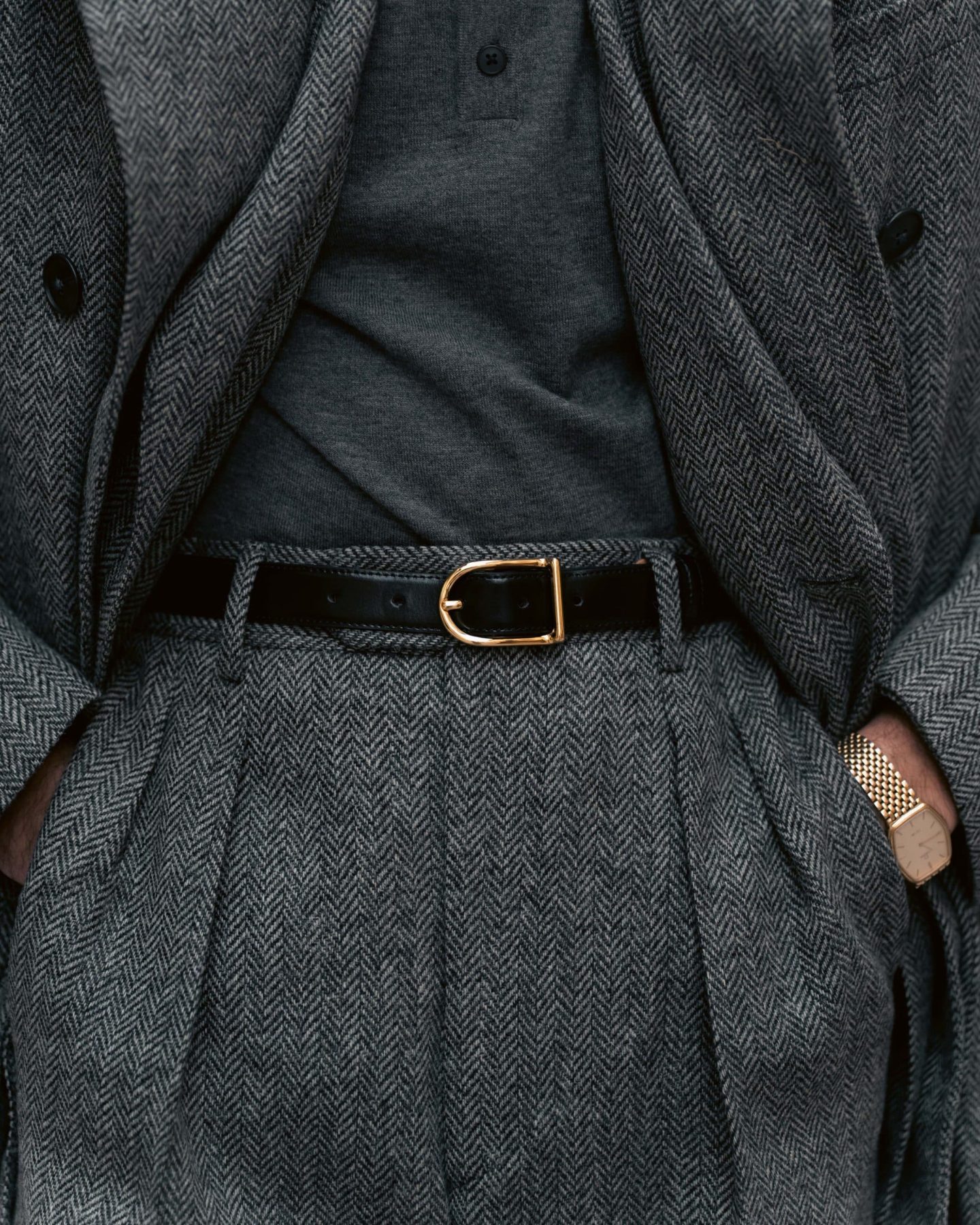
The belt has been used for many years and is often seen as the classic solution for keeping trousers in place. However, as we say in the tailoring world—why use a belt when your trousers are tailored to fit you? That said, a belt can offer both visual advantages and disadvantages.
The benefits of wearing a belt include adding character and charisma to your outfit. We particularly recommend it for soft tailoring or casual tailoring in general. In these cases, the belt dividing your silhouette is less of a concern, as the color contrast can add depth and dimension to your look.
For more formal tailored clothing, a belt is best suited for taller men. It can create a sense of balance and make their proportions appear more harmonious, rather than emphasising height—especially when wearing a two-piece suit.
As with everything, one should ultimately wear whatever they prefer. At the end of the day, it’s all about feeling comfortable and confident in the outfit you’re wearing.
When Should You Wear Braces/Suspenders—or Go Without?
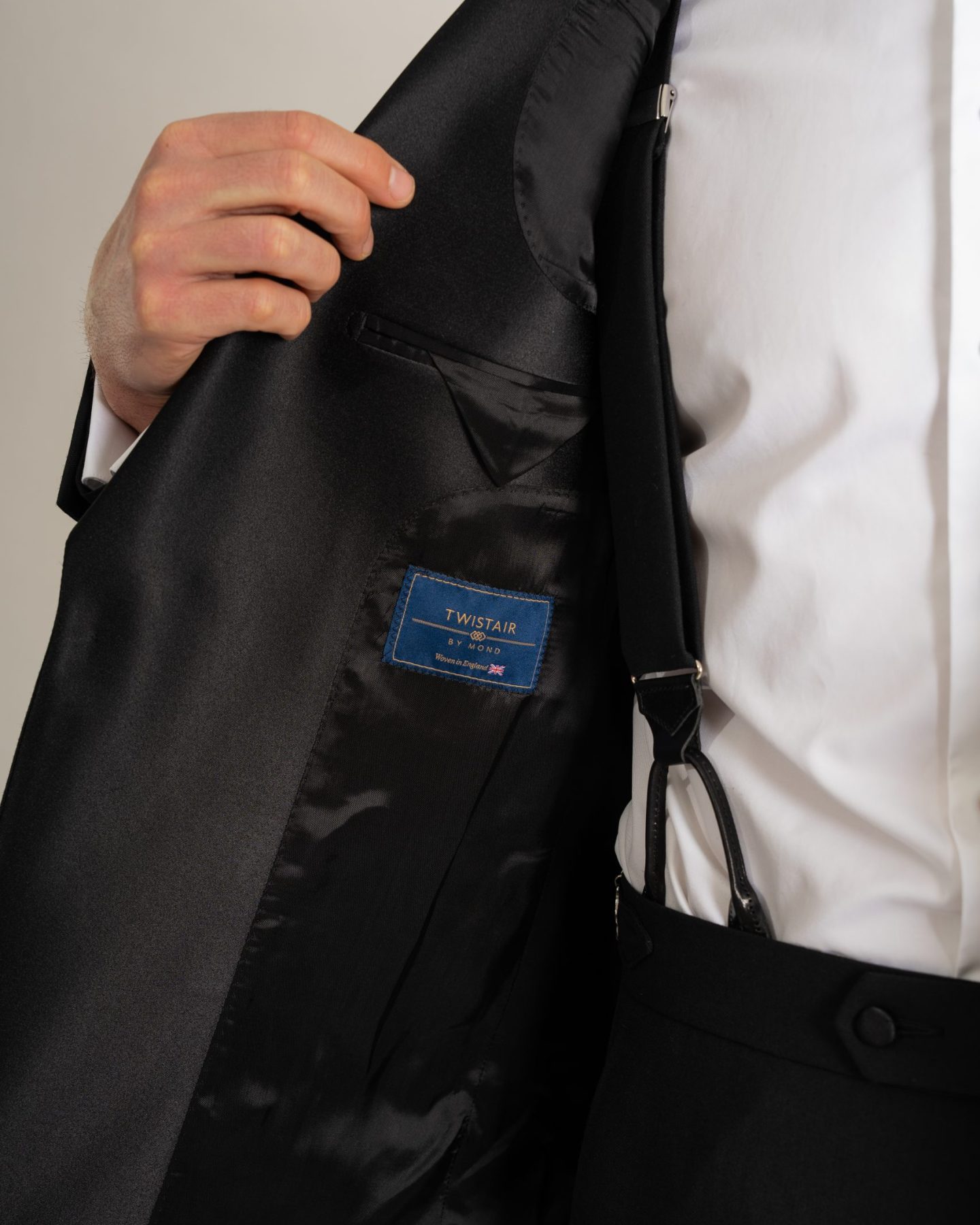
Braces (or suspenders) are undoubtedly the best choice for wearing with tailored trousers. When opting for custom trousers, many people choose a high waist, and to achieve the cleanest and most flattering silhouette, it’s crucial that the trousers stay in place. Nothing does this better than braces.
Braces allow you to move freely—whether sitting, walking, or standing—while ensuring your trousers remain perfectly positioned. Additionally, since the waistband doesn’t need to fit as tightly, they provide superior comfort throughout the day.
The most common hesitation we hear is: “I don’t think braces are for me.” This is understandable, as braces are not as commonly worn today. However, those who give them a try often fall in love with both the look and the comfort they provide.
Braces can be worn with virtually any outfit—whether formal or casual. However, they are an absolute must for both morning wear and evening wear. At MOND, we offer some of the finest braces available, all bespoke and handmade in the United Kingdom by Albert Thurston, exclusively for MOND.
Tailored trousers can last you a lifetime if you take proper care of them and maintain a consistent physique. The key to longevity lies in choosing a high-quality, durable fabric and opting for a classic, slightly looser fit that stands the test of time.
Beyond fabric and fit, proper maintenance is essential. Regularly brushing your trousers, airing them out between wears, and dry-cleaning only when necessary will help preserve their shape and integrity. By investing in well-made tailored trousers and following these care principles, you’ll have a pair that remains stylish and wearable for years to come.
Read our article on how to take care of your trousers: Garment care explained